
Skip to content
An official website of the OECD. Find out more
Created by the Public Governance Directorate

This website was created by the OECD Observatory of Public Sector Innovation (OPSI), part of the OECD Public Governance Directorate (GOV).

How to validate authenticity

Validation that this is an official OECD website can be found on the Innovative Government page of the corporate OECD website.

View as: Map

Filter by:

Countries

Level of government

Sector

Year of launch

Stage of innovation

Recognition

Innovation Tags

Innovations:
0
This website, as well as any data and map included herein, are without prejudice to the status of or sovereignty over any territory, to the delimitation of international frontiers and boundaries and to the name of any territory, city or area.
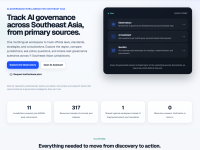
SEA Observatory Platform is public-interest AI governance infrastructure for Southeast Asia. It brings together 350+ official resources across 11 jurisdictions and ASEAN, helps institutions verify rules against primary sources, and uses GovSim (Governance Simulator) to rehearse procurement, oversight, and implementation choices before harm occurs. Its innovation is one auditable workflow from policy discovery to verification to decision rehearsal.
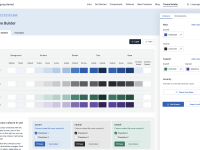
The Norwegian government has developed Designsystemet, a shared foundation for building accessible and consistent digital services. It provides reusable UI components, design guidelines and patterns that help organisations develop services faster while meeting accessibility requirements. Developed collaboratively across government, Designsystemet is technology-agnostic and recognised as a Digital Public Good, meaning organisations worldwide can use, adapt and contribute to improving it.
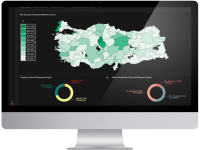
Developed by the Ministry of Health to analyze data flowing from all healthcare facilities in real time, SINA is an advanced, big data-driven decision support platform that enables real-time data visualization, interpretation, and comparison. Integrated with the AI assistant JAS in 2026, SINA allows users to gain insights by asking questions in natural language. By leveraging big data and causal analysis, SINA improves health policies, service delivery, and public health outcomes.
Gaeilge365 was created to respond to growing demand for bilingual public services while opportunities to use Irish in everyday local authority services remained limited. It redesigns existing services to create real speaking opportunities, increasing annual use from 10,000 to over 26,000 in one year, with a target of 150,000 by 2028. It is innovative because it replaces translation‑based compliance with a scalable, measured service model that delivers clear social impact.
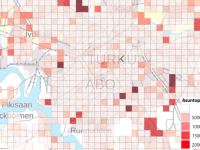
A digital population twin, combined with financial impact analysis, helps governments anticipate how demographic change and shifting risk patterns affect future service needs and costs. Built from real population data and enriched with research and administrative data, it supports precise forecasting, simulation, and planning. In Finland, it has been used to model future accident risks for rescue services at a highly detailed spatial level.
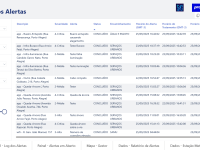
Conecta is a platform that allows public administrators to use technology to anticipate problems faced by cities during extreme weather events, such as flooding, landslides, accidents, and fallen trees. The platform integrates and unifies real-time alerts from different technological sources, enabling faster decision-making and more effective emergency response. Additionally, all the data generated and compiled will allow society to understand new reality and measure how efficiently public…
Governments often struggle to decide which emerging technologies are worth adopting and how to apply them responsibly. The Future Technology Observatory helps government entities identify, assess, and test high-potential technologies before adoption. It is innovative because it connects technology foresight with practical experimentation and adoption guidance in one shared government capability.
Despite ambitious climate pledges, a persistent “last-mile” gap remains: individual climate actions are often undervalued within existing frameworks. Gyeonggi Province addresses this gap by converting verified citizen actions into measurable public value and rewarding participants with local currency to support local economies. By reinvesting these rewards in climate technologies, the initiative transforms citizens from policy beneficiaries into active co-creators of a sustainable future.
A digital platform that provides strategic and prospective quantitative and qualitative information, specifically on trends, risks, opportunities, scenarios, future events, and other topics. It is designed for use, consultation, and input by planners and the general public. It seeks to reduce the information gap, ensuring the validity and up-to-date nature of data for the formulation of plans and policies, thus facilitating the anticipation of challenges and the exploitation of opportunities.
Futures and foresight methods are fundamental tools to inform decision-making and public policy in order to consider a wide range of future possibilities. The creation of a Latin American Future Network seeks to articulate existing efforts from many countries and enhance capacity building in the region, since capacities are still not well developed. This will benefit citizens by improving public sector services and future-proofing policies aimed at the population wellbeing.