
A digital platform that provides strategic and prospective quantitative and qualitative information, specifically on trends, risks, opportunities, scenarios, future events, and other topics. It is designed for use, consultation, and input by planners and the general public. It seeks to reduce the information gap, ensuring the validity and up-to-date nature of data for the formulation of plans and policies, thus facilitating the anticipation of challenges and the exploitation of opportunities.
Country: Peru
BI Project
Correcting Misperceptions About Trends and Norms to Address Weak Collective Action – Experimental…
Finding ways to encourage collective action in contexts where only a minority adopts the desired behaviour is central to solving many of today's global environmental problems. We study how correcting people's beliefs about social norms and behavioural trends encourages collective action in a setting where the desired behaviour is not yet prevalent. In a field experiment, we test whether low sign-up rates for a municipal recycling program in urban Peru can be increased by providing information…
Case Study
Protected: Internet WiFi gratis para mejorar el desarrollo tecnológico, educativo y social de la…
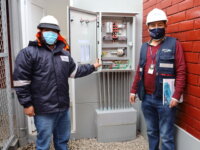
The Pasco Regional Government proposes free WiFi to enhance access to information and education in parks and squares, reducing digital divides. Customized home pages and user management aim to close regional digital gaps, fostering educational, professional, and commercial activities.
Case Study
Protected: Solución de Soporte Tecnológico para el Escrutinio (SST) con Certificación Digital…
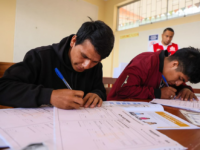
The Technological Support Solution for Scrutiny(TSS),developed by ONPE, modernizes Public Management and Digital Government. During elections,poll workers manually fill out multiple official records. The TSS digitalizes votes and produces printed records, simplifying their task. The results are encrypted and securely transmitted to the central office, speeding up their delivery. Additionally, digital certificates were introduced for electronic signatures, giving legal value to the generated PDFs
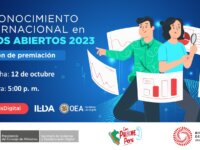
Initiative that promoted the publication of open data from public entities and encouraged its effective use by citizens. The initiative promotes open public data through the National Open Data Platform, meeting global standards and gaining recognition from organizations like OAS and ILDA. Collaboration enhances entities' international standing, fostering open data adoption. Emphasizing data openness, it spotlights leading institutions nationally and regionally, encouraging transparency and…
Case Study
Portal de Contrataciones Abiertas de la Compra Pública -Open Procurement Contracting Portal
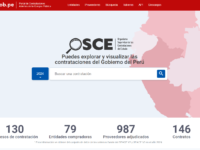
The Organismo Supervisor de las Contrataciones del Estado (OSCE) supervises public procurement, ensuring integrity and efficiency. Its Portal de Contrataciones Abiertas de la Compra Pública plays a crucial role, improving transparency with international standards. By implementing the Open Contracting Data Standard (OCDS), it provides detailed access, benefiting entities, suppliers, citizens and civil society.
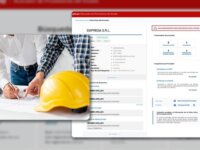
The "Ficha Única del Proveedor" created to address the lack of transparency in public procurement, consolidates key data about state suppliers, including composition, representatives, and legal background. This innovative tool empowers citizens and service users by providing detailed information, contributing to transparency and efficiency in public procurement. Verification of sanctions and additional records further enhances its utility.
Case Study
Unlocking Labour Markets: Removing Bureaucratic Barriers to Enhance Opportunities for the Young…
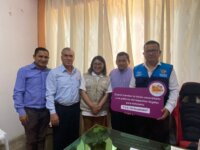
In 2022, INDECOPI identified that 23 universities and 10 professional associations were imposing +700 bureaucratic barriers, affecting the employment insertion of +36 thousand new professionals.
Given this, the Voluntary Elimination of Bureaucratic Barriers Programme was implemented to open regulated professional services at the subnational level.
Based on behavioral tools, INDECOPI engaged with universities and professional associations to eliminate 786 bureaucratic barriers in 17 regions.
In Peru, the lack of systematic evidence hinders efficient budget allocation and innovative public policy. The MEFLab addresses this by conducting experimental evaluations of programs and policies that benefit the Peruvian Ministries and the citizens through improved public services. The lab's innovation lies in using existing evidence, creativity, and collaboration to design new public policy solutions and promote evidence-based decision-making.
Case Study
Overcoming Complexity in Public Services: Facilitating Access to the Bureaucratic Barriers…

INDECOPI receives over 363 complaints a day. In terms of bureaucratic barriers, last year, 71% of the complaints were incomplete or inaccurate. To address this, we introduced new templates guided by behavioural insights. These templates simplify the process for complainants and change how we request further data from complainants to get us better information and improve the public service by eliminating bureaucratic barriers.