
This resource provides advice as well as tools for those involved in the development and implementation of public administration reform and sector strategies. It guides users through each stage of the development, implementation, monitoring and overall management of strategies. It covers:
problem analysis; prioritisation of reform ambitions;
setting of objectives; definition of indicators (with baselines and targets); action planning and costing; implementation monitoring, reporting and…
Good For: Decide on an approach
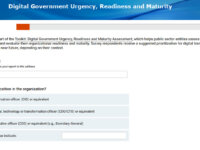
The "Toolkit: Digital Government Urgency, Readiness and Maturity Assessment" helps public sector entities assess urgency for digital transformation and evaluate their organizational readiness and maturity. Respondents of the freely accessible survey receive a suggested prioritization for digital transformation initiatives in the near future, depending on their context, as well as indicative digital maturity levels. An email address is required in order to receive the report.


The resource was developed for IFRC and National Societies to develop their literacy around data, but it could easily be applied to other organisations. It aims to promote responsible data use and develop data readiness. It has been tailored based on these audiences:
The Data Curious, who needs an ‘on ramp’ to learn and be exposed to the data basics.
The Data Advocate, who sees relevance and and wants to improve their skills and/or offer support.
The Data Active, who are motivated to…

This resource includes tools, approaches and resources for local authorities sharing non-personal data. The publishers intend it for those currently working in city governments as well as those supplying data sharing services to be able to find a common language and process in approaching the sharing of data. It focuses on both the technical and non-technical aspects of sharing data, including building data sharing partnerships, building a team, ecosystem mapping, and proposal and business case…
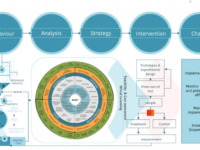
BASIC (Behaviour, Analysis, Strategies, Intervention, and Change) is an overarching framework for applying behavioural insights to public policy from the beginning to the end of the policy cycle. It is built on five stages that guides the application of behavioural insights and is a repository of best practices, proof of concepts and methodological standards for behavioural insights practitioners and policymakers who have become interested in applying behavioural insights to public policy.
The…

This resource provides South Australian Government organisations with guidance on the development and format of their digital strategies, which they distinguish separately from an information and communications technology (ICT) strategy. The toolkit contains guidance on the development and format of digital strategies, a digital maturity assessment tool, a digital transformation prioritisation tool, a digital strategy template, and an implementation plan template.
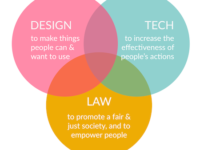
This is a set of resources for designers who are approaching legal challenges with a creative, generative, human-centered approach. The toolbox provides guides, tools, and examples to help you scope & tackle these challenges with design. It includes a Legal Communication Design Toolbox, a Legal Design Pattern Library, and a Legal Product Typology. It covers policy prototyping, visual design, and data visualisation.
A collection of online guidance and knowledge to assist countries and others in setting up open data strategies and platforms.
The resource is comprised seven sections:
Open Data Essentials, Starting an Open Data Initiative,Technology Options, Demand & Engagement, Supply & Quality of Data, Readiness Assessment Tool, and Technical Assistance and Funding.
The resource is intended for those working in the international development or social impact space to assesses the future impact that innovation can deliver in a system. It focuses on three "systems": The Problem Space, The Innovation Space, The Context.
It's goals are to precipitate better understanding of the problem of focus and the context in which it exists, assess enablers and barriers
to innovation, track system change over time, and assess the impact of a program ex post facto. It…

This resource is a series of tools to help clarify, plan, collect, and use data, information and evidence to evaluate an innovation as well as spread the learnings and results. It is intended to be used throughout a project to incorporate evaluative and intentional processes and feedback loops.