

Cities often invest in traffic solutions based on guesswork, wasting public money on interventions that may not work. Joinville built a Smart Mobility methodology that combines real-time traffic data from a partnership with Waze and open-source traffic simulation software (SUMO) to test solutions digitally before any physical work begins. This evidence-based approach has made mobility decisions faster, cheaper, and more effective — saving public funds and improving daily life for residents.
Case Study Library
Where innovations are collected and shared to disseminate and replicate good ideas

Innovations:
0
This website, as well as any data and map included herein, are without prejudice to the status of or sovereignty over any territory, to the delimitation of international frontiers and boundaries and to the name of any territory, city or area.

AI tool integrated into the national OuvidorSUS platform developed by the General Ombudsman’s Office of the Brazilian Ministry of Health is innovation meant to enhance the Public Health System’s responsiveness to citizens. Platform which - used by more than 2k health ombudsman offices - is enhanced by artificial intelligence to organize and analyse citizens’ submissions and optimize workflows. This allows staff to focus on meaningful human engagement while enabling decision-makers to…
Case Study
SEA Observatory: Contextual AI governance intelligence and decision rehearsal for Southeast Asia
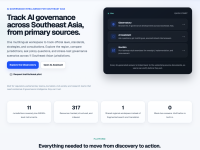
SEA Observatory Platform is public-interest AI governance infrastructure for Southeast Asia. It brings together 350+ official resources across 11 jurisdictions and ASEAN, helps institutions verify rules against primary sources, and uses GovSim (Governance Simulator) to rehearse procurement, oversight, and implementation choices before harm occurs. Its innovation is one auditable workflow from policy discovery to verification to decision rehearsal.
In Hungary, navigating government services meant deciphering bureaucratic language across dozens of unconnected portals; most people queued at a government window instead.
The Digital Citizenship Programme (DÁP) reorganised this from the citizen's perspective: one mobile-first ecosystem with digital identity, binding e-signatures, and services organised around life events.
Within 18 months, 1.66M citizens registered voluntarily, completing now in minutes what previously demanded a visit in…

Many deaf citizens still struggle to complete essential government services because they cannot easily communicate with staff. Our innovation is an AI system that instantly translates between spoken Arabic and Arabic Sign Language, using a signing avatar and camera. It lets deaf citizens deal with Civil Affairs independently, privately, and with dignity.
Case Study
Gyeonggi Climate Insurance: A Universal Public Insurance Model for Climate Risk Protection

Gyeonggi Climate Insurance is a universal public climate insurance program that automatically covers all 14.2 million residents of Gyeonggi Province without requiring enrollment or premium payments. Fully funded by the provincial government, the program provides financial protection against health damage caused by climate-related risks such as heatwaves, cold waves, infectious diseases, and climate-related accidents.
The National Digital Data Platform is Italy’s secure data-sharing infrastructure that allows public institutions to reuse each other’s information instead of repeatedly asking citizens and businesses for the same data. It simplifies access to services, reduces administrative burden and enables data-driven government through a common, trusted API-based interoperability layer.
Case Study
Designsystemet – A cross-government design system improving accessibility and efficiency in…
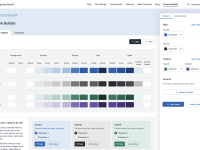
The Norwegian government has developed Designsystemet, a shared foundation for building accessible and consistent digital services. It provides reusable UI components, design guidelines and patterns that help organisations develop services faster while meeting accessibility requirements. Developed collaboratively across government, Designsystemet is technology-agnostic and recognised as a Digital Public Good, meaning organisations worldwide can use, adapt and contribute to improving it.
Case Study
National ESG Data Map (esg.ekt.gr): a public ESG data-governance platform for benchmarking, green…
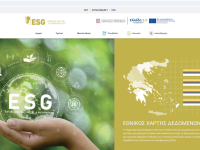
Greece lacked comparable Environmental, Social and Governance (ESG) data across firms. The National ESG Data Map (esg.ekt.gr) is a public digital platform that collects data from trusted sources, standardises them and publishes comparable ESG indicators and dashboards for businesses and policy makers. It supports targeted policy and green finance decisions and helps companies prepare for EU sustainability reporting.
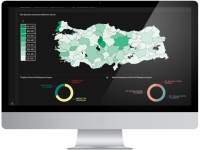
Developed by the Ministry of Health to analyze data flowing from all healthcare facilities in real time, SINA is an advanced, big data-driven decision support platform that enables real-time data visualization, interpretation, and comparison. Integrated with the AI assistant JAS in 2026, SINA allows users to gain insights by asking questions in natural language. By leveraging big data and causal analysis, SINA improves health policies, service delivery, and public health outcomes.