
In Hungary, navigating government services meant deciphering bureaucratic language across dozens of unconnected portals; most people queued at a government window instead.
The Digital Citizenship Programme (DÁP) reorganised this from the citizen's perspective: one mobile-first ecosystem with digital identity, binding e-signatures, and services organised around life events.
Within 18 months, 1.66M citizens registered voluntarily, completing now in minutes what previously demanded a visit in…
Innovation Tag: Design
Case Study
Designsystemet – A cross-government design system improving accessibility and efficiency in…
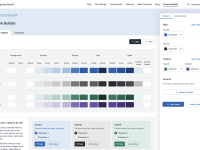
The Norwegian government has developed Designsystemet, a shared foundation for building accessible and consistent digital services. It provides reusable UI components, design guidelines and patterns that help organisations develop services faster while meeting accessibility requirements. Developed collaboratively across government, Designsystemet is technology-agnostic and recognised as a Digital Public Good, meaning organisations worldwide can use, adapt and contribute to improving it.
Many citizens face difficulties navigating government websites because information is often complex, overly technical, or gender biased. To address this challenge, Tesorería General de la República developed AInclusiva, an AI tool that scans institutional content to provide instant recommendations for clearer, more empathetic, and inclusive communication. This innovation automates the alignment of public data with official accessibility standards, creating a scalable model to ensure no one is…
Complex government documents may confuse citizens, making it difficult to access services such as pensions or benefits. This work engages GenAI to rewrite these texts in plain language, maintaining legal accuracy while increasing clarity. Focused on the Service Pages of Italy's National Institute of Social Security portal, which serves 45 million users, AI surpassed human experts in user preference, enabling the Institute to communicate inclusively and at scale.
The study integrates Artificial Intelligence (AI) techniques, and a digital twin methodology to process and interpret urban data streams derived from citizen interactions with the city's coordinate-based problem mapping platform. Using an interactive GeoDataFrame within the digital twin methodology, dynamic entities facilitate simulations based on various scenarios, allowing users to visualize, analyze, and predict the response of the urban system at
Case Study
Thematic Innovation Clinic to improve the quality and quantity of public service innovations
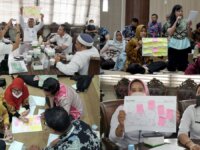
Thematic Innovation Clinic was implemented to encourage and increase number and quality of innovations in Pontianak City. This program succeeded in increasing the number of innovations within the Pontianak City Government to 165 innovations in 2022, and to 196 innovations in 2023. With a design thinking approach, the innovation clinic increases the number of innovations, fosters the spirit and culture of innovation, and cross-party collaboration to deliver optimal public services to community.

Zaragoza City Council has launched a new electronic citizen participation platform with the aim of involving its citizens in public policy decisions and in the design of its services. It provides an interactive space for residents to actively contribute, strengthening the collaboration between the administration and the community, thus fostering a more inclusive and transparent management.
The National Injury Insurance Agency Queensland in partnership with Queensland University of Technology is revolutionising support for those severely injured in accidents by offering a digital platform for easier access to services and self-management. This initiative provides a seamless, empowering user experience, enhancing independence and trust in public support systems. It's innovative because it transforms traditional, paper-based processes into an accessible, efficient digital solution.
People are demanding increased transparency and participation in government decision-making processes. Project Heart brought together people with lived experience, researchers, designers, and policy analysts to co-envision a way for engagement to be meaningful and bring about more caring and equitable futures for all. The findings are a rallying call for governments to change common practices and move towards co-designing policies/programs as a path to (re)building community relationships.
In New Zealand, a new unit in the Ministry for the Environment / Manatū Mō Te Taiao was set up. This new unit was a deliberate decision to focus on behavioural science, systems thinking, design thinking and human system-dynamics to help the organisation, designing for the systems we focus on. It is innovative because it is bringing this type of thinking together in a single team, embedding this in a policy organisation, using the multidisciplinary skills.