
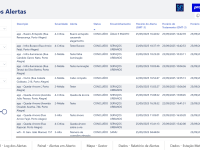
Conecta is a platform that allows public administrators to use technology to anticipate problems faced by cities during extreme weather events, such as flooding, landslides, accidents, and fallen trees. The platform integrates and unifies real-time alerts from different technological sources, enabling faster decision-making and more effective emergency response. Additionally, all the data generated and compiled will allow society to understand new reality and measure how efficiently public…
Innovation Tag: Systems Change
Government digital systems can create invisible barriers for civil servants and citizens. Experiência.Gov is an evidence-based UX methodology created by public servants at Brazil’s Ministry of Management and Innovation in Public Services to identify and eliminate these frictions. The approach combines behavioral science, observation of real use, and agile prototyping to turn usage evidence into concrete improvements in government digital systems.
Case Study
Shared Services Center “ColaboraGov”: An Innovative Model for Delivering Administrative Services…
In order to enable strategic ministerial expansion without increasing costs, ColaboraGov centralizes the sharing of administrative support services among 13 ministries. It ensures savings in resources, gains in scale and quality, and standardized service provision. It comprises more than 41,000 civil servants, 374 services and has an impact on 10 areas - such as human resources, finance and logistics - thus making it easier for the government to direct its efforts towards final public policies.
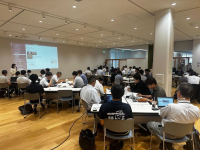
Digital Transformation Co-Creation Platform enables national and local governments to co-create policies and services through knowledge sharing and mutual learning. In Japan, diverse knowledge and challenges exist across about 1,780 local governments but are not adequately shared due to hierarchical communication structures. Digital Agency has developed a co-creation ecosystem where government officers nationwide can engage in open, flat, and two-way communications as individuals.
Case Study
High Impact Service Provider Case Study: Innovating the Individual Assistance Program For Survivors…
The Federal Emergency Management Agency (FEMA), a component of the United States’ Federal Government, has fully reimagined its DisasterAssistance.gov website to make applying for disaster assistance faster than ever. This change will reduce time burdens for survivors post-disaster, when they are in greatest need and the most overwhelmed. This effort has been built on decades of feedback from disaster survivors and is expected to reduce the registration time by more than 15%.
The Government of Canada is experimenting writing existing laws and proposed regulations into code. Encoding rules allows us to run legal simulations in the regulatory drafting room, which helps us detect ambiguities, loopholes, and gaps in the rules that often go unnoticed. However, existing tools designed by and for programmers are not intuitive for rule-makers. In response, we set out to develop one – an open-source Rules as Code tool called Blawx.
Baia Mare has developed a community-driven approach to decontaminate heavy metal-polluted land using plants, addressing a critical public health issue. The project combines phytoremediation, smart mapping technology, and a digital reward system to encourage environmental action and sustainable development. This innovative model empowers citizens, improves urban health, and creates new green economic opportunities.
The National Internship Program, coordinated by the Presidency of the Republic of Türkiye Human Resources Office, is a nationwide program designed to assist youth employability and school-to-work transition. It involves all public institutions and voluntary employers with the aim of providing internship opportunities for university students with principles of equal opportunity and merit ensured by its platform. The Program helped and encouraged candidates to engage in activities for their…
In 2023, Estonia was the first in Europe to star using a nationwide food card, giving people the freedom to buy the food what they want and how they want. Aid is loaded on the card each quarter and must be used by the end of the quarter. If there is not enough money on the card, the remainder can be paid by bank card or cash (the balance can be checked on a receipt, at self-checkout or by customer service). Recipients in need have the autonomy to curate their own food baskets, tailoring their…

Good Coffee is a Vocational Engagement Enterprise that organises a chain of social cafes for people with complex psychosocial disabilities. The cafes provide vocational rehabilitation on a work place and for some, introductory training is already given during their hospitalization in Mental Health Centers. The model enables continuity of care and transition between the realms of Health, Social Services and Employment. Good Coffee also reduces public funding, increases independent living and…