

Cities often invest in traffic solutions based on guesswork, wasting public money on interventions that may not work. Joinville built a Smart Mobility methodology that combines real-time traffic data from a partnership with Waze and open-source traffic simulation software (SUMO) to test solutions digitally before any physical work begins. This evidence-based approach has made mobility decisions faster, cheaper, and more effective — saving public funds and improving daily life for residents.
Innovation Tag: Methods and Tools
Case Study
Designsystemet – A cross-government design system improving accessibility and efficiency in…
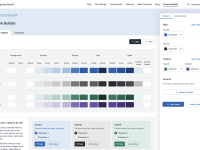
The Norwegian government has developed Designsystemet, a shared foundation for building accessible and consistent digital services. It provides reusable UI components, design guidelines and patterns that help organisations develop services faster while meeting accessibility requirements. Developed collaboratively across government, Designsystemet is technology-agnostic and recognised as a Digital Public Good, meaning organisations worldwide can use, adapt and contribute to improving it.
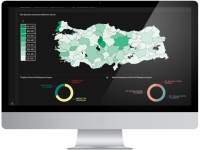
Developed by the Ministry of Health to analyze data flowing from all healthcare facilities in real time, SINA is an advanced, big data-driven decision support platform that enables real-time data visualization, interpretation, and comparison. Integrated with the AI assistant JAS in 2026, SINA allows users to gain insights by asking questions in natural language. By leveraging big data and causal analysis, SINA improves health policies, service delivery, and public health outcomes.
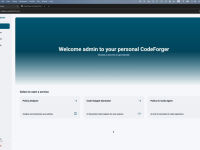
Government entities often face delays and inconsistent implementation because complex digital policies are difficult to translate into clear technical action. DGCP is an AI-enabled platform that converts policy documents into actionable technical requirements and implementation-ready outputs, helping government teams deliver more compliant and consistent digital services. It is innovative because it connects policy interpretation and technical execution in one workflow.
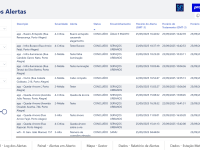
Conecta is a platform that allows public administrators to use technology to anticipate problems faced by cities during extreme weather events, such as flooding, landslides, accidents, and fallen trees. The platform integrates and unifies real-time alerts from different technological sources, enabling faster decision-making and more effective emergency response. Additionally, all the data generated and compiled will allow society to understand new reality and measure how efficiently public…
Case Study
Humble Governance Journey: From Risk Aversion to Building Adaptive Leadership Capacity in…

Latvia's public administration struggles with complex challenges due to siloed operations and a deep fear of failure. Rather than structural reforms alone, Latvia is pioneering cultural shift through Humble Governance framework by Demos Helsinki with Prof. Charles Sabel (Columbia Law School) prioritising trust, shared responsibility, and courage under uncertainty. Cross-ministerial teams tackle real challenges through experimentation, shifting from a zero-mistake culture to iterative learning.
Governments often struggle to decide which emerging technologies are worth adopting and how to apply them responsibly. The Future Technology Observatory helps government entities identify, assess, and test high-potential technologies before adoption. It is innovative because it connects technology foresight with practical experimentation and adoption guidance in one shared government capability.
Case Study
FCINCO Anti-Sludge: a systematic method to identify and remove behavioural barriers in digital…
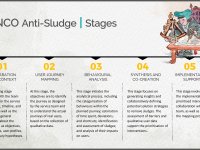
Digital public services often fail not only due to lack of provision, but because of invisible barriers that hinder or even prevent citizens from accessing and interacting with government in digital environments.
The FCINCO Anti-Sludge method systematically identifies and removes these barriers. Applied in real services, it can improve access, reduce friction, and increase the efficiency of public service delivery.
The innovation was developed to help Caruaru address violence by using data to identify the most vulnerable groups. The Violence Prevention Observatory brings together information from various public services to better understand the root causes of violence and to design effective solutions. By integrating data from areas such as education, health, and public safety, the project offers an innovative approach that enables more preventive and better-coordinated actions to protect citizens at risk.
Case Study
Shared Services Center “ColaboraGov”: An Innovative Model for Delivering Administrative Services…
In order to enable strategic ministerial expansion without increasing costs, ColaboraGov centralizes the sharing of administrative support services among 13 ministries. It ensures savings in resources, gains in scale and quality, and standardized service provision. It comprises more than 41,000 civil servants, 374 services and has an impact on 10 areas - such as human resources, finance and logistics - thus making it easier for the government to direct its efforts towards final public policies.