Skip to content
An official website of the OECD. Find out more
Created by the Public Governance Directorate

This website was created by the OECD Observatory of Public Sector Innovation (OPSI), part of the OECD Public Governance Directorate (GOV).

How to validate authenticity

Validation that this is an official OECD website can be found on the Innovative Government page of the corporate OECD website.

Gyeonggi Climate Insurance is a universal public climate insurance program that automatically covers all 14.2 million residents of Gyeonggi Province without requiring enrollment or premium payments. Fully funded by the provincial government, the program provides financial protection against health damage caused by climate-related risks such as heatwaves, cold waves, infectious diseases, and climate-related accidents.
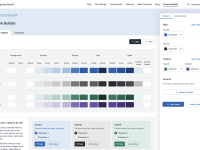
The Norwegian government has developed Designsystemet, a shared foundation for building accessible and consistent digital services. It provides reusable UI components, design guidelines and patterns that help organisations develop services faster while meeting accessibility requirements. Developed collaboratively across government, Designsystemet is technology-agnostic and recognised as a Digital Public Good, meaning organisations worldwide can use, adapt and contribute to improving it.
Gaeilge365 was created to respond to growing demand for bilingual public services while opportunities to use Irish in everyday local authority services remained limited. It redesigns existing services to create real speaking opportunities, increasing annual use from 10,000 to over 26,000 in one year, with a target of 150,000 by 2028. It is innovative because it replaces translation‑based compliance with a scalable, measured service model that delivers clear social impact.
“Madrid, Digital Capital” is a city-wide transformation model that redesigns how Madrid delivers services and makes decisions using real-time data and digital tools. It simplifies procedures, improves daily services and helps the city respond faster to citizens and businesses. It is innovative because it turns digital transformation into a single, measurable system for running government, not just isolated projects, and that is fully user and citizen centred and also environmental centred.
Latvia's public administration struggles with complex challenges due to siloed operations and a deep fear of failure. Rather than structural reforms alone, Latvia is pioneering cultural shift through Humble Governance framework by Demos Helsinki with Prof. Charles Sabel (Columbia Law School) prioritising trust, shared responsibility, and courage under uncertainty. Cross-ministerial teams tackle real challenges through experimentation, shifting from a zero-mistake culture to iterative learning.
Digital Transformation Co-Creation Platform enables national and local governments to co-create policies and services through knowledge sharing and mutual learning. In Japan, diverse knowledge and challenges exist across about 1,780 local governments but are not adequately shared due to hierarchical communication structures. Digital Agency has developed a co-creation ecosystem where government officers nationwide can engage in open, flat, and two-way communications as individuals.
The program offers an online Human Rights course for civil servants with modules from 15 Public Administration entities. It includes initial and final webinars featuring the Ombudsman and three civil society associations, respectively. Graduates propose initiatives to implement Human Rights, fostering a "Network of Ambassadors for the Promotion of Human Rights in Public Administration." A Best Practices Guide will highlight implemented projects.
Gov.gr has boosted the number of digital systems and services in Greece and dramatically increased the number of their users (>70% of the population). In this direction, HowTo has been designed to deliver simple, online micro-courses, that guide citizens and public servants in the use of the new systems and services. HowTo supports continuous training for new features and capabilities and certification where needed. Its communities foster collaboration and peer-to-peer problem-solving.
The Network of Public Services (NPD) was established to collectively support and inspire public services, share knowledge and expertise and to lobby policy and politics. The NPD is an informal network of over 80 public services. Together, we present a strong voice towards politics and policy to make our wishes feasible, aiming for improving public services for citizens and entrepreneurs.
Karolinska University Hospital is piloting a new model for nurse-led innovation. The model consists of a framework for enabling nursing organisations to work with innovation and a nurse-led innovation hub concept, where nurses can collaborate with the industry to co-develop solutions for healthcare. Through this, the hospital puts nurses in the driving seat of innovation in healthcare to both develop better solutions for healthcare and promote a sustainable work life for frontline staff.