Skip to content
An official website of the OECD. Find out more
Created by the Public Governance Directorate

This website was created by the OECD Observatory of Public Sector Innovation (OPSI), part of the OECD Public Governance Directorate (GOV).

How to validate authenticity

Validation that this is an official OECD website can be found on the Innovative Government page of the corporate OECD website.

Gyeonggi Climate Insurance is a universal public climate insurance program that automatically covers all 14.2 million residents of Gyeonggi Province without requiring enrollment or premium payments. Fully funded by the provincial government, the program provides financial protection against health damage caused by climate-related risks such as heatwaves, cold waves, infectious diseases, and climate-related accidents.
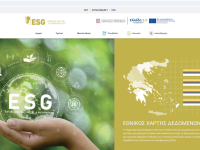
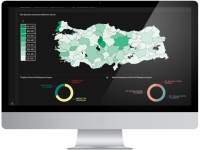
Greece lacked comparable Environmental, Social and Governance (ESG) data across firms. The National ESG Data Map (esg.ekt.gr) is a public digital platform that collects data from trusted sources, standardises them and publishes comparable ESG indicators and dashboards for businesses and policy makers. It supports targeted policy and green finance decisions and helps companies prepare for EU sustainability reporting.
Developed by the Ministry of Health to analyze data flowing from all healthcare facilities in real time, SINA is an advanced, big data-driven decision support platform that enables real-time data visualization, interpretation, and comparison. Integrated with the AI assistant JAS in 2026, SINA allows users to gain insights by asking questions in natural language. By leveraging big data and causal analysis, SINA improves health policies, service delivery, and public health outcomes.
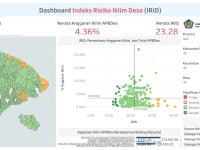
Indonesia ranks as world's second most disaster-prone country, with climate-related losses reaching Rp50 trillion (±USD 3 billion) annually. Over 75,000 villages bear the greatest burden of climate and disaster risks, yet often lack the data needed to allocate climate and disaster budgets effectively. IRID Dashboard, developed by the Ministry of Finance, integrates climate risk indices, village budgets, and fiscal transfers into one free, map-based platform. Users can filter and analyze data…
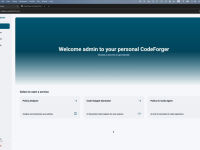
Government entities often face delays and inconsistent implementation because complex digital policies are difficult to translate into clear technical action. DGCP is an AI-enabled platform that converts policy documents into actionable technical requirements and implementation-ready outputs, helping government teams deliver more compliant and consistent digital services. It is innovative because it connects policy interpretation and technical execution in one workflow.
New Brunswick faces an urban development challenge driven by record population growth, which also impacts biodiversity flow on the outskirts of urban regions. This Project used advanced virtual simulation technology to help municipalities evaluate urban development and infrastructure solutions before implementation. By creating digital replicas of cities and rural land use, decision-makers can test hundreds of scenarios and make evidence-based choices that improve territory management.
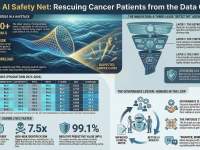
Chile manages 400,000+ surgical waiting list records monthly. Cancer patients often remain invisible within this volume — despite facing 7.5x higher mortality than the rest. We built a sovereign in-house AI that screens oncological risk across all 29 national Health Services, flagging a high-risk group in hours instead of weeks. Sensitivity: 95%. Manual review burden cut 99.76%. No vendor, no black box: AI flags risk, humans decide. Every patient, every region, the same standard.
The innovation was developed to help Caruaru address violence by using data to identify the most vulnerable groups. The Violence Prevention Observatory brings together information from various public services to better understand the root causes of violence and to design effective solutions. By integrating data from areas such as education, health, and public safety, the project offers an innovative approach that enables more preventive and better-coordinated actions to protect citizens at risk.
Despite ambitious climate pledges, a persistent “last-mile” gap remains: individual climate actions are often undervalued within existing frameworks. Gyeonggi Province addresses this gap by converting verified citizen actions into measurable public value and rewarding participants with local currency to support local economies. By reinvesting these rewards in climate technologies, the initiative transforms citizens from policy beneficiaries into active co-creators of a sustainable future.
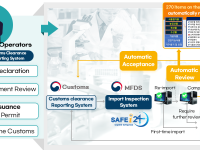
The Korean Ministry of Food and Drug Safety (MFDS) has developed SAFE-i24, an automated digital review system, to handle the growing number of imported food declarations. This allows inspectors to perform their duties more efficiently, and it has reduced unnecessary complaints. Additionally, importers can now process their declarations within five minutes, 24/7, saving both time and money during the customs clearance process.