Skip to content
An official website of the OECD. Find out more
Created by the Public Governance Directorate

This website was created by the OECD Observatory of Public Sector Innovation (OPSI), part of the OECD Public Governance Directorate (GOV).

How to validate authenticity

Validation that this is an official OECD website can be found on the Innovative Government page of the corporate OECD website.

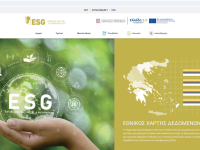
Greece lacked comparable Environmental, Social and Governance (ESG) data across firms. The National ESG Data Map (esg.ekt.gr) is a public digital platform that collects data from trusted sources, standardises them and publishes comparable ESG indicators and dashboards for businesses and policy makers. It supports targeted policy and green finance decisions and helps companies prepare for EU sustainability reporting.
Developed by the Ministry of Health to analyze data flowing from all healthcare facilities in real time, SINA is an advanced, big data-driven decision support platform that enables real-time data visualization, interpretation, and comparison. Integrated with the AI assistant JAS in 2026, SINA allows users to gain insights by asking questions in natural language. By leveraging big data and causal analysis, SINA improves health policies, service delivery, and public health outcomes.
The Matrix gives public organisations a data‑driven understanding of how their services work for people. By combining user experience, operational and regulatory data, it exposes the areas where improvements matter most. It then guides teams to act on that evidence, helping create more effective and responsive public services
Wildfires is one of the main causes of blackouts in Brazil. To monitor the thousands of Brazilian Transmission Lines (TLs), ANEEL created the GGT System, which consists of a tool that uses Artificial Intelligence and satellite images processing to preventively inspect the maintenance of TLs against wildfires. With the GGT System, there was a 89% reduction in shutdowns caused by wildfires, representing a great improvement in the reliability of the electricity offered to the Brazilian population.
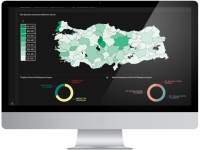
Bağcılar Municipality has implemented an Algorithmic Decision Systems model with the aim of maximizing the value proposition and satisfaction level offered to stakeholders at the minimum cost. This model enables the municipality to make decisions regarding the investment worthiness of its current and planned services and activities, as well as the direction of improvements needed in existing products and services, both in the eyes of stakeholders and the organization.
Chile has registered 700 public programmes. The annual performance monitoring is carried out by two institutions: SES/Dipres, so it is not a simple task. In order to contribute to greater transparency in the use of public resources, SES/Dipres incorporated the principles of innovation: co-creation and testing of improvements to the process. The result was a substantial improvement in the quality of the monitoring reports, making them a relevant input for decision-making.
In order to continuously improve public policies and correct any deployment difficulties, the French Government has set up a data-driven steering system that allows it to monitor the results of more than 60 priority policies across all departments in its territory. This system is embodied by an internal steering and monitoring tool (PILOTE) and a citizen information site presenting the results in open data.
The Government of Canada is experimenting writing existing laws and proposed regulations into code. Encoding rules allows us to run legal simulations in the regulatory drafting room, which helps us detect ambiguities, loopholes, and gaps in the rules that often go unnoticed. However, existing tools designed by and for programmers are not intuitive for rule-makers. In response, we set out to develop one – an open-source Rules as Code tool called Blawx.
In Peru, the lack of systematic evidence hinders efficient budget allocation and innovative public policy. The MEFLab addresses this by conducting experimental evaluations of programs and policies that benefit the Peruvian Ministries and the citizens through improved public services. The lab's innovation lies in using existing evidence, creativity, and collaboration to design new public policy solutions and promote evidence-based decision-making.
The Ministry of Environment, Water, and Agriculture in Saudi Arabia proudly introduces the innovative mobile application called Livestock Chain as a groundbreaking solution leveraging Blockchain technology to effectively manage livestock data within the all country regions. This visionary application is designed to preserve the rich heritage of livestock while offering a secure mechanism for data storage and retrieval, by assigning each livestock a unique identifier.