
In Hungary, navigating government services meant deciphering bureaucratic language across dozens of unconnected portals; most people queued at a government window instead.
The Digital Citizenship Programme (DÁP) reorganised this from the citizen's perspective: one mobile-first ecosystem with digital identity, binding e-signatures, and services organised around life events.
Within 18 months, 1.66M citizens registered voluntarily, completing now in minutes what previously demanded a visit in…
Innovation Tag: Process Improvement/Simplification
The National Digital Data Platform is Italy’s secure data-sharing infrastructure that allows public institutions to reuse each other’s information instead of repeatedly asking citizens and businesses for the same data. It simplifies access to services, reduces administrative burden and enables data-driven government through a common, trusted API-based interoperability layer.
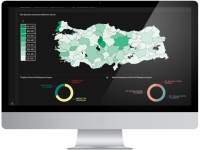
Developed by the Ministry of Health to analyze data flowing from all healthcare facilities in real time, SINA is an advanced, big data-driven decision support platform that enables real-time data visualization, interpretation, and comparison. Integrated with the AI assistant JAS in 2026, SINA allows users to gain insights by asking questions in natural language. By leveraging big data and causal analysis, SINA improves health policies, service delivery, and public health outcomes.

The Saudi Commission for Health Specialties introduced Basma as a new model to help healthcare professionals navigate complex regulatory services more easily. The platform uses artificial intelligence and a localized avatar to translate regulations into clear, step-by-step guidance, enabling practitioners to understand requirements and complete processes independently. This improves access to services, reduces confusion, and enhances the efficiency of regulatory service delivery.
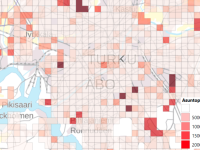
A digital population twin, combined with financial impact analysis, helps governments anticipate how demographic change and shifting risk patterns affect future service needs and costs. Built from real population data and enriched with research and administrative data, it supports precise forecasting, simulation, and planning. In Finland, it has been used to model future accident risks for rescue services at a highly detailed spatial level.
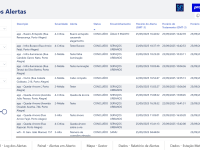
Conecta is a platform that allows public administrators to use technology to anticipate problems faced by cities during extreme weather events, such as flooding, landslides, accidents, and fallen trees. The platform integrates and unifies real-time alerts from different technological sources, enabling faster decision-making and more effective emergency response. Additionally, all the data generated and compiled will allow society to understand new reality and measure how efficiently public…

New Brunswick faces an urban development challenge driven by record population growth, which also impacts biodiversity flow on the outskirts of urban regions. This Project used advanced virtual simulation technology to help municipalities evaluate urban development and infrastructure solutions before implementation. By creating digital replicas of cities and rural land use, decision-makers can test hundreds of scenarios and make evidence-based choices that improve territory management.
“Madrid, Digital Capital” is a city-wide transformation model that redesigns how Madrid delivers services and makes decisions using real-time data and digital tools. It simplifies procedures, improves daily services and helps the city respond faster to citizens and businesses. It is innovative because it turns digital transformation into a single, measurable system for running government, not just isolated projects, and that is fully user and citizen centred and also environmental centred.

Many rural communities face difficulties accessing government services due to distance, ageing populations and digital barriers. Navarra created Mobile Citizen Offices: travelling public service units that bring administrative procedures and digital support directly to small municipalities. By reversing the traditional model—government travelling to citizens—the initiative reduces territorial inequalities, simplifies access to administration and strengthens trust in public institutions.
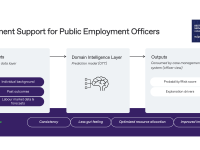
OTT2 helps Estonia’s Unemployment Insurance Fund identify which jobseekers are most at risk of long-term unemployment. It combines data from public registries and updates each person’s employment outlook as their situation changes, helping counsellors provide more timely and tailored support. This is innovative because it replaces a labour-intensive and inconsistent manual process with a dynamic, explainable and highly accurate system that improves how public resources are used.