

Cities often invest in traffic solutions based on guesswork, wasting public money on interventions that may not work. Joinville built a Smart Mobility methodology that combines real-time traffic data from a partnership with Waze and open-source traffic simulation software (SUMO) to test solutions digitally before any physical work begins. This evidence-based approach has made mobility decisions faster, cheaper, and more effective — saving public funds and improving daily life for residents.
Innovation Tag: Cross-Sector Partnerships
Case Study
Designsystemet – A cross-government design system improving accessibility and efficiency in…
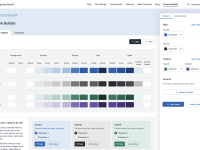
The Norwegian government has developed Designsystemet, a shared foundation for building accessible and consistent digital services. It provides reusable UI components, design guidelines and patterns that help organisations develop services faster while meeting accessibility requirements. Developed collaboratively across government, Designsystemet is technology-agnostic and recognised as a Digital Public Good, meaning organisations worldwide can use, adapt and contribute to improving it.
Case Study
Mano a Mano: Transforming Social Policy through Data-Driven, Whole-of-Government Coordination in…

Guatemala's Mano a Mano transforms fragmented social policy into an integrated, data-driven system. By creating the Social Household Registry (RSH) and a coordination system, the innovation eliminates institutional silos, reduces clientelism, and enables real-time tracking of interventions across 11 institutions—resulting in more precise targeting of vulnerable households and measurable reductions in poverty and malnutrition through coordinated territorial interventions.

New Brunswick faces an urban development challenge driven by record population growth, which also impacts biodiversity flow on the outskirts of urban regions. This Project used advanced virtual simulation technology to help municipalities evaluate urban development and infrastructure solutions before implementation. By creating digital replicas of cities and rural land use, decision-makers can test hundreds of scenarios and make evidence-based choices that improve territory management.

The "Programa Justiça Cidadã" in Brazil's Roraima state, led by the State Court of Justice, extends legal services to remote regions, including indigenous and riverside communities, addressing the needs of Venezuelan migrants. Through permanent service points and digital integration, it promotes inclusivity and accessibility, ensuring all residents can access legal support.
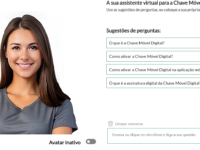
The Virtual Assistant project targets every person that may come to require information on how to access and make use of Portuguese Public Services. It takes the shape of an AI driven ChatBot (powered by ChatGPT3.5), designed on Azure Cloud AI architecture as a public/private partnership. Our Innovation demonstrates a clear use case for AI within the public sector, and it was developed to address effectiveness, efficacy and quality issues inherent to the provision of public services.
The program offers an online Human Rights course for civil servants with modules from 15 Public Administration entities. It includes initial and final webinars featuring the Ombudsman and three civil society associations, respectively. Graduates propose initiatives to implement Human Rights, fostering a "Network of Ambassadors for the Promotion of Human Rights in Public Administration." A Best Practices Guide will highlight implemented projects.
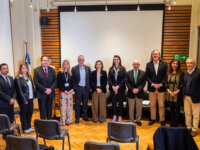
Futures and foresight methods are fundamental tools to inform decision-making and public policy in order to consider a wide range of future possibilities. The creation of a Latin American Future Network seeks to articulate existing efforts from many countries and enhance capacity building in the region, since capacities are still not well developed. This will benefit citizens by improving public sector services and future-proofing policies aimed at the population wellbeing.
The Ministry of Environment, Water, and Agriculture in Saudi Arabia proudly introduces the innovative mobile application called Livestock Chain as a groundbreaking solution leveraging Blockchain technology to effectively manage livestock data within the all country regions. This visionary application is designed to preserve the rich heritage of livestock while offering a secure mechanism for data storage and retrieval, by assigning each livestock a unique identifier.
Baia Mare has developed a community-driven approach to decontaminate heavy metal-polluted land using plants, addressing a critical public health issue. The project combines phytoremediation, smart mapping technology, and a digital reward system to encourage environmental action and sustainable development. This innovative model empowers citizens, improves urban health, and creates new green economic opportunities.