

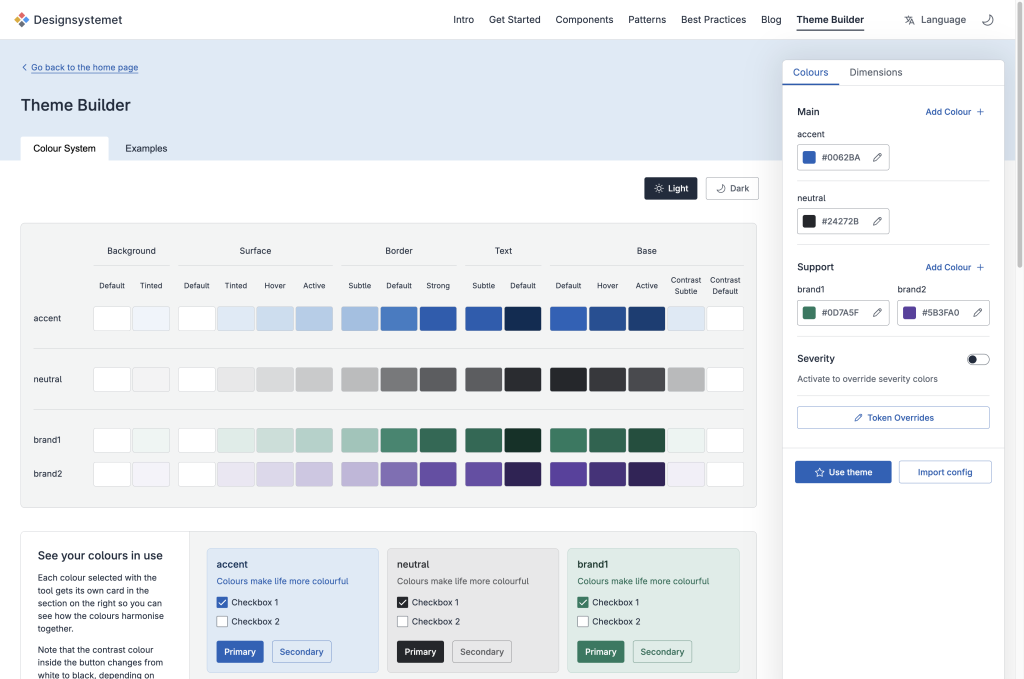
The Norwegian government has developed Designsystemet, a shared foundation for building accessible and consistent digital services. It provides reusable UI components, design guidelines and patterns that help organisations develop services faster while meeting accessibility requirements. Developed collaboratively across government, Designsystemet is technology-agnostic and recognised as a Digital Public Good, meaning organisations worldwide can use, adapt and contribute to improving it.
Innovation Summary
Innovation Overview
Governments often develop digital services independently, which can lead to duplicated work, inconsistent user experiences and accessibility challenges. At the same time, public organisations must meet strict accessibility requirements while responding to increasing expectations from citizens for clear, efficient and reliable digital services. Without shared solutions and guidance, teams spend time solving the same problems repeatedly, and scarce expertise in areas such as accessibility, design and front-end development is spread thinly across organisations.
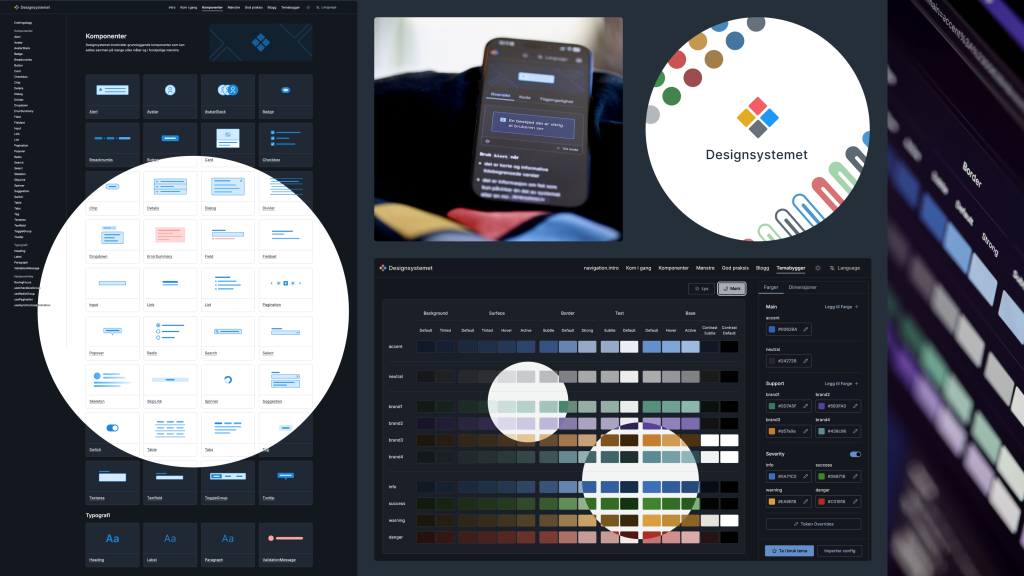
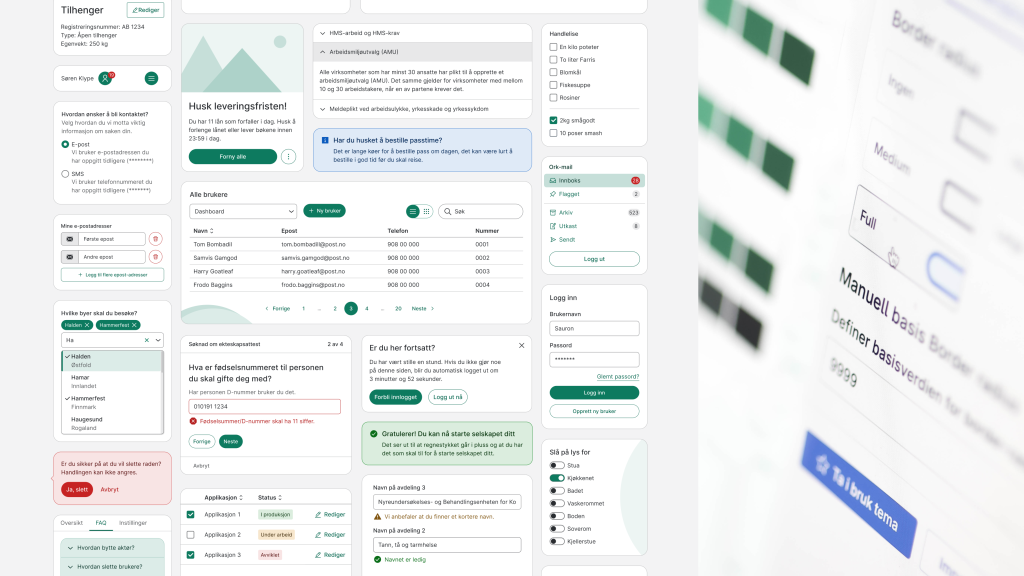
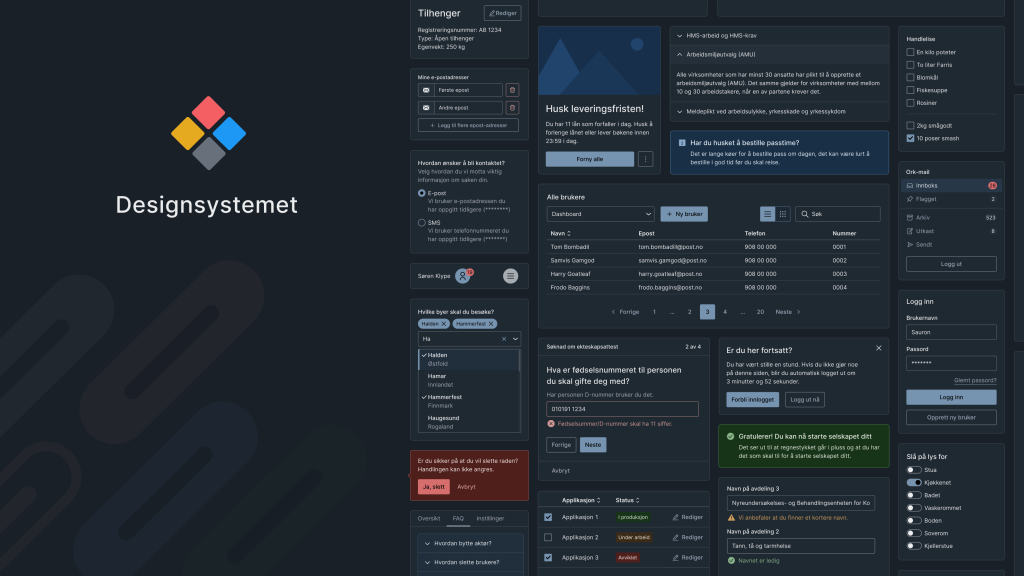
Designsystemet addresses this challenge by providing a shared toolkit for developing digital public services. It includes reusable UI components, design guidelines and service patterns that help teams design and build accessible and consistent services more efficiently. Accessibility is built into the components from the start, helping organisations meet national requirements for universal design while improving the overall quality and usability of services.
Designsystemet is developed collaboratively by a cross-government team including The Norwegian Digitalisation Agency, the Brønnøysund Register Centre, the Norwegian Food Safety Authority, the Directorate for Education and Training and KS Digital. Several other organisations contribute through an open community, open source collaboration and cross-government pattern collaboration groups. By pooling scarce expertise and sharing solutions, public organisations benefit from faster service development, reduced duplication of work and stronger digital capabilities, while citizens benefit from more consistent, user-friendly and accessible digital services.
Looking ahead, Designsystemet aims to further strengthen cross-government collaboration and expand the ecosystem of shared patterns and components. As governments increasingly explore new technologies and AI-assisted development, Designsystemet provides a technology-agnostic foundation that helps ensure new services remain consistent, accessible and aligned with public sector standards. Designsystemet is also recognised as a Digital Public Good, meaning the resources are openly available and organisations around the world can use, adapt and contribute to improving the design system.
Innovation Description
What Makes Your Project Innovative?
Designsystemet is innovative because it moves beyond a traditional organisation-specific design system and instead provides a shared foundation developed collaboratively across multiple organisations. Rather than each organisation creating its own components and guidelines, expertise in accessibility, design and front-end development is pooled to create reusable solutions that benefit the wider ecosystem of organisations developing digital services.
Organisations can apply their own visual identity through a theme builder that ensures accessible colour combinations and contrast. The design system is technology-agnostic and can be used across different frameworks such as React, Vue, Angular and others. By aligning design and code, it improves collaboration between design and development. It also provides a strong foundation for AI-assisted development, enabling tools that generate services to use accessible components and follow shared standards and guidelines from Designsystemet.
What is the current status of your innovation?
Designsystemet is actively used to develop digital services across multiple organisations in Norway and beyond. The design system continues to evolve through cross-government collaboration, open source contributions and pattern collaboration groups. Knowledge and reusable solutions are continuously shared, enabling organisations to build accessible and consistent digital services.
Innovation Development
Collaborations & Partnerships
Designsystemet is developed through a multi-level collaboration model. A cross-government development team from five organisations builds the system, supported by a product council with representatives from 13 public organisations. Service patterns are developed in collaboration groups with organisations across government. A wider open community of over 1,300 members on Slack, including designers, developers and companies, contributes feedback and improvements.
Users, Stakeholders & Beneficiaries
Designsystemet benefits designers, developers and organisations building digital services by providing reusable components and shared guidance. Public agencies and private suppliers can develop services faster while ensuring accessibility and consistency. Citizens benefit from clearer, more accessible and more consistent digital services across government.
Innovation Reflections
Results, Outcomes & Impacts
Designsystemet aims to improve the quality, accessibility and consistency of digital public services while reducing duplicated work across organisations. The system is actively used by multiple organisations and has enabled faster development through reusable components, shared patterns and common guidance. Impact is visible through growing adoption, cross-government collaboration and an active community of more than 1,300 designers and developers from over 230 organisations. Accessibility requirements are built into components and theme tools, helping organisations meet standards more easily. Progress is monitored through community feedback, contributions and continuous improvements.
Challenges and Failures
Developing a shared design system across multiple organisations has required balancing different needs, priorities and levels of digital maturity. Reaching agreement on common patterns and standards can take time, especially when solutions must work across many services and organisations. Another challenge has been limited shared resources for maintaining and evolving the system. These challenges are addressed through structured collaboration models and continuous feedback from the community, allowing the design system to evolve and improve over time.
Conditions for Success
The success of Designsystemet is rooted in strong cross-government collaboration and shared ownership across organisations. A structured collaboration model, including a product council, development team, pattern collaboration groups and an open community, enables continuous contributions and feedback. Strong leadership support, a shared commitment to accessibility and open source principles, and a technology-agnostic approach have made it easier for organisations to adopt and build upon the system.
Lessons Learned
A key lesson is that successful cross-government collaboration requires dedicated core resources. Participating organisations must allocate time for experts to contribute to the core development team. Without people who work closely with the system on a daily basis, it becomes difficult to review contributions, maintain quality and ensure coherence. Our experience also highlights the importance of clear collaboration models and open communities to sustain long-term development. We hope this approach can inspire other governments seeking to build shared, accessible and reusable foundations for digital public services.
Project Pitch
Status:
- Implementation - making the innovation happen
- Evaluation - understanding whether the innovative initiative has delivered what was needed
- Diffusing Lessons - using what was learnt to inform other projects and understanding how the innovation can be applied in other ways
Innovation provided by:

Media:
Date Published:
29 September 2026