Skip to content
An official website of the OECD. Find out more
Created by the Public Governance Directorate

This website was created by the OECD Observatory of Public Sector Innovation (OPSI), part of the OECD Public Governance Directorate (GOV).

How to validate authenticity

Validation that this is an official OECD website can be found on the Innovative Government page of the corporate OECD website.

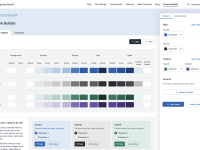
The Norwegian government has developed Designsystemet, a shared foundation for building accessible and consistent digital services. It provides reusable UI components, design guidelines and patterns that help organisations develop services faster while meeting accessibility requirements. Developed collaboratively across government, Designsystemet is technology-agnostic and recognised as a Digital Public Good, meaning organisations worldwide can use, adapt and contribute to improving it.
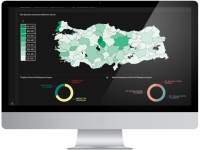
Developed by the Ministry of Health to analyze data flowing from all healthcare facilities in real time, SINA is an advanced, big data-driven decision support platform that enables real-time data visualization, interpretation, and comparison. Integrated with the AI assistant JAS in 2026, SINA allows users to gain insights by asking questions in natural language. By leveraging big data and causal analysis, SINA improves health policies, service delivery, and public health outcomes.
Gaeilge365 was created to respond to growing demand for bilingual public services while opportunities to use Irish in everyday local authority services remained limited. It redesigns existing services to create real speaking opportunities, increasing annual use from 10,000 to over 26,000 in one year, with a target of 150,000 by 2028. It is innovative because it replaces translation‑based compliance with a scalable, measured service model that delivers clear social impact.
Despite ambitious climate pledges, a persistent “last-mile” gap remains: individual climate actions are often undervalued within existing frameworks. Gyeonggi Province addresses this gap by converting verified citizen actions into measurable public value and rewarding participants with local currency to support local economies. By reinvesting these rewards in climate technologies, the initiative transforms citizens from policy beneficiaries into active co-creators of a sustainable future.
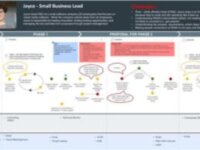
In the U.S. government, community members have experimented with designing the government services they will use. Their lived experience improves service outcomes, builds better relations with the government, and creates greater ownership over the service. This is new; normal participatory design of government services just includes community members for certain activities at certain points, never throughout, and never allowing the community to lead and frame the project or choose methodologies.
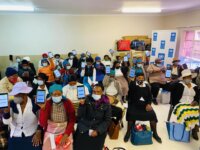
UNDP has introduced a digital system that allows better reporting of public health data in rural communities in Lesotho. It consists of tablets and software designed to fit the needs of Village Health Workers, the Ministry of Health unit that collects the data, whose staff has low digital literacy. The initiative led to increased reporting frequencies (essential for monitoring fast-moving epidemics) and reduced costs; as a side effect, it increased the rates of digital literacy of the personnel.
The innovation strategically aligns the Chamber of Commerce of Cosenza's (Camera di Commercio di Cosenza) personnel approach with its evolving goals and societal needs. It introduces a fully innovative, multidimensional recruitment process, impacting professional profiles, job announcements, selection processes, and communication strategies. This benefits the Chamber by enhancing recruitment efficiency and attracting qualified candidates, seemingly distant from institution but capable of…
The City of Ilion has developed a mini forest park within its urban complex. The goal of this pocket park, measuring 600 square meters, was to become, within a short period of time, a dynamic ecosystem that provides critical benefits to people and to urban wildlife. Its primary goal was to be an open nature-based school for the children of the Municipal Kindergarten – which is located next to the mini forest, as well as their caregivers and the neighbourhood inhabitants.
To improve the Government's response to problems and delivery of products, the Office of the Prime Minister of Croatia introduced Agile methodology and Agile teams, which mimicked startups in using iterations and learning to inform their next move. All governments have policy challenges that seem too complex to be solved. These challenges span across several departments, have some areas where jurisdiction of departments is unclear, and any intervention would have serious impact on all citizens.
ANII, in collaboration with the private sector and the support of Uruguay's Ministry of Health, is piloting a novel Open Innovation Initiative (MH2030). Ageing populations and rising numbers of people with multiple chronic diseases are placing an increasing burden on health systems. There is a need for improving healthcare by fostering an innovative environment. Through this new co-creative approach, local entrepreneurs work collaboratively with partnering healthcare institutions to tailor and…