
License: CC BY Attribution
The resource was developed for IFRC and National Societies to develop their literacy around data, but it could easily be applied to other organisations. It aims to promote responsible data use and develop data readiness. It has been tailored based on these audiences:
The Data Curious, who needs an ‘on ramp’ to learn and be exposed to the data basics.
The Data Advocate, who sees relevance and and wants to improve their skills and/or offer support.
The Data Active, who are motivated to…
The goal of this resource is to elicit conversation, encourage risk evaluation as a team, and catalyze proactive mitigation strategy planning around algorithm use in the public sector. It includes assessments and worksheets for assessing algorithm risk and managing algorithm risk. The publishers assume users have an understanding of their data and a basic understanding of algorithms.
A community sourced set of best practices and principles to help incorporate human-centered design into a product development process.
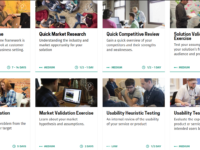
The website contains dozens of methods organised by process, difficulty, time required, and outcomes. Each method contains an overview, detailed, steps, resources, and examples or cases.
The methods are framed in terms of private sector product or service development but can be adapted to a public sector context.
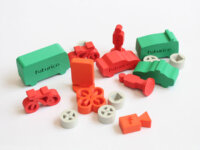
The IoT Service Kit is a board game that brings domain experts out of their silos to co-create user-centric IoT experiences. The Kit consists of three major components: maps, tokens and cards, which can be downloaded and printed/3D printed. It includes source content on GitHub as well. Its stated goals: achieve mutual understanding, stay tangible, and make complex simple. It is best for those who have some understanding of service design processes and principles as well as IoT technologies.
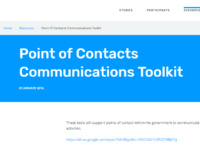
This is a collection of tools for an Open Government Partnership communications team, including the OGP's tips on blogging, branding, talking points, press guide, etc.
While this is specifically created for Open Government Partnership partners, it it can be adapted for other public sector initiatives, services, or programs.
The Open Data Board Game is a board game built around the creation of tools using data. A physical board game journey might involve clearing datasets for release as open data, achieving a certain data quality, and ultimately connecting data sets with a start up, SME or government to deliver economic, social and environmental benefits.
It is a Github code repository that contains all the things that are needed to create the game. It is a work in progress, according to the publisher. Requires some…
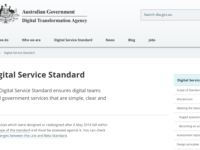
The purpose of the standard is to provide guidance for those in the Australian government or anyone who designs or provides government digital services regarding the provision of simple, clear and fast services. It includes 13 criteria, rationale, information about meeting the standard, design principles, service design and delivery process, related training and guides, and a glossary.
The resource also includes downloadable posters.
The Open Data Toolkit provides guidance intended for South Australia agencies and local councils release open data, although can be adapted to other contexts. It includes guidance on the following steps: Identify, Classify, Approach, Approve, Publish, Maintain.
It includes suggestions on governance decisions and roles as well as privacy, public value, and intellectual property guidance.
This resource contains two guides: one about the general field of behavioural economics and another is on developing behavioural interventions for randomised controlled trials (RCTs). The website also contains an academic directory of researchers working in this field.
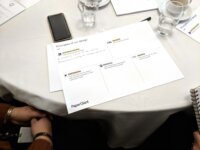
This is canvas and background guidance around a set of principles for co-design, inspired by the principles developed by the NSW Council of Social Services. The principles are: Outcomes-focused, Inclusive, Participative, Respectful, Adaptive.
The canvas includes an example case study.