Toolkit Type: Guidance
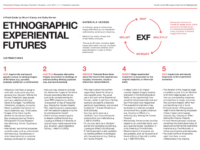
Ethnographic Experiential Futures, is a protocol for surfacing and documenting existing images of the future. It combines Ethnographic futures research, EFR, a protocol for surfacing and documenting existing images of the future. Experiential futures, XF, is a family of approaches for vivid multisensory, transmedia, and diegetic representations of images of the future. The hybrid approach puts together two modes of futures research and practice in a step-by-step guide. Its intent is to help…

The resource addresses the use of financial prizes to source solutions to challenges. It draws on academic literature, interviews with analysts and practitioners, surveys of prize sponsors and competitors, databases of small and large awards, and case studies of 12 effective prizes to produce lessons from a range of sectors, goals, and prize types. It provides frameworks and recommendations to help improve current prizes and stimulate effective future use. While it is targeted to philanthropic…
A curated set of resources on innovation by Tim Kastelle. This resource is primarily framed around private entrepreneurship, but some elements are transferable to a public sector context (i.e. cultivating a growth mindset). The resource is associated with a masterclass offered at the University of Queensland.
Toolkit
Innovation Tool Kit: A practical guide: Introduction to horizon scanning in the public sector
A part of the Australian Public Sector Innovation Toolkit, this provides guidance on what horizon scanning is and how to do it. It includes assessments, checklists, and specialised information about techniques.
This guide outlines BETA’s approach to developing behavioural interventions for randomised controlled trials (RCTs), based round 9 guiding questions through four project phases:
Discovery, Diagnosis, Design, Delivery. The guide is designed to primarily help with the discovery and diagnosis phases.
It also includes basic guidance on setting up an RCT.
The website includes an academic directory of those working in the behavioral economics research community.
This EU Quality of Public Administration Toolbox aims to support, guide, encourage and inspire those who want to build public administrations that will create prosperous, fair and resilient societies. The Toolbox tries to help countries with addressing country-specific policy recommendations and with delivering successful strategies and operational programmes.
Guide to service blueprinting. The reader analyses their own interaction with service users. Through the tools of personas, scenarios, and the decomposition of a scenario into a blueprint of its elements, the reader can understand and improve their services from a Human-Centred design person
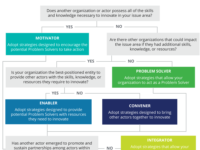
This resource covers five key roles in a public innovation ecosystem: Problem Solver, Enabler, Motivator, Convener, and Integrator. For public administrations wanting to make an impact on a societal challenge, it helps identify where to start, and how the administration fits in with other actors already focused on the same or similar challenges. By understanding which of these five roles to assume when launching an initiative, organisations may be able to more effectively deploy their resources,…
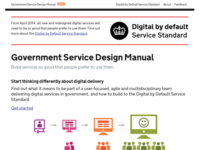
This resource is intended to support United Kingdom government teams create and run digital services according to their Digital Service Standard. It covers Accessibility and assisted digital, Agile delivery, Design, Measuring success, Service assessments and getting on GOV.UK, Technology, The team, and User research.
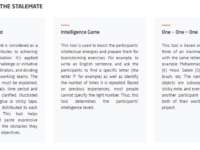
This resource includes a variety of tools and techniques, enabling government entities to develop initiatives and come up with innovative solutions to enhance the efficiency of the government sector, and improve the services provided by the government to individuals and entities.