
This is a free, self-paced, 3-5 hour course designed to build your capacity for bringing a design approach to complex problems. The course is intended to: develop a design mindset, define a problem, and dig deep and clarify problems. The publisher also includes downloadable toolkits as part of the course.
User Type: Manager


The website is aims to be a major knowledge broker in the behavioral sciences, particularly behavioral economics and related areas (nudging, behavior change, etc.). The site contains a guide (published annually), a blog, a LinkedIn group, and job board. The site’s mission is to connect people, provide resources, as well as promote the growth and relevance of the discipline. Note that behavioral economics is a specific application of behavioral science. Downloading the guide requires you to…

The resource is both an online catalog of resources as well as a publication. Combined, they comprise a basic but comprehensive introduction to service design and a selection of service design tools. The resources include the fundamentals of service design, an explanation of the Double Diamond design process and how it is used in service design, what to expect when working with a designer, and tools and methods that service designers use in the creative process. The publisher is considered the…


This resource provides South Australian Government organisations with guidance on the development and format of their digital strategies, which they distinguish separately from an information and communications technology (ICT) strategy. The toolkit contains guidance on the development and format of digital strategies, a digital maturity assessment tool, a digital transformation prioritisation tool, a digital strategy template, and an implementation plan template.
This resource provides advice as well as tools for those involved in the development and implementation of public administration reform and sector strategies. It guides users through each stage of the development, implementation, monitoring and overall management of strategies. It covers:
problem analysis; prioritisation of reform ambitions;
setting of objectives; definition of indicators (with baselines and targets); action planning and costing; implementation monitoring, reporting and…

This resource is focused on collaboration around designs for solving product problems, specifically on the topics of trust, transparency and control concerning the use of personal data. The methodology used was inspired by those from the Stanford d.school and IDEO. The toolkit is split into four sections – Plan, Discover, Ideate and Prototype.
The resource contains over 20 guided activities and supporting materials (including downloadable worksheets) covering materials for planning and running…
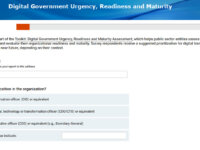
The "Toolkit: Digital Government Urgency, Readiness and Maturity Assessment" helps public sector entities assess urgency for digital transformation and evaluate their organizational readiness and maturity. Respondents of the freely accessible survey receive a suggested prioritization for digital transformation initiatives in the near future, depending on their context, as well as indicative digital maturity levels. An email address is required in order to receive the report.

The resource was developed for IFRC and National Societies to develop their literacy around data, but it could easily be applied to other organisations. It aims to promote responsible data use and develop data readiness. It has been tailored based on these audiences:
The Data Curious, who needs an ‘on ramp’ to learn and be exposed to the data basics.
The Data Advocate, who sees relevance and and wants to improve their skills and/or offer support.
The Data Active, who are motivated to…
This resource includes tools, approaches and resources for local authorities sharing non-personal data. The publishers intend it for those currently working in city governments as well as those supplying data sharing services to be able to find a common language and process in approaching the sharing of data. It focuses on both the technical and non-technical aspects of sharing data, including building data sharing partnerships, building a team, ecosystem mapping, and proposal and business case…


The goal of this resource is to elicit conversation, encourage risk evaluation as a team, and catalyze proactive mitigation strategy planning around algorithm use in the public sector. It includes assessments and worksheets for assessing algorithm risk and managing algorithm risk. The publishers assume users have an understanding of their data and a basic understanding of algorithms.