Adaptability: Champion
The AIA is a questionnaire designed to help assess and mitigate the impacts associated with deploying an automated decision system. It helps identify the impact level of an automated decision system. It was developed with the Canadian Directive on Automated Decision-Making in mind but it can be applied elsewhere. The questions are focused on business processes, data, and system design decisions.
The questionnaire asks around 60 questions and the results will demonstrate impact level as well as a…

The goal of this resource is to elicit conversation, encourage risk evaluation as a team, and catalyze proactive mitigation strategy planning around algorithm use in the public sector. It includes assessments and worksheets for assessing algorithm risk and managing algorithm risk. The publishers assume users have an understanding of their data and a basic understanding of algorithms.
This is a tool compendium created specifically for participants of a programme in Victoria, Australia. It is a PDF containing an organised selection of the key tools used during the sessions.
It is divided into two sections:
1. ‘tools for experimental problem solving’ and aligns with both the publisher's Experimental Continuum and Six Principles for exploring the unobvious.
2. ‘tools for setting the conditions’, which looks beyond the project challenge to other factors that can impede…
A curated set of 18 canvases that walk you through the steps needed for creating services & products using the combined principles and methodologies of agile development, lean startup, and design thinking. The publisher's intent is for you to reach business objectives in an iterative and human-centric way. In adapting to a public sector context, "customers" may need to be re-framed as stakeholders or service users. GitHub source content available. Includes how-to videos.
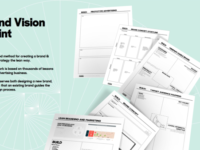
Lean Brand Creation is a structured method for lean creation of a new brand, and a strategic guideline for an existing brand in any brand, marketing & experience design work. It contains a set of 22 canvasses. It is intended for a marketing context but some techniques could be adapted for public services or for stakeholder engagement.
It is an offspring of Futurice’s Lean Service Creation, and can be used with the LSC toolkit or on its own.
The publisher defines validation as the process of gathering evidence and learnings around business ideas through experimentation and user testing, in order to make faster, informed, de-risked decisions. The Validation Guide contains guidance and several tools, including an Assumption Mapper and Experimentation Execution Card for designing and setting up experiments to test ideas and products in iterative ways. The intended audience is large private companies but the principles and tools can…
The purpose of the standard is to provide guidance for those in the Australian government or anyone who designs or provides government digital services regarding the provision of simple, clear and fast services. It includes 13 criteria, rationale, information about meeting the standard, design principles, service design and delivery process, related training and guides, and a glossary.
The resource also includes downloadable posters.
This resource is a series of tools to help clarify, plan, collect, and use data, information and evidence to evaluate an innovation as well as spread the learnings and results. It is intended to be used throughout a project to incorporate evaluative and intentional processes and feedback loops.
The resource contains tools for visualizing and anticipating future risk of technology products, acknowledging that once technology is released and reaches scale it may be used for purposes beyond the original intention. The toolkit contains foresight methods, including 14 scenarios, for kicking off important conversations with product teams--including examples of current signals of future trends. It also contains a Risk Mitigation Manual with 8 risk
zones where hard-to anticipate
and unwelcome…
This step-by-step toolkit describes an inclusive approach to recruiting participants for public consultation or engagement processes. The publishers designed the Civic Lottery process to mitigate the shortcomings and distortions produced by traditional recruitment methods. The approach introduces randomization at multiple stages of the participant recruitment and selection
process. This toolkit is best for those who have decided that a reference panel is right for their situation (see the…