

The resource was designed to help organisations: develop a clearer understanding of the range of purposes of collaborations, reflect on the partnerships they have established, and focus on ways to strengthen new and existing partnerships by engaging in discussion about issues and ways forward. The resource contains guidance as well as an interactive partnership assessment tool.
Although it was created with the health sector in mind, it is relevant for other sectors as well.
For innovation…
Good For: Collaboration

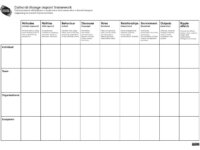
This resource includes a framework, basic guidance and canvas for use in mapping and assessing organisational readiness and capacity development, designing and developing assessment criteria for capacity-building, facilitating strategic dialogue, supporting and assessing the impact of innovation teams and labs, and enabling structured focus on what elements should be prioritised in capacity-building efforts as well as for case production and knowledge sharing.


The Better Government Toolkit provides resources to build a better government through innovation. It focuses on four areas/verticals: Build a 21st Century Culture and Workforce, Improve Government Services Delivery, Solve Complex Problems, Collaborate with Innovators. It includes case studies within the United States Government. Each tool includes approach, actions and considerations, glossary of terms, related policies, and related resources.

This resource includes a method and guidance for developing and getting comfortable with storytelling to engage your audience and collaborators in your project. It includes an 8 step process to developing and creating a "sticky" story to inspire and persuade others into action. It includes a downloadable guide with examples and tips and tricks as well as a checklist for evaluating your story.

Liberating Structures is a web resource that includes a collection of 33 results-oriented collaboration patterns have been developed and refined through field testing over a 10+ year period in a variety of sectors including healthcare and business.
They are intended to complement conventional practices for organisational design and strategy design. They are designed to be used in an inclusive collaborative setting.
Associated books (for sale) and video guidance is available to assist those…
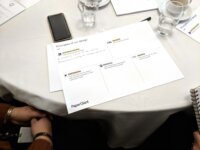
This is canvas and background guidance around a set of principles for co-design, inspired by the principles developed by the NSW Council of Social Services. The principles are: Outcomes-focused, Inclusive, Participative, Respectful, Adaptive.
The canvas includes an example case study.
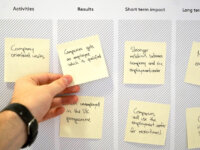
[Now defunct. Link goes to internet archive from 2018, when MindLab closed]. One of the pioneers of public sector design, Mindlab, developed a set of tools to find and define problems as well as new approaches to solving them. This toolset contains some of the most commonly used in the design practice (user journey, pattern recognition, etc).
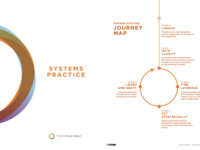
This resource walks you through a systems practice, and describes process phases (Launch, Gain Clarity, Find Leverage, Act Strategically, and Learn and Adapt) and methods for guiding the practice.
This resource has been developed in collaboration with teams across The Omidyar Group. This workbook aims to fill the gap between the promise of a systems approach for making social change and putting it into practice. It was created alongside curriculum as part of a paid course.
For each method,…


A tool to help cities and public administrations better orient and diagnose themselves regarding their innovation profile and maturity.
The tool includes a self-analysis quiz, a map to help navigate concepts and trends and compose your a custom menu. It also includes guidance for setting an innovation strategy.
Sonar comes in the form of a newspaper printed in A2 format that can be used in a group setting . This resource is available in French.
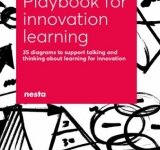
This playbook has been created for innovation practitioners who want to spread innovation skills, methods and tools or build an innovation capacity. It covers the design of effective learning experiences, identification and articulation of learning needs, pitching a learning offer at the right level, and connection of a team or innovation strategy with learning and development.
It contains overview of 35 methods that Nesta regularly uses in its practice. Each method description includes a short…