
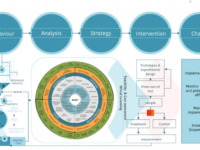
BASIC (Behaviour, Analysis, Strategies, Intervention, and Change) is an overarching framework for applying behavioural insights to public policy from the beginning to the end of the policy cycle. It is built on five stages that guides the application of behavioural insights and is a repository of best practices, proof of concepts and methodological standards for behavioural insights practitioners and policymakers who have become interested in applying behavioural insights to public policy.
The…
Good For: Compare different possible approaches

This is a tool compendium created specifically for participants of a programme in Victoria, Australia. It is a PDF containing an organised selection of the key tools used during the sessions.
It is divided into two sections:
1. ‘tools for experimental problem solving’ and aligns with both the publisher's Experimental Continuum and Six Principles for exploring the unobvious.
2. ‘tools for setting the conditions’, which looks beyond the project challenge to other factors that can impede…
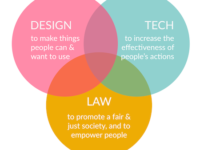
This is a set of resources for designers who are approaching legal challenges with a creative, generative, human-centered approach. The toolbox provides guides, tools, and examples to help you scope & tackle these challenges with design. It includes a Legal Communication Design Toolbox, a Legal Design Pattern Library, and a Legal Product Typology. It covers policy prototyping, visual design, and data visualisation.


The IoT Service Kit is a board game that brings domain experts out of their silos to co-create user-centric IoT experiences. The Kit consists of three major components: maps, tokens and cards, which can be downloaded and printed/3D printed. It includes source content on GitHub as well. Its stated goals: achieve mutual understanding, stay tangible, and make complex simple. It is best for those who have some understanding of service design processes and principles as well as IoT technologies.

The U.S. Public Participation Playbook is a resource for government managers to evaluate and build better services through public participation using best practices and performance metrics.
Based on discussions with US Federal Government managers and stakeholders, the publishers identified five main categories that should be addressed in all programs, whether digital or offline. Within each category they identified 12 unifying plays to start with, each including a checklist to consider,…
A playbook of 13 key “plays” drawn from successful practices from the private sector and government that the publisher believes, if followed together, will help governments build effective digital services.
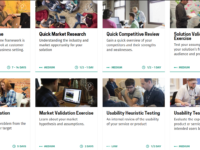
A community sourced set of best practices and principles to help incorporate human-centered design into a product development process.
The website contains dozens of methods organised by process, difficulty, time required, and outcomes. Each method contains an overview, detailed, steps, resources, and examples or cases.
The methods are framed in terms of private sector product or service development but can be adapted to a public sector context.

This playbook defines smart cities through human experiences, including 3 "mindsets" (lenses to understand) and 6 "plays" (ways to start). Originally developed for the City of Calgary, Canada, it offers ways to document, prioritize and advocate for individual human experiences at the nexus of networked technology, data and urbanism. It promotes embracing complexity and designing responsive systems, policies and governance around people for people-centered smart cities. Both PDF and slide deck…

The Open Data Board Game is a board game built around the creation of tools using data. A physical board game journey might involve clearing datasets for release as open data, achieving a certain data quality, and ultimately connecting data sets with a start up, SME or government to deliver economic, social and environmental benefits.
It is a Github code repository that contains all the things that are needed to create the game. It is a work in progress, according to the publisher. Requires some…
Principles and guidance for developing digital services in Argentina and beyond. The resource is available in a Github repository and includes 9 principles, indicators, and standards for API's, website, mobile applications, and others.