Good For: Insight finding
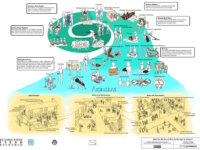
This tool is a condensed version of the Agile Evalution kit. It contains the key graphs and principles, including the Argentinian government's model on the lifecycle of innovation (Planificacion, Monitoreo, Evaluacion), theory of chain explanation, proposed learning modules, a Logic Model matrix of indicators, and several lists of evaluation questions.
This mini-book is based around the Cynefin framework, a contexutalisation and sense-making framework developed by Dave Snowden. The resource provides an overview of the Cynefin framework and use of narrative research, guidance and a tool for developing shared sense-making, and tools and guidance for developing a portfolio of experiments for different types of problems, distinguishing between complicated and complex problems.
The publisher requires a free login in exchange for downloading the…
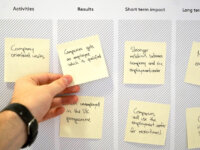
The GovLab's Public Problem Solving Canvas is an online interactive canvas based on twenty questions to create and develop your public interest project. These twenty questions are designed to help you refine your understanding of the problem and those whom it affects; express your Big Idea; and turn that idea into an actionable strategy in the real world to the end of improving people's lives.
14 methods and 3 recipes suggesting how to combine them, associated with a guide book available for sale by the toolkit publisher.
Accompanying each method: Purpose, Outcomes, How to do it, and Tips as well as a worked example, to help readers understand how the method and associated template can be used at the early stage of designing an innovative service.
Toolkit
Demand for Health Services: A Human-Centred Field Guide for Investigating and Responding to…
This field guide introduces human-centred design as an approach to addressing challenges related to community demand for services (specifically immunization services, but it could be applied to others). This Field Guide exists to help investigate, understand and respond to challenges of demand. It draws on insights from behavioural science and employs human-centred methods to improve immunization outcomes. Includes a 170 page field manual, process map, and workbook with tools. Its process…
This resource describes open government good practices and presents them to encourage further adoption and innovation. The publisher's goal is to help government reformers and civil society partners in improving the quality and output of co-creation processes across the Open Government Partnership (OGP). The resource was created to aid OGP partners but is applicable to others interested in open government.
The Toolkit contains content organised in a Question & Answer format, a matrix of…
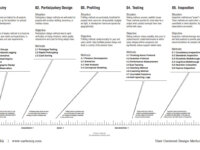
This is one of the first collections of user experience methods. It describes and analyses user experience design methods by costs expended, time required, resources required, expertise required, and quality of data.
This guidance contains 13 implementation plans laying out practical ways to address corruption. It is divided into 6 issue areas, each with an overview of the problem as well as solutions. The plans emerged from “Smarter Crowdsourcing Anti-Corruption” (2017). The Smarter Crowdsourcing method is an agile process, which begins with problem definition followed by online sourcing of global expertise to surface innovative ideas and then turns them into practical implementation plans. This…
This toolkit is for people help each other map out the skills, knowledge, resources and capabilities they have in order to respond to, and effect, change in their community.
The Possible Futures Lab of the Information Security Group at Royal Holloway University of London originally developed the toolkit to assist grassroots co-creation in the community of Pallion, Sunderland. They have made their toolkits available to others to adapt.
Platform Design Toolkit is based on the tradition of service design thinking and the publishers intend it to overcome the limitations in traditional, linear, business modeling approaches. This methodology is based on a multi-sided, ecosystem based, platform model instead of a traditional product or service design. Those interested in building their "government as a platform" strategy or building a suite of digital or non-digital products or services would likely find value in this approach but…