Good For: Problem framing
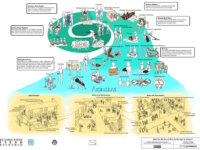
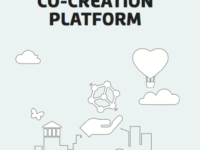
The Experiment Co-Creation Platform (ECP) is a model for collaboration and experimenting dedicated in delivering sustainable solutions to wicked urban problems.
The ECP model was developed and prototyped by Demos Helsinki. In the model, cities, higher education institutions and non-academic collaborators such as companies and foundations together define a desirable shared vision to work towards to as well as identify the challenges preventing the vision from happening. Research-based teams…
This manual introduces strategic foresight as a practice in the context of the 2030 Agenda for Sustainable Development. It was created with consideration for the resource constraints in developing country contexts, so proposes light-touch and low-cost methods. However, it could easily be applied elsewhere.
The manual features a selection of methods and techniques suited for framing development or policy discussions, but there are many methods and techniques available that are considered part of…
Here you find a selection of the Danish Design Centre’s commonly used tools. It includes information about the methods, instructions for tool use, and printable materials.
The tools are divided in three categories that are used at different stages in the design process - and often in this order: Explore, Co-create, and Give the future concrete form.
Explore helps the participants to open up and get around all aspects of the issue. Co-create contains tools that help participants get in-depth…
Reference Panels, also known as Citizens' Assemblies, Commissions and Juries, are an example of long-form deliberative processes that are frequently used by governments and public agencies to obtain detailed guidance on important and sometimes controversial policies.
Based on the publisher's experience with reference panels, they offer eight moves from their playbook to help others plan their own deliberative process.
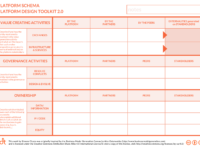
Platform Design Toolkit is based on the tradition of service design thinking and the publishers intend it to overcome the limitations in traditional, linear, business modeling approaches. This methodology is based on a multi-sided, ecosystem based, platform model instead of a traditional product or service design. Those interested in building their "government as a platform" strategy or building a suite of digital or non-digital products or services would likely find value in this approach but…
This toolkit is for people help each other map out the skills, knowledge, resources and capabilities they have in order to respond to, and effect, change in their community.
The Possible Futures Lab of the Information Security Group at Royal Holloway University of London originally developed the toolkit to assist grassroots co-creation in the community of Pallion, Sunderland. They have made their toolkits available to others to adapt.
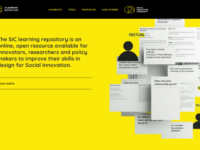
The SIC learning repository is an online, open resource available for innovators, researchers and policy makers to improve their skills in design for Social Innovation.
The tools section is organised by main activities/actions, including:
RECRUITING SOCIAL INNOVATORS
STAKEHOLDER ENGAGEMENT
IDEATION
PRODUCT/SERVICE DEVELOPMENT
PROTOTYPING
SUSTAINABLE GROWTH AND IMPACT
FUNDING OPPORTUNITIES
For each tool, time commitment and team requirements are listed and each can be downloaded as a PDF.
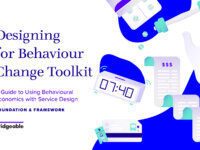
This toolkit outlines Bridgeable’s approach to harnessing behavioural economics (BE) to design better products and services that nudge user behaviour. It combines a service design approach with a BE approach, with the caveat that BE helps identify and tweak pivotal moments of decision making but not overall user experience or strategies.
The toolkit includes an overview of BE as well as an ideation and testing framework incorporating BE principles to move from a current state to an idea future…
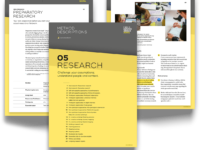
This resource is a method library containing 54 method descriptions for using the key methods in service design. These methods include instructions, guidelines, and-tips-and tricks for activities within research, ideation, prototyping, and facilitation. This collection only contains building blocks. It doesn’t detail how to assemble them into a cohesive design process or how to plan or manage it. The associated (paid) book and curriculum offers this context.
Grounded Change is an approach and social innovation methodology used by the company InWithForward. It means flipping the order in which most social policies & services are made. Rather than start at the top, in boardrooms, they start at the bottom, with user needs. They have named 7 kinds of interactions that they believe are the most important to weave into policy, procurement, service delivery, and community activities. This resource contains the context, reasons, and mechanisms of Grounded…