Good For: Proposal development
The main goal of the SISCODE Toolbox is to provide support for the co-creation labs in making sense of existing data, tools and toolkits. Co-creation is a non-linear process that involves multiple actors and stakeholders in the ideation, implementation and assessment of product services, policies and systems. The resource aims to improve their efficiency and effectiveness, and the satisfaction of those who take part in the process. The SISCODE Toolbox aims to facilitate the design and…
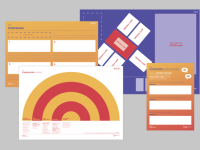
The REMODEL toolkit is targeted at companies producing products and is focused on developing economically sustainable business models through the principle of open source. While the toolkit is private-sector-oriented, some of the co-creation principles and methods can also apply to some areas of the public sector. The toolkit was published based on the experience of REMODEL with 8 Danish companies in 2018. The toolkit consists of 7 work packages and each part has a step-by-step instruction and a…
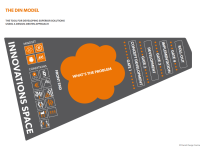
The DIN model is a methodology for developing solutions using a design-driven approach with the goals of achieving better and more innovative processes and outcomes, increasing probability of implementation, and improving user satisfaction. The model helps explore all the potential pitfalls, possibilities and limitations, particularly in the "front end" or early stage of projects. The DIN model consists of a series of phases and four ‘gates’. Each phase contains a variety of activities and…
This resource provides advice as well as tools for those involved in the development and implementation of public administration reform and sector strategies. It guides users through each stage of the development, implementation, monitoring and overall management of strategies. It covers:
problem analysis; prioritisation of reform ambitions;
setting of objectives; definition of indicators (with baselines and targets); action planning and costing; implementation monitoring, reporting and…
The resource was developed for IFRC and National Societies to develop their literacy around data, but it could easily be applied to other organisations. It aims to promote responsible data use and develop data readiness. It has been tailored based on these audiences:
The Data Curious, who needs an ‘on ramp’ to learn and be exposed to the data basics.
The Data Advocate, who sees relevance and and wants to improve their skills and/or offer support.
The Data Active, who are motivated to…
This resource includes tools, approaches and resources for local authorities sharing non-personal data. The publishers intend it for those currently working in city governments as well as those supplying data sharing services to be able to find a common language and process in approaching the sharing of data. It focuses on both the technical and non-technical aspects of sharing data, including building data sharing partnerships, building a team, ecosystem mapping, and proposal and business case…
This online interactive playbook is intended for teams to work better together in order to get things done. It is organised into Health Monitor (checks and activities for building team health), individual plays (filterable standalone activities), and game plans (series of plays for common use cases). The playbook organises the materials by project, service, and leadership team type, provides detailed instructions on how to run the plays and offers downloads of materials. Since many plays are…
This resource provides South Australian Government organisations with guidance on the development and format of their digital strategies, which they distinguish separately from an information and communications technology (ICT) strategy. The toolkit contains guidance on the development and format of digital strategies, a digital maturity assessment tool, a digital transformation prioritisation tool, a digital strategy template, and an implementation plan template.
The resource provides support for individuals and organizations wishing to publish open government data. Some guidance may be specific to the Swiss context. It is designed as a wiki: contributions from organizations and individuals that have experience with open data are welcomed. The resource is organised into stages: identify, prepare, publish, and support. A Github repository of the website's code is also available.
“Scenes” is a tool and a method to create visual stories about products and services fast, collaboratively and iteratively. It is intended for leaders and professionals of all industries to shape their ideas and scenarios in the form of fun illustrative storyboards without the need of refined drawing skills. It uses storytelling instead of long functional specifications for new or redesigned services or concepts.
It contains free, downloadable and printable templates for professionals to…