
Evidence and Resource Library on Public Sector Reform which documents country experiences, good practices and challenges, shares a wide range of information on modalities /methodologies on peer learning, publicises original, empirical research when and where knowledge gaps are identified, and documents and disseminates stories of change. Hundreds of entries are tagged by problem type, theme, and keyword.
Good For: Scanning
The toolkit provides step-by-step guidance for development practitioners to leverage new sources of data. It is a result of a collaboration of UNDP and UN Global Pulse with support from UN Volunteers, led by UNDP innovation teams in Europe and Central Asia and Arab States.
The guide is structured into three sections - (I) Explore the Problem & System, (II) Assemble the Team and (III) Create the Workplan. Each of the sections comprises of a series of tools for completing the steps needed to…

This is a starter kit covering signal spotting, or detecting early signs of change in several fields: Technology, Policy, Business model, Citizen action, Research finding, Design, Application, Idea / innovation. The online resource includes video guidance, examples of signals in the different fields, and exercises for practice with signal spotting. It also includes exercises for signal spotting in one's own context.

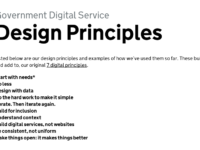
The United Kingdom government's design principles and examples of how they have been used. Each principle includes links to articles with additional explanation and reflections.
1. Start with user needs
2. Do less
3. Design with data
4. Do the hard work to make it simple
5. Iterate. Then iterate again
6. This is for everyone
7. Understand context
8. Build digital services, not websites
9. Be consistent, not uniform
10. Make things open: it makes things better
This resource contains a framework and guidance regarding the use of user-centred design. The publisher defines the UCD process in six phases - two planning and four delivery phases. The two planning phases focus on typical project planning aspects such as problem space, resources, agency readiness, team logistics, governance, etc. The four delivery phases are about action, talking to users to understand their real needs, prototyping potential solutions, and building the minimum viable product…

This Field Guide is designed to support new-to-foresight practitioners in incorporating future thinking and foresight into everyday projects. In addition to describing methods (including purpose, pros, cons and considerations for each), it also provides guidance on how to advocate for a foresight related project or approach in your organistion, cultivate a futures/foresight mindset, and build a team.
The ""zombies" referenced represent an unexpected and unlikely event for humanity. Stories about…
A collection of code, tools, and case studies to help United States federal agencies adopt the Open Data Policy and unlock the potential of government data.
This project is meant to be a living document, so that collaboration in the open data ecosystem is fostered, and the continual update of technology pieces that affect update can happen at a more rapid pace. Edits to the content may be made by anyone.
It could provide other governments with examples and starter content for its own open data…
Toolkit
 CHAMPION:
Can be remixed
Innovation Tool Kit: A practical guide: Introduction to horizon scanning in the public sector
CHAMPION:Can be remixed
A part of the Australian Public Sector Innovation Toolkit, this provides guidance on what horizon scanning is and how to do it. It includes assessments, checklists, and specialised information about techniques.
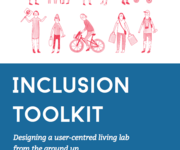
The toolkit includes 5 methods for designing a more inclusive lab. The toolkit begins by guiding users through basic user observation, identification, and categorization processes (observation, interviews,
and personas). It then moves into problem definition and stakeholder prioritization, and finally defines a concrete suggestion for increased
diverse stakeholder governance. It includes templates and examples for each method.
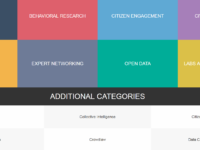
A platform for researchers to share findings and methodologies and a repository of theoretical and applied research on open and innovative governance techniques and tools.
It includes:
A platform for researchers to share findings and methodologies;
A repository of theoretical and applied research on open and innovative governance techniques and tools;
A diversity of publication types – from research reports and journal articles to books and dissertations;
A taxonomy for browsing research by…