
This resource aims to enrich the efforts of parliaments and their civil society counterparts to engage in collaborative processes, either as part of the Open Government Partnership National Action Plan or otherwise. The first section focuses on the development of open parliament commitments. The second section shares the experiences of a variety of parliaments and civil society organisations in collaborating in the creation of parliamentary openness commitments and in developing ongoing…
Good For: Solution finding

The publisher defines validation as the process of gathering evidence and learnings around business ideas through experimentation and user testing, in order to make faster, informed, de-risked decisions. The Validation Guide contains guidance and several tools, including an Assumption Mapper and Experimentation Execution Card for designing and setting up experiments to test ideas and products in iterative ways. The intended audience is large private companies but the principles and tools can…
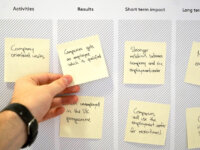
[Now defunct. Link goes to internet archive from 2018, when MindLab closed]. One of the pioneers of public sector design, Mindlab, developed a set of tools to find and define problems as well as new approaches to solving them. This toolset contains some of the most commonly used in the design practice (user journey, pattern recognition, etc).
This guidance contains 13 implementation plans laying out practical ways to address corruption. It is divided into 6 issue areas, each with an overview of the problem as well as solutions. The plans emerged from “Smarter Crowdsourcing Anti-Corruption” (2017). The Smarter Crowdsourcing method is an agile process, which begins with problem definition followed by online sourcing of global expertise to surface innovative ideas and then turns them into practical implementation plans. This…
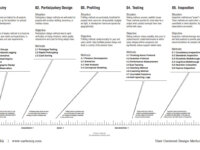
This is one of the first collections of user experience methods. It describes and analyses user experience design methods by costs expended, time required, resources required, expertise required, and quality of data.
Toolkit
 BASIC:
Allows reuse
Demand for Health Services: A Human-Centred Field Guide for Investigating and Responding to…
BASIC:Allows reuse
This field guide introduces human-centred design as an approach to addressing challenges related to community demand for services (specifically immunization services, but it could be applied to others). This Field Guide exists to help investigate, understand and respond to challenges of demand. It draws on insights from behavioural science and employs human-centred methods to improve immunization outcomes. Includes a 170 page field manual, process map, and workbook with tools. Its process…
The Experiment Co-Creation Platform (ECP) is a model for collaboration and experimenting dedicated in delivering sustainable solutions to wicked urban problems.
The ECP model was developed and prototyped by Demos Helsinki. In the model, cities, higher education institutions and non-academic collaborators such as companies and foundations together define a desirable shared vision to work towards to as well as identify the challenges preventing the vision from happening. Research-based teams…
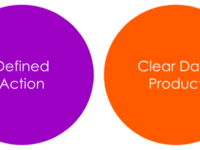
This resource provides guidance on four criteria/factors (Specific Problem, Defined action, Clear Data Product, Accessible data) the publisher has found to be helpful for public sector organisations considering running a data analytics project. It also contains information on privacy impact assessments and research ethics.
The toolkit addresses the many complexities of devising and advancing digital skills at policy level. It maps out how digital skills take their place within a wider framework of soft, twenty-first century skills. It offers guidance on bringing together – and leading – different stakeholders and moving forward under one clear and focused framework.
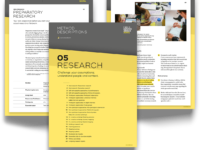
This resource is a method library containing 54 method descriptions for using the key methods in service design. These methods include instructions, guidelines, and-tips-and tricks for activities within research, ideation, prototyping, and facilitation. This collection only contains building blocks. It doesn’t detail how to assemble them into a cohesive design process or how to plan or manage it. The associated (paid) book and curriculum offers this context.