
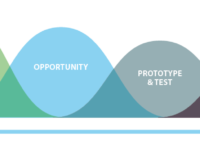
This resource describes a comprehensive method for the BC Public Service (BCPS) to design services for British Columbians, although it is also applicable to other governments.
The Playbook is intended to help ensure public service designers have the necessary tools and corporate support to make change.
It includes an overview of service design, a discussion of when and how to use it, as well as detailed guidance and tools for the various methods used in service design. The methods are organised…
Good For: Uncover beliefs and values


This Field Guide is designed to support new-to-foresight practitioners in incorporating future thinking and foresight into everyday projects. In addition to describing methods (including purpose, pros, cons and considerations for each), it also provides guidance on how to advocate for a foresight related project or approach in your organistion, cultivate a futures/foresight mindset, and build a team.
The ""zombies" referenced represent an unexpected and unlikely event for humanity. Stories about…

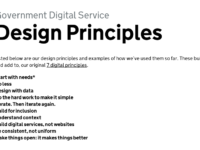
The United Kingdom government's design principles and examples of how they have been used. Each principle includes links to articles with additional explanation and reflections.
1. Start with user needs
2. Do less
3. Design with data
4. Do the hard work to make it simple
5. Iterate. Then iterate again
6. This is for everyone
7. Understand context
8. Build digital services, not websites
9. Be consistent, not uniform
10. Make things open: it makes things better
The toolkit includes 5 methods for designing a more inclusive lab. The toolkit begins by guiding users through basic user observation, identification, and categorization processes (observation, interviews,
and personas). It then moves into problem definition and stakeholder prioritization, and finally defines a concrete suggestion for increased
diverse stakeholder governance. It includes templates and examples for each method.
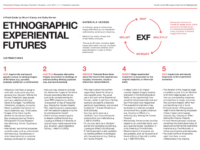
Ethnographic Experiential Futures, is a protocol for surfacing and documenting existing images of the future. It combines Ethnographic futures research, EFR, a protocol for surfacing and documenting existing images of the future. Experiential futures, XF, is a family of approaches for vivid multisensory, transmedia, and diegetic representations of images of the future. The hybrid approach puts together two modes of futures research and practice in a step-by-step guide. Its intent is to help…
An introduction to service design for public servants, and a set of practical ways to include design methods in your work. This resource was developed for the City of New York but is relevant to other cities, governments, and innovation labs as well.

The publishers describe the PD concept as: based on the observation that in every community or organization, there are a few individuals or groups whose uncommon but successful behaviors and strategies have enabled them to find better solutions to problems than their neighbors who face the same challenges and barriers and have access to same resources.
This resource orients newcomers to the Positive Deviance (PD) approach and provide the essential tools to get started. It includes a brief…
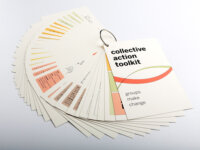
The Collective Action Toolkit (2nd edition) is a set of activities and methods that enables groups of people anywhere to organize, collaborate, and create solutions for problems affecting their community.
It guides users through methods according to six action areas, with suggested pathways from one method to the next. For each method, step-by-step instructions are given, in addition to the time, roles, and materials needed. Some methods include canvasses to guide activity.
The toolkit is…