Level: Intermediate
The Australian Public Service (APS) Framework for Engagement and Participation provides guidance, principles, and links to interactive tools that support public servants and managers to adopt and improve the participation and engagement of stakeholders and citizens as ways to earn trust and overcome complexity in dealing with society's challenges in the 21st century.
Public servants and managers are invited to subscribe to the principles that underpin this vision and actively use this toolkit…
In 2020 and 2021, OPSI developed the idea of an Innovation Incubator jointly with the European Commission through the Horizon 2020 project. The goal of the incubator has been to to maximize the spread of learning and knowledge from initiatives to a larger ecosystem of actors. The OPSI-convened incubator has worked to connect experts and practitioners to provide insights and validation of transformative work, reduce duplication, and streamline replication efforts. The primary principle of the…
Futures Frequency is a workshop method for groups of 8–20 people. This website provides tools for facilitating the workshop either online or in person. There are videos that introduce each theme and the facilitator’s handbook includes detailed steps for facilitating the group assignments.
Futures Frequency was developed by Sitra based on input from a development team in various fields. It's purpose is to increase participants’ ability to envisage different futures and take action towards…
Living Futures: Scenario Kit is a design tool for understanding, discussing, and shaping the future. It consists of four alternative versions of year 2050 explored through narrated stories from future citizens, themed analyses, and other media files, as well as a set of design tools that puts the scenarios to work. The kit can be used to future proof business models, develop new strategy, and understand and discuss important trends and developments in the present.
The kit is flexible and can be…
This toolbox is a guide for shaping the future and developing organisational operations. It guides users through how to build an organisation’s future capability to ready it to deal with new phenomena. It guides users through all the steps of building a vision and for viewing, interpreting or shaping futures. It contains three phases: Trends and Signals, Interpretation and choices, and Shaping futures. Each tool includes step-by-step guidance and downloadable resources.
This resource is a generative tool for creating new metaphors to help understand the world in new ways, reframe problems, generate new ideas, and imagine different futures.
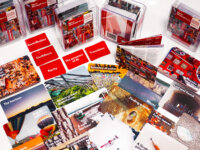
New Metaphors has been developed by the Imaginaries Lab, a design research studio based at Carnegie Mellon University, and working internationally. New Metaphors is a set of 150 cards and a number of simple, fun workshop formats which enable idea generation and new ways of thinking about issues creatively, from specific…
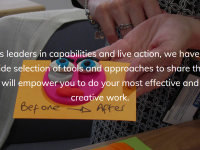
The Paraffin toolbox consists of a wide selection of tools and approaches that focus on capacity building and active facilitation methods alongside work on creative projects. It contains a selection of 16 presentation templates that can be used when a workshop planner or facilitator needs inspiration, guidance or concrete methods within building workshops. The resource also includes articles and best practice guidance on running workshops, including virtual workshops. Many of the downloadable…
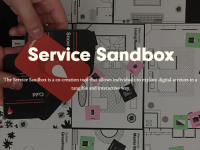
The Service Sandbox is a visual, playful, co-creation tool that allows individuals to explore digital services in a tangible and interactive way. The sandbox can be used to test an existing service or to create new ones. The resource is oriented toward designing interior environments, especially digitalising environments, but could be used more broadly. The tool consists of three phases (build, ideate and define), plus a pitch template for taking the process one step further. According to the…
This is a collection of tools developed through transforming leading innovation management theory into hands-on, easy-to-use, actionable innovation tools. The tools are organized in the categories: Culture, Business model, Validation, Pitching, Technology, Strategy, Problem discovery and Ideation. Each tool contains a description and a step-by-step guide telling how to approach it. The resource also includes guides, videos, posters, quizzes, etc., which provide knowledge within the field of…
The Design for Policy toolkit PROMPT is targeted toward policymakers who wish to identify where design can add value to the policy cycle process by enhancing user and citizen participation. The majority of the design tools included in the resource are common qualitative research and design methods and follow a gradual shift in emphasis from data-centred policy to people-powered policy, according to the publishers.
PROMPT has been collaboratively developed by PDR - International Design and…