
The purpose of the standard is to provide guidance for those in the New Zealand government or anyone who designs or provides government services regarding the provision of accessible, integrated, inclusive public services. It includes principles, rationale, information on how to meet the standard, related implementation guidance and resources, and a glossary.
Publisher Type: National government

The purpose of the standard is to provide guidance for those in the Australian government or anyone who designs or provides government digital services regarding the provision of simple, clear and fast services. It includes 13 criteria, rationale, information about meeting the standard, design principles, service design and delivery process, related training and guides, and a glossary.
The resource also includes downloadable posters.

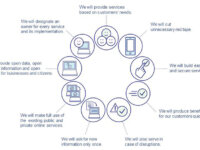
Established in 2016, these 9 principles provide guidelines for information sharing and interfaces, operating models, rapid service development and preparedness within the Finnish government and beyond.
This resource contains two guides: one about the general field of behavioural economics and another is on developing behavioural interventions for randomised controlled trials (RCTs). The website also contains an academic directory of researchers working in this field.

The Better Government Toolkit provides resources to build a better government through innovation. It focuses on four areas/verticals: Build a 21st Century Culture and Workforce, Improve Government Services Delivery, Solve Complex Problems, Collaborate with Innovators. It includes case studies within the United States Government. Each tool includes approach, actions and considerations, glossary of terms, related policies, and related resources.
This tool is a condensed version of the Agile Evalution kit. It contains the key graphs and principles, including the Argentinian government's model on the lifecycle of innovation (Planificacion, Monitoreo, Evaluacion), theory of chain explanation, proposed learning modules, a Logic Model matrix of indicators, and several lists of evaluation questions.
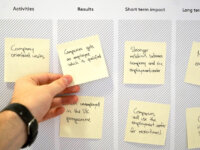
[Now defunct. Link goes to internet archive from 2018, when MindLab closed]. One of the pioneers of public sector design, Mindlab, developed a set of tools to find and define problems as well as new approaches to solving them. This toolset contains some of the most commonly used in the design practice (user journey, pattern recognition, etc).
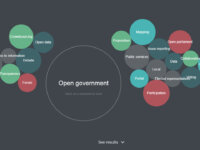
The OGP Toolbox is a collaborative platform that gathers digital tools developed and used throughout the world by organizations to improve democracy and promote transparency, participation and collaboration.
It is designed as a social network and includes use cases and tool "collections," technical criteria informed by the community and recommendations based on the experience of users that have already implemented existing solutions.
The goals of the publisher and platform are to:
- allow actors…
In this booklet you will find tools to implement the CO-CRE-AR methodology in its three phases: Understanding, Creating and Arming.
CO-CRE-AR moves in spaces of divergence and convergence. The first part invites you to UNDERSTAND in detail the challenge you want to face; the second to CREATE with openness and generate ideas without many restrictions, to then land them and make them concrete in work plans, including the necessary communication elements to "sell" the solution in the organization.
The National Centre for Public Sector Innovation in Denmark has developed this guide to help public sector workplaces share their own innovations and reuse others. It is relevant for anyone who wants to collaborate on spreading an innovation from one context to another. The guide consists of six steps with recommended actions to take and associated tools that help structure the dialogue throughout the process.