
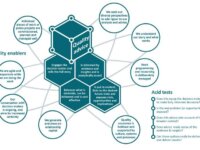
The Policy Quality Framework describes the key characteristics of quality policy advice, as well as the ‘enablers’ of great advice, like considering multiple perspectives, good commissioning, quality assurance processes and work planning.
It is one of three improvement frameworks co-designed for and by the policy community in New Zealand to help government agencies improve their policy quality and capability.
It includes several policy assessments for different stages of the policy cycle and…
Publisher Type: National government
Toolkit
 CHAMPION:
Can be remixed
Innovation Tool Kit: A practical guide: Introduction to horizon scanning in the public sector
CHAMPION:Can be remixed

A part of the Australian Public Sector Innovation Toolkit, this provides guidance on what horizon scanning is and how to do it. It includes assessments, checklists, and specialised information about techniques.
A collection of code, tools, and case studies to help United States federal agencies adopt the Open Data Policy and unlock the potential of government data.
This project is meant to be a living document, so that collaboration in the open data ecosystem is fostered, and the continual update of technology pieces that affect update can happen at a more rapid pace. Edits to the content may be made by anyone.
It could provide other governments with examples and starter content for its own open data…
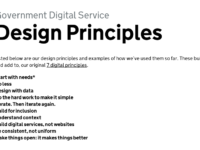
The United Kingdom government's design principles and examples of how they have been used. Each principle includes links to articles with additional explanation and reflections.
1. Start with user needs
2. Do less
3. Design with data
4. Do the hard work to make it simple
5. Iterate. Then iterate again
6. This is for everyone
7. Understand context
8. Build digital services, not websites
9. Be consistent, not uniform
10. Make things open: it makes things better
This resource contains a framework and guidance regarding the use of user-centred design. The publisher defines the UCD process in six phases - two planning and four delivery phases. The two planning phases focus on typical project planning aspects such as problem space, resources, agency readiness, team logistics, governance, etc. The four delivery phases are about action, talking to users to understand their real needs, prototyping potential solutions, and building the minimum viable product…
The DesignGov experiment was an 18 month initiative of the Australian Public Service to apply design-led innovation to cross-agency problems. This resource is based on the experience of DesignGov and is intended to be a resource for others that might be looking to establish and operate a public sector innovation lab. This resource is offered as a personal contemplation about what should be considered when establishing, running and, possibly, closing a public innovation lab.
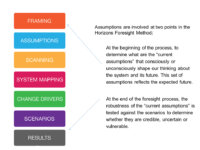
This guide is a facilitation toolkit for staff at Horizons and others interested in practising the Horizons Foresight Method in their own organizations. Its aims are to build foresight literacy in general, to explain the Horizons Foresight Method in particular, and to build capacity for horizon scanning in the Canadian federal government and other organizations. It provides a detailed description of concepts and processes, divided into 6 modules. Modules include facilitation guides, tip sheets,…
Toolkit
 HERO:
HERO:
Editable source files available
BETA Guide to developing behavioural interventions for randomised controlled trials
HERO:Editable source files available
This guide outlines BETA’s approach to developing behavioural interventions for randomised controlled trials (RCTs), based round 9 guiding questions through four project phases:
Discovery, Diagnosis, Design, Delivery. The guide is designed to primarily help with the discovery and diagnosis phases.
It also includes basic guidance on setting up an RCT.
The website includes an academic directory of those working in the behavioral economics research community.
This resource is intended to support United Kingdom government teams create and run digital services according to their Digital Service Standard. It covers Accessibility and assisted digital, Agile delivery, Design, Measuring success, Service assessments and getting on GOV.UK, Technology, The team, and User research.
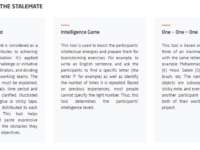
This resource includes a variety of tools and techniques, enabling government entities to develop initiatives and come up with innovative solutions to enhance the efficiency of the government sector, and improve the services provided by the government to individuals and entities.