
The resource is intended for those working in the international development or social impact space to assesses the future impact that innovation can deliver in a system. It focuses on three "systems": The Problem Space, The Innovation Space, The Context.
It's goals are to precipitate better understanding of the problem of focus and the context in which it exists, assess enablers and barriers
to innovation, track system change over time, and assess the impact of a program ex post facto. It…
Task Type: Problem solving

This step-by-step toolkit describes an inclusive approach to recruiting participants for public consultation or engagement processes. The publishers designed the Civic Lottery process to mitigate the shortcomings and distortions produced by traditional recruitment methods. The approach introduces randomization at multiple stages of the participant recruitment and selection
process. This toolkit is best for those who have decided that a reference panel is right for their situation (see the…

This resource focuses on inclusive design, a methodology that enables and draws on the full range of human diversity, including those with limited abilities. The resource includes a guide on inclusive design, multiple short-films and a 20-minute documentary, as well as activity cards that follow 5 phases of a design process.
14 methods and 3 recipes suggesting how to combine them, associated with a guide book available for sale by the toolkit publisher.
Accompanying each method: Purpose, Outcomes, How to do it, and Tips as well as a worked example, to help readers understand how the method and associated template can be used at the early stage of designing an innovative service.
This resource contains two guides: one about the general field of behavioural economics and another is on developing behavioural interventions for randomised controlled trials (RCTs). The website also contains an academic directory of researchers working in this field.
The term data collaborative refers to a new form of collaboration, beyond the public-private partnership model, in which participants from different sectors — including private companies, research institutions, and government agencies — can exchange data to help solve public problems.
This resource outlines 8 Phases for designing and implementing a data collaborative (partnership) at an institutional level. The online resource includes examples, enablers, tools, and resources for…

The resource was designed to help organisations: develop a clearer understanding of the range of purposes of collaborations, reflect on the partnerships they have established, and focus on ways to strengthen new and existing partnerships by engaging in discussion about issues and ways forward. The resource contains guidance as well as an interactive partnership assessment tool.
Although it was created with the health sector in mind, it is relevant for other sectors as well.
For innovation…
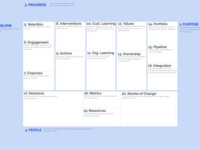
This is a LinkedIn article exploring what a canvas for an Experimentation System should include. It is a way to visualise an experimentation system in a one-page view. It's author says it bring hundreds if not thousands of actions and decisions into context and helps to translate nebulous terms like 'innovation culture' into practical actions. The article offers explanations of the 20 building blocks and offers the canvas via email request.
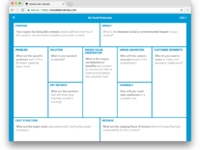
A mashup of the original Business Model Canvas with lean startup methodology built in, this canvas is intended for social entrepreneurs to validate their offering, prioritise what to develop, and message the offering. This could also be used by a government service provider.
The website includes a checklist to evaluate whether you will likely find value in using the canvas.
This tool is a condensed version of the Agile Evalution kit. It contains the key graphs and principles, including the Argentinian government's model on the lifecycle of innovation (Planificacion, Monitoreo, Evaluacion), theory of chain explanation, proposed learning modules, a Logic Model matrix of indicators, and several lists of evaluation questions.