Country Territory: United States
This is a curated collection of 30+ resources from Stanford d.school classes and workshops, including activities, tools, and how-to guides. They are intended for anyone who wants to become more familiar with design thinking or unlocking creative thinking in whatever challenge being tackled. Some are full-fledged workshops that for guiding others through. Other resources are short worksheet-based activities.
The guide offers practical guidance to local government officials on how to build a culture and practice of innovation and give local leaders an action-oriented framework for breakthrough
innovation. It lays out nine “Imperatives” towards this end, with concrete action steps for each to help cities get started, along with illustrative case studies.
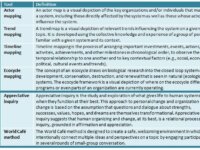
A blog series introducing and sharing guidance for using different tools to support systems thinking and practice, including actor mapping, trend mapping, timeline mapping, ecocycle mapping, appreciative inquiry, and world cafe. Each offers a downloadable guide in exchange for an email address.
This toolkit is for officials and staff at governments and institutions that are interested in launching a participatory budgeting process. Its purpose is to build understanding of what it takes to start a participatory budgeting process and how to lay a foundation for success.
It answers the questions:
How does a typical PB process work?
What are the impacts of PB?
What budgets can be used for PB?
What staffing and other resources are needed to implement PB?
How do I get started?
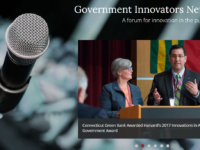
The Government Innovators Network is a collection of ideas and examples of government innovation for policymakers, policy advisors, and practitioners. It contains news, articles, reports, descriptions of award-winning innovative programs, and events as well as online communities of practice. The publisher's goal is to stimulate new ideas and bring people and ideas together around innovations in government for the purpose of stimulating discourse on the principles and practices of innovation and…
This resource contains tools around specific design methods and techniques, including facilitation, ideation, and synthesis. Some contain step-by-step guidance and guidance on the method while others are standalone canvases/worksheets.
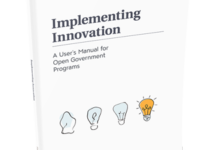
A hands-on resource that provides practical advice, guidance, and an 8-phase process from concept development to implementation for building an open government program, with each step referencing principles, lessons learned, case studies, and a checklist for determining whether you are at the right phase. This resource complements Open Government Partnership Action Plans and and was developed as part of a year-long project with the Mexican government.
Information and resources to guide United States federal employees working on challenges and prizes. It includes guidance on each challenge phase, from preparation to execution and also provides guidance on different types of challenges. It includes case studies and a list of resources for more detailed guidance and support.
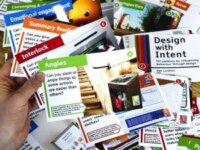
A collection of design patterns, or ‘gambits’, for influencing user behaviour through design. It’s applicable across product, service, interaction and architectural design, aimed particularly at socially and environmentally beneficial behaviour change. The patterns are drawn from a range of disciplines, and are phrased as questions or provocations to enable the toolkit’s use as both a brainstorming tool and a guide for exploring the field of design for behaviour change.
It includes…
Ethnographic Experiential Futures, is a protocol for surfacing and documenting existing images of the future. It combines Ethnographic futures research, EFR, a protocol for surfacing and documenting existing images of the future. Experiential futures, XF, is a family of approaches for vivid multisensory, transmedia, and diegetic representations of images of the future. The hybrid approach puts together two modes of futures research and practice in a step-by-step guide. Its intent is to help…