
The Design Thinking Handbook is a comprehensive guide to the practice of design thinking and framework popularized by the Stanford d.school. The resource is organised into sections Why We Need Design Thinking, Empathize, Define, Ideate, Prototype, Test and it can be downloaded as an epub, PDF, or audiobook, or can be read in a web-based format. The text is supplemented with links to podcasts, videos, interactive exercises, and other related resources to build practice along with knowledge of…
Toolkit Format: Web-based resource
This is a collection of tools developed through transforming leading innovation management theory into hands-on, easy-to-use, actionable innovation tools. The tools are organized in the categories: Culture, Business model, Validation, Pitching, Technology, Strategy, Problem discovery and Ideation. Each tool contains a description and a step-by-step guide telling how to approach it. The resource also includes guides, videos, posters, quizzes, etc., which provide knowledge within the field of…
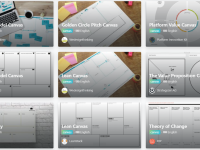
A library with over 150 different canvases and tools, all in relation to the Business Model Canvas and other visual design canvases. The canvases within the library focus on generating insights, strategic business development, value creation, value chains and user insight. The library contains quick tutorials and canvases in many languages and organises canvases by how they are licensed for reuse and remixing. The tools themselves are accessed by the canvas publisher's websites, which are linked…

The Design Sprint is a methodology for quickly solving problems through developing a hypothesis, prototyping an idea, and testing ideas with users. Design Sprints quickly align teams under a shared vision with clearly defined goals and deliverables. The Design Sprint methodology was developed at Google from a vision to grow user experience (UX) culture and the practice of design leadership across an organisation. The length of time for Design Sprints will be based on the goals and the needs of…

This resource is for creating equitable change in schools and learning environments. It helps build the capacity of school communities and learning coordinators to set and pursue equity aspirations, so that every student is future-ready, no matter their background, circumstances, or learning preferences. The resource is based on a design thinking process and includes an overview, methods, and instructions that are specifically tailored to learning environments. The resource includes sections:…
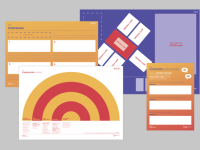
The REMODEL toolkit is targeted at companies producing products and is focused on developing economically sustainable business models through the principle of open source. While the toolkit is private-sector-oriented, some of the co-creation principles and methods can also apply to some areas of the public sector. The toolkit was published based on the experience of REMODEL with 8 Danish companies in 2018. The toolkit consists of 7 work packages and each part has a step-by-step instruction and a…
The AIA is a questionnaire designed to help assess and mitigate the impacts associated with deploying an automated decision system. It helps identify the impact level of an automated decision system. It was developed with the Canadian Directive on Automated Decision-Making in mind but it can be applied elsewhere. The questions are focused on business processes, data, and system design decisions.
The questionnaire asks around 60 questions and the results will demonstrate impact level as well as a…

The Privy Council Office's Impact and Innovation Unit’s (IIU) developed this guidance for impact measurement, in support of its work under Impact Canada. This resource provides an introduction to the topic, as well as a reference for those involved in the design, delivery, procurement or appraisal of impact measurement strategies in Canada and beyond. It provides descriptions and considerations of different ways of measuring impact versus traditional methods.
It includes the reasoning for…

A front-end framework for building websites that are accessible, usable, interoperable, mobile friendly and multilingual for the Government of Canada and beyond, the resource includes a collection of of flexible and themeable templates and reusable components and related guidance. Content is also available in French.

This resource provides South Australian Government organisations with guidance on the development and format of their digital strategies, which they distinguish separately from an information and communications technology (ICT) strategy. The toolkit contains guidance on the development and format of digital strategies, a digital maturity assessment tool, a digital transformation prioritisation tool, a digital strategy template, and an implementation plan template.