Skip to content
An official website of the OECD. Find out more
Created by the Public Governance Directorate

This website was created by the OECD Observatory of Public Sector Innovation (OPSI), part of the OECD Public Governance Directorate (GOV).

How to validate authenticity

Validation that this is an official OECD website can be found on the Innovative Government page of the corporate OECD website.

Toolkit

SISCODE toolbox for co-creation journeys

Champion CHAMPION:
Can be remixed
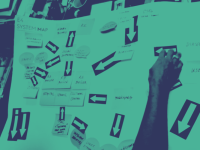
The main goal of the SISCODE Toolbox is to provide support for the co-creation labs in making sense of existing data, tools and toolkits. Co-creation is a non-linear process that involves multiple actors and stakeholders in the ideation, implementation and assessment of product services, policies and systems. The resource aims to improve their efficiency and effectiveness, and the satisfaction of those who take part in the process. The SISCODE Toolbox aims to facilitate the design and…
Toolkit

Platform-way-of-working toolkit

Hero HERO:
Editable source files available
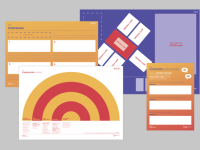
This toolkit allows organisations to change their mindset and move from a project-oriented approach towards a platform-way-of-working that is designed to tackle complex problems. The toolkit was developed and tested by the Danish Design Centre in collaboration with United Nations Development Programme (UNDP) and 40+ country offices. The toolkit consists of several mapping exercises. After using the integrated Mission Statement Generator to create an ambitious yet realistic mission statement,…
Toolkit

Remodel – A toolkit for open source business models

Champion CHAMPION:
Can be remixed
The REMODEL toolkit is targeted at companies producing products and is focused on developing economically sustainable business models through the principle of open source. While the toolkit is private-sector-oriented, some of the co-creation principles and methods can also apply to some areas of the public sector. The toolkit was published based on the experience of REMODEL with 8 Danish companies in 2018. The toolkit consists of 7 work packages and each part has a step-by-step instruction and a…
Toolkit

The DIN model

Basic BASIC:
Allows reuse
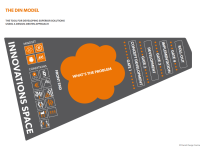
The DIN model is a methodology for developing solutions using a design-driven approach with the goals of achieving better and more innovative processes and outcomes, increasing probability of implementation, and improving user satisfaction. The model helps explore all the potential pitfalls, possibilities and limitations, particularly in the "front end" or early stage of projects. The DIN model consists of a series of phases and four ‘gates’. Each phase contains a variety of activities and…
Toolkit

Actionable Futures Toolkit

Champion CHAMPION:
Can be remixed
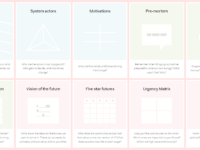
This resource is a modular set of tools (10 methods in 3 phases) that can be run in various ways, from a general tool to discover and ideate futures into a premeditated, repeated and ever-focusing exercise to build a vision on one or more lines of work. The resource can also be used to bring transparency and alignment to any organization through repeated exercises. It consists of three types of tools: Worldbuilding, Predictive Analysis and the Optimal Futures. The authors also suggest a process…
Toolkit

Algorithmic Impact Assessment

Champion CHAMPION:
Can be remixed
The AIA is a questionnaire designed to help assess and mitigate the impacts associated with deploying an automated decision system. It helps identify the impact level of an automated decision system. It was developed with the Canadian Directive on Automated Decision-Making in mind but it can be applied elsewhere. The questions are focused on business processes, data, and system design decisions. The questionnaire asks around 60 questions and the results will demonstrate impact level as well as a…
Toolkit

Tool Compendium for Victoria Australia

Champion CHAMPION:
Can be remixed
This is a tool compendium created specifically for participants of a programme in Victoria, Australia. It is a PDF containing an organised selection of the key tools used during the sessions. It is divided into two sections: 1. ‘tools for experimental problem solving’ and aligns with both the publisher's Experimental Continuum and Six Principles for exploring the unobvious. 2. ‘tools for setting the conditions’, which looks beyond the project challenge to other factors that can impede…
Toolkit

Atlassian Team Playbook

This online interactive playbook is intended for teams to work better together in order to get things done. It is organised into Health Monitor (checks and activities for building team health), individual plays (filterable standalone activities), and game plans (series of plays for common use cases). The playbook organises the materials by project, service, and leadership team type, provides detailed instructions on how to run the plays and offers downloads of materials. Since many plays are…
Toolkit

X-Road

Hero HERO:
Editable source files available
X-Road, a data exchange layer for information systems, is a technological and organizational environment enabling a secure Internet-based data exchange between information systems. Source code of X-Road is open for all and it is licensed under MIT license. Consultation services for deploying independent X-Road instances can be obtained from enterprises with such services. There is also an X-Road Community for support. This is a collaborative project involving several countries/territories,…
Toolkit

Australia Digital Transformation Toolkit

Hero HERO:
Editable source files available
This resource provides South Australian Government organisations with guidance on the development and format of their digital strategies, which they distinguish separately from an information and communications technology (ICT) strategy. The toolkit contains guidance on the development and format of digital strategies, a digital maturity assessment tool, a digital transformation prioritisation tool, a digital strategy template, and an implementation plan template.