
This online interactive playbook is intended for teams to work better together in order to get things done. It is organised into Health Monitor (checks and activities for building team health), individual plays (filterable standalone activities), and game plans (series of plays for common use cases). The playbook organises the materials by project, service, and leadership team type, provides detailed instructions on how to run the plays and offers downloads of materials. Since many plays are…
Toolkit Type: Tool/Toolset

The resource is both an online catalog of resources as well as a publication. Combined, they comprise a basic but comprehensive introduction to service design and a selection of service design tools. The resources include the fundamentals of service design, an explanation of the Double Diamond design process and how it is used in service design, what to expect when working with a designer, and tools and methods that service designers use in the creative process. The publisher is considered the…


X-Road, a data exchange layer for information systems, is a technological and organizational environment enabling a secure Internet-based data exchange between information systems. Source code of X-Road is open for all and it is licensed under MIT license.
Consultation services for deploying independent X-Road instances can be obtained from enterprises with such services. There is also an X-Road Community for support.
This is a collaborative project involving several countries/territories,…

This resource provides South Australian Government organisations with guidance on the development and format of their digital strategies, which they distinguish separately from an information and communications technology (ICT) strategy. The toolkit contains guidance on the development and format of digital strategies, a digital maturity assessment tool, a digital transformation prioritisation tool, a digital strategy template, and an implementation plan template.
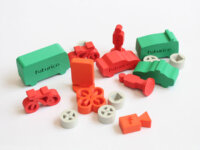
The IoT Service Kit is a board game that brings domain experts out of their silos to co-create user-centric IoT experiences. The Kit consists of three major components: maps, tokens and cards, which can be downloaded and printed/3D printed. It includes source content on GitHub as well. Its stated goals: achieve mutual understanding, stay tangible, and make complex simple. It is best for those who have some understanding of service design processes and principles as well as IoT technologies.

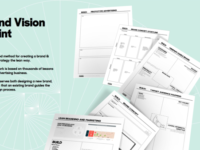
Lean Brand Creation is a structured method for lean creation of a new brand, and a strategic guideline for an existing brand in any brand, marketing & experience design work. It contains a set of 22 canvasses. It is intended for a marketing context but some techniques could be adapted for public services or for stakeholder engagement.
It is an offspring of Futurice’s Lean Service Creation, and can be used with the LSC toolkit or on its own.
A curated set of 18 canvases that walk you through the steps needed for creating services & products using the combined principles and methodologies of agile development, lean startup, and design thinking. The publisher's intent is for you to reach business objectives in an iterative and human-centric way. In adapting to a public sector context, "customers" may need to be re-framed as stakeholders or service users. GitHub source content available. Includes how-to videos.
The Toolkit helps government employees use crowdsourcing and citizen science in their work. It provides five basic process steps for planning, designing and carrying out a crowdsourcing or citizen science project. It also includes a case study library of this process in practice as well as citizen science-related resources (examples, background information, journal articles, tools).
These methods were developed for United States Government staff but could also be used by other governments and…
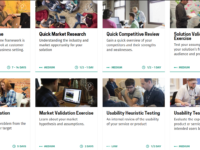
A community sourced set of best practices and principles to help incorporate human-centered design into a product development process.
The website contains dozens of methods organised by process, difficulty, time required, and outcomes. Each method contains an overview, detailed, steps, resources, and examples or cases.
The methods are framed in terms of private sector product or service development but can be adapted to a public sector context.
DemTools is a suite of free, open source software solutions developed by NDITech and distributed for supporting democracy building efforts around the world. The software includes contact management, issue tracking, crowdsourcing, election monitoring, open data, and petition development tools. These were built with the developing world in mind but can also be used in other contexts.
An associated DemTools Guide Book offers an overview of each of the suite of tools, including use cases, user…