User Type: Manager
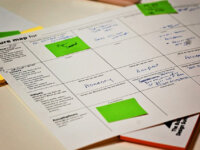
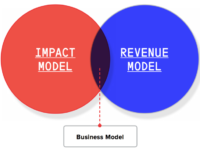
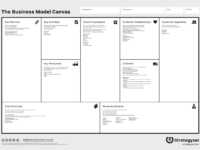
This canvas and associated guidance is is a strategic management and lean startup template that can be used the to describe, design, challenge, and pivot a business model to deliver different values or in different ways. It consists of 9 elements: value proposition, customer segments, customer relationships, channels, key partners, key resources, key activities, cost structure, and revenue streams.
It can be used individually or in a group. It works in conjunction with the Value Proposition…
The MaRS Library contains articles, templates, reports, workbooks, reference guides and videos covering a range of topics, including accounting, funding, governance, intellectual property, leadership, legal issues, marketing, product management, selling, social innovation, strategy and talent.
It is intended for an entrepreneurial context, but it can be adapted for a public sector organisational context.
A tool that organizations can use to assess, map and transform their cultures. It is intended at a group activity to guide conversations around outcomes, behaviours, and enablers/blockers. The website also contains guidance for its use. It is intended for a private sector context but non-financial "outcomes" can also be considered when using it in the public sector.
This website and blog containing a toolkit based on the book GameStorming (not free) and intends to bring a playful or game-like atmosphere to group problem solving activities for the purpose of creating an mindset conducive to innovation and change-making. The site contains games for different purposes, including vision and strategy, planning, problem-solving, and decision-making.
The online resources describe each method and technique in terms of: Object of Play, Number of Players, Duration of…
The guide offers practical guidance to local government officials on how to build a culture and practice of innovation and give local leaders an action-oriented framework for breakthrough
innovation. It lays out nine “Imperatives” towards this end, with concrete action steps for each to help cities get started, along with illustrative case studies.
This is a curated collection of 30+ resources from Stanford d.school classes and workshops, including activities, tools, and how-to guides. They are intended for anyone who wants to become more familiar with design thinking or unlocking creative thinking in whatever challenge being tackled. Some are full-fledged workshops that for guiding others through. Other resources are short worksheet-based activities.
A Role-Playing and Ideation Game That Simulates The Process Of Launching A Social Enterprise. The game walks players through a series of activities in order to simulate the process of ideating and launching a social enterprise in four steps: Learn, Invent, Program, and Report. It is available via a pay-what-you-want digital download, and includes instructions for gameplay, a glossary of 200+ business models, and a suite of other resources.
DIY Learn is a set of online modules to help development practitioners understand and embed practical tools to support social innovation in their work. It contains a series of free, 2-hour courses as well as a trainers handbook. It was created for international development practitioners but is applicable for public sector staff as well.
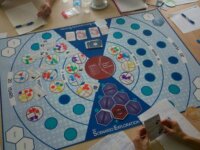
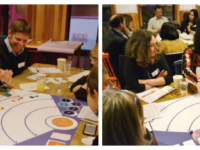
The Scenario Exploration System (SES) is a serious game for future simulation (2035 and 2050). It involves participants exploring their long-term objectives in contrasting scenario-related contexts while interacting with other stakeholders. By creating a realistic journey towards the future, the SES generates a safe space to simulate possible responses connected to any issue of interest to the participants.
There are two editions: "Sustainable Transitions" and "Food Safety and Nutrition…
The Game of Life 2050 draws on scenarios for a sustainable European society in 2050. It is an interactive board game in which players consider four scenarios that describe the radical changes needed to be living within key environmental boundaries by 2050.
The game takes a minimum of 2 hours to run (ideally 4 hours) and involves 5-7 actors (each played by one person or in pairs) and one Games Master.
Play consists of three ‘rounds’ in which actors are given a set of circumstances that have…