User Type: Stakeholder outside of government
This is a report from the Workshop ‘How might we approach transformational change for complex challenges in the future?’, held in London 30-31 August 2017. It provides 18 insights and considerations for playing the enabler, catalyst, and convenor roles in creating a mindset of long-termism.
A collection of tools created during the Open Data Innovation Week, which was a gathering of innovators from across the Asia-Pacific region to build a box of tools and methods for improving the design, practice and implementation of open data initiatives to help solve the region’s key political, economic, and social problems. Tools range from ethnography to mapping and analysis. Each tool contains instructions: purpose, prerequisites, who to involve, difficulty, time-frame, and step-by-step…
This is a report produced in conjunction with IDEO after a 2-year initiative of the Rockefeller Foundation called Paper Prototyping, an effort to better inform investment decisions of the Foundation. While this resource is not a typical innovation toolkit, it was included because it describes an often implicit and invisible process of developing and testing proposals for innovative solutions to complex problems.
A collection of code, tools, and case studies to help United States federal agencies adopt the Open Data Policy and unlock the potential of government data.
This project is meant to be a living document, so that collaboration in the open data ecosystem is fostered, and the continual update of technology pieces that affect update can happen at a more rapid pace. Edits to the content may be made by anyone.
It could provide other governments with examples and starter content for its own open data…
The toolkit's goal is to help actors conceptualize and operationalize their ambitions in terms of supporting social innovation. It contains not only “procedures” but also knowledge concerning social innovation.
The guide was designed to support European Social Fund (or other) funding organisations that want to focus mainly on service innovation (as opposed to systems innovation or internally oriented process innovation). But it also recognizes the idea of broader societal transitions and the…
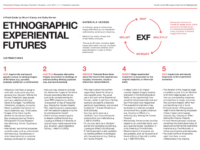
Ethnographic Experiential Futures, is a protocol for surfacing and documenting existing images of the future. It combines Ethnographic futures research, EFR, a protocol for surfacing and documenting existing images of the future. Experiential futures, XF, is a family of approaches for vivid multisensory, transmedia, and diegetic representations of images of the future. The hybrid approach puts together two modes of futures research and practice in a step-by-step guide. Its intent is to help…
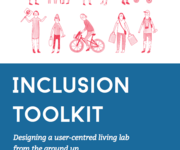
The toolkit includes 5 methods for designing a more inclusive lab. The toolkit begins by guiding users through basic user observation, identification, and categorization processes (observation, interviews,
and personas). It then moves into problem definition and stakeholder prioritization, and finally defines a concrete suggestion for increased
diverse stakeholder governance. It includes templates and examples for each method.
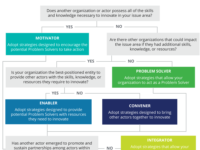
This resource covers five key roles in a public innovation ecosystem: Problem Solver, Enabler, Motivator, Convener, and Integrator. For public administrations wanting to make an impact on a societal challenge, it helps identify where to start, and how the administration fits in with other actors already focused on the same or similar challenges. By understanding which of these five roles to assume when launching an initiative, organisations may be able to more effectively deploy their resources,…
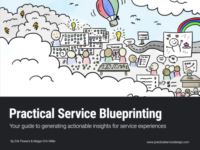
Guide to service blueprinting. The reader analyses their own interaction with service users. Through the tools of personas, scenarios, and the decomposition of a scenario into a blueprint of its elements, the reader can understand and improve their services from a Human-Centred design person
The publishers describe the PD concept as: based on the observation that in every community or organization, there are a few individuals or groups whose uncommon but successful behaviors and strategies have enabled them to find better solutions to problems than their neighbors who face the same challenges and barriers and have access to same resources.
This resource orients newcomers to the Positive Deviance (PD) approach and provide the essential tools to get started. It includes a brief…