Where are we now? Latvia’s public sector innovation laboratory
 Written by Uga Kristofers Kalendris | 12 March 2026
In the past three years, the Latvian State Chancellery’s Innovation Laboratory, with the assistance of the OECD’s Observatory of Public Sector Innovation, has strengthened its efforts to improve public sector innovation in Latvia. As 2026 marks the KPIs and deliverables for improving operational capacity being reached and exceeded, this blog reflects on Latvia’s recent work and offers a perspective on how to adapt future work to accommodate the increasing demand for strategic design support.
“In order to design you need to see the world as designed”
-Tony Fry
This blog shortly reflects on the journey of the Latvian State Chancellery Innovation Laboratory in the last three years. Although our story began back in 2018, the real kickstart happened in 2023, when the new Latvian State Chancellery Innovation laboratory team asked the million-euro question: How can you translate the boundless and ubiquitous need for design and innovation in government into the bureaucratic constraints of state governance? In 2026, with what feels like a series of “foot-in-the-door” interventions, the Innovation Lab reached a critical point in its development. For the 6 designers and experts working on the team to continue empowering and strengthening the innovation capabilities of the Latvian public sector, we need to scale our impact to a systemic level and scale our strategy accordingly.
If we were to track the small successes that contributed to our position so far, many of them would trace back to the support received from the OECD’s Observatory of Public Sector Innovation (OPSI). Through the support of a European Commission Technical Support Instrument project, we were able to embark on the journey with the OECD from 2022 to 2024 that involved assessing the innovation capacity of the Latvian public sector. Amongst other things, the project helped define three pillars of support for public sector innovation in Latvia that would form the basis of our work further on:
- Workforce and skills: creating and sharing the innovation toolbox
- Operating environment: making it easier to innovate in the centre of government
- Innovation for impact: ensuring our impact grows sustainably.
These three pillars (which we have continued to adapt in our ongoing work) served as the foundation of the Information Report on Innovation Capacity Strengthening in Latvia, a Cabinet of Ministers-approved framework for public-sector innovation and guiding principles for future innovation laboratories. The project concluded with a report that highlighted the lack of cohesion in policies on public sector innovation, the importance of learning culture in teams and organizational environments that enable innovation and the role of resource management and operating environment in civil servants’ potential to innovate.
As these pillars often guided the Innovation Lab’s work, they serve as a useful framework for reflecting on the work the Innovation Lab has done in the past year.
Workforce and skills – creating and sharing the innovation toolbox
The OECD’s 2023 assessment of Latvia’s public sector innovation capacity found that only 21% of public servants believed that workforce planning and the availability of different skills was supporting innovation, and that there were gaps in skills among public servants. Training public servants in design and innovation skills, co-creating innovation tools, and using them in practice has been a top priority for our Innovation Lab for most of the past three years. In this time, we have organized 11 training programs on topics ranging from the basics of design theory to advanced speculative design methods, reaching almost 500 unique participants. In 2025, the focus shifted to refining these tools, adapting them to the increased demand, and empowering people to use them themselves.
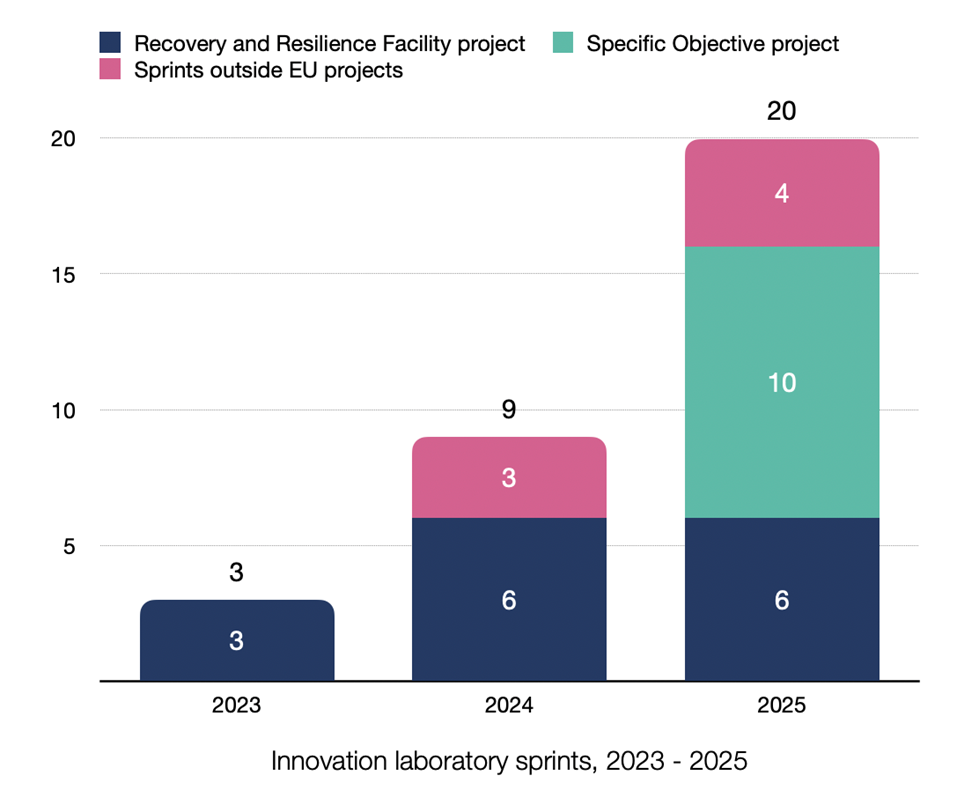
The core of our service package is still innovation sprints – a series of workshops with participating teams in different public sector organizations that apply design thinking to better understand a problem and develop user-centric solutions. Mainly through 2 EU-funded projects, the Innovation Lab organized or facilitated 20 innovation sprints in 2025, significantly expanding our capacity from previous years.
The topics for the innovation sprints varied widely. Many were redesigns of digital government services; for instance, the Register of Commerce’s project highlighted the gap in applying for a company on a mobile device and developed a prototype of this functionality. The Centre for Disease Prevention and Control used service design methods to understand the risks of digitalizing medical certificates for the cause of death and to create a digital service prototype. Often, the projects were policy oriented. In their project, the Ministry of Interior collaborated with stakeholders to develop an algorithm for involving civil society in a time of crisis, which will serve as the basis for further policies. The more than 500 people that we reached in 2025, on average, spent 8 hours with us improving innovation capacity and creating user-validated prototypes. Through us, 4000 working hours were spent strengthening the innovation capacity of the Latvian public sector in 2025.
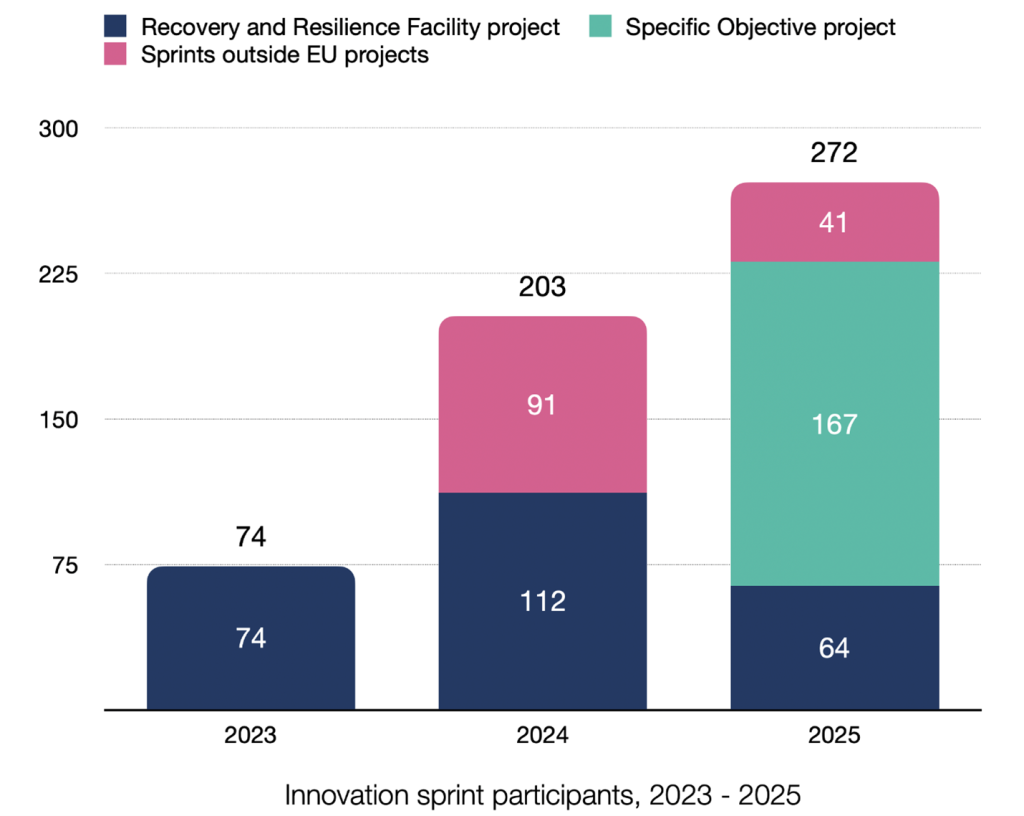
Innovation sprints are not just about the innovative solutions designed during the process. Public sector workers report that innovation sprints have a strong impact on changing the innovation culture within the organisation. As one partner puts it, “this cooperation has allowed us to move forward more quickly on long-standing issues, develop internal capacity to work with innovative methods, and strengthen collaboration as a natural approach to everyday work, both within the institution and in cooperation with partners”. Having people within an organization experience the sprint helps to destigmatize design and innovation methods, aids the innovation leaders in learning how to use the methods, and, ultimately, helps to solve a specific public sector problem.
This is taken further through the Innovation Experts network – a community of practice regarding innovation in the Latvian state administration with 358 members (and growing) from different public organizations and levels of seniority. The Innovation Lab organizes workshops and community meetings for the Experts network, and they are always the first to be invited to the wide variety of training programmes hosted by the Innovation Lab. Everyone is welcome to participate in our community of practice to further embed this knowledge and link with likeminded people across the state governance. The innovation laboratory provides advice to members of the network on innovation topic and, when specific circumstances are met, innovation sprints that put the theory into practice.
This multi-pronged approach – targeting public servants at different levels of seniority through training, innovation sprints, and a community of practice – seems to be making an impact. One indicator of this is the surge of designers in government who feel empowered to start the innovation journey themselves. So far, four other public organisations have shown initiative in creating a design team or an innovation laboratory themselves. Our team has and continues to offer consultative support in this process.
Operating environment: making it easier to innovate in the centre of government
Having skills only gets innovators so far. Outside of the EU project-mandated activities, one of the Innovation Lab’s priorities was to systematically improve the operating environment for innovators across the Latvian public sector making it easier for public servants to do things differently. Due to our positioning in the centre of government, we tried to influence changes that would affect multiple, if not all, governmental institutions. In this regard, we achieved many significant milestones.
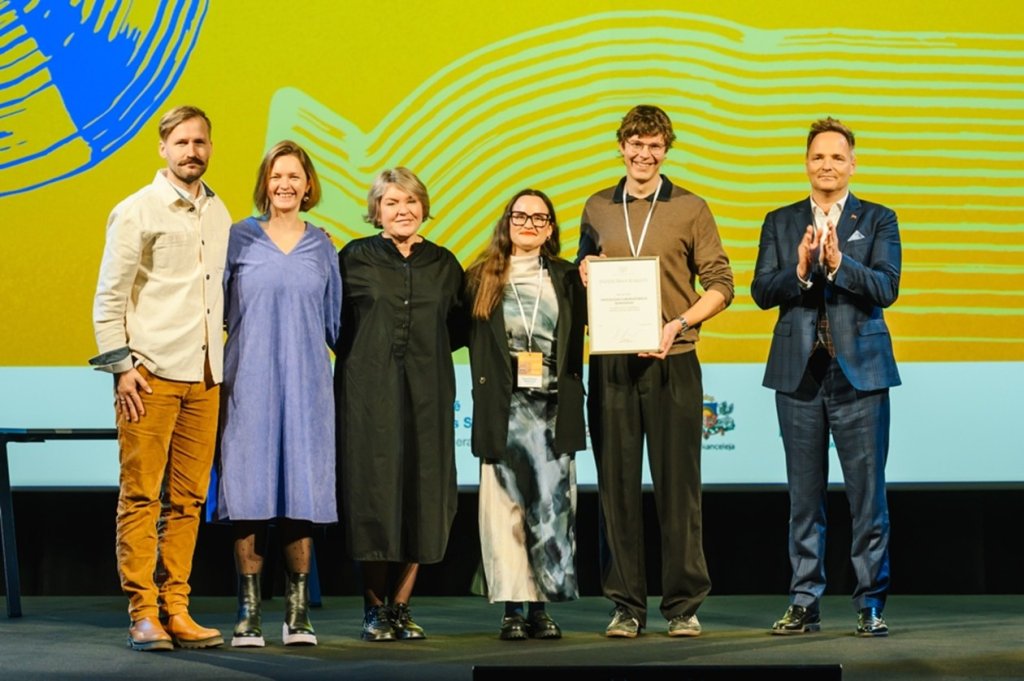
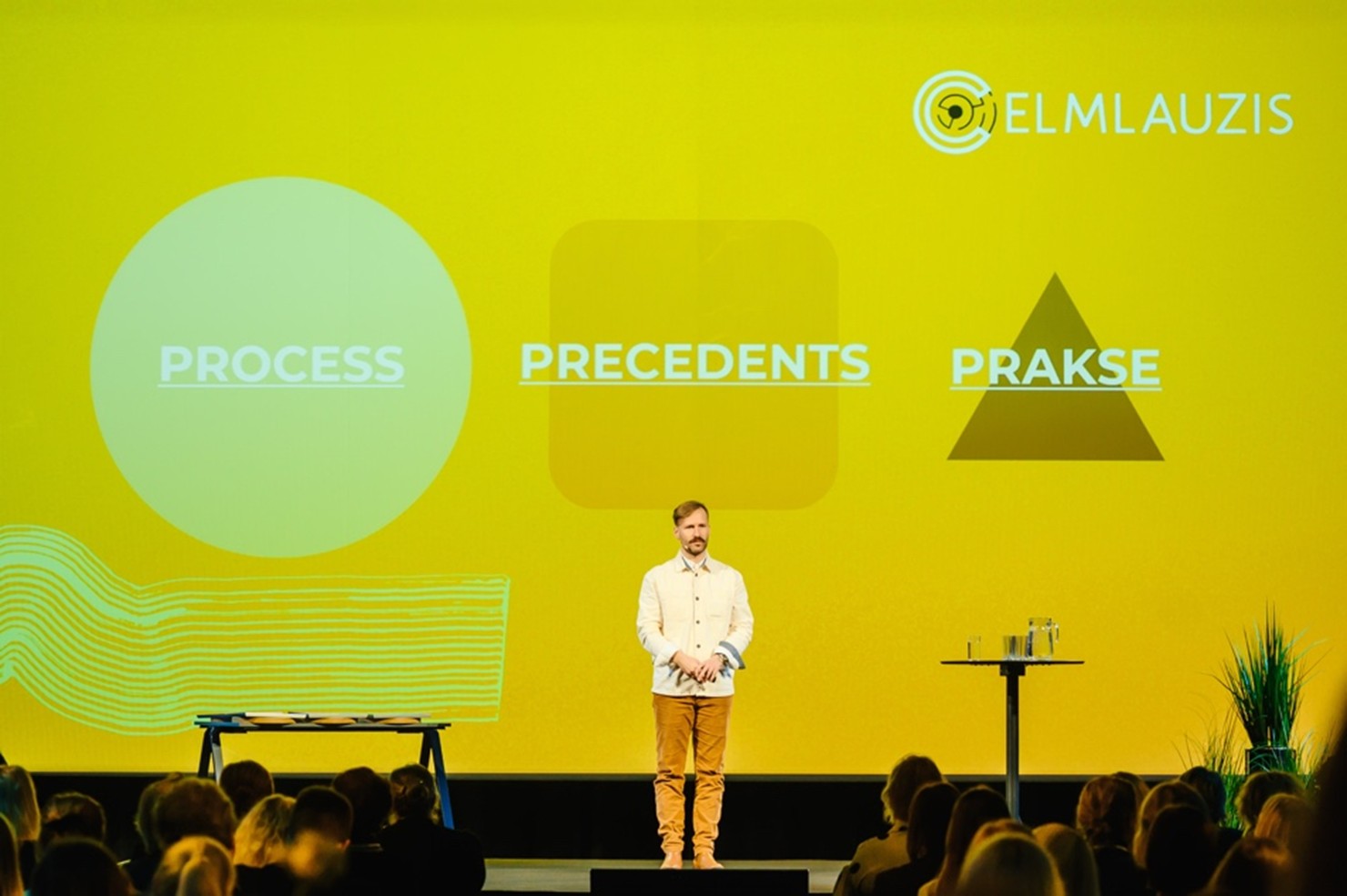
First, we focused on normalizing design as a method for engaging in complex policy problems. This involved creating a platform for sharing and discussing examples of design and innovation in government. This platform would benefit innovators multifacetedly. It would serve as a space where to share successes, where to learn about successful innovations and where to seek inspiration on methods and practices, as well as a community where to network with designers in government. We cultivated this through our innovation story conference “Celmlauzis 2025”, naming it after the historical practice of preparing dense, forested fields for agricultural work. This metaphor highlights the sometimes thankless task of being the first to start the cultural shift in an organization. In 2025, we combined it with the first Latvian Government Innovation Award, further celebrating the work done by the first design teams in the Latvian public sector. The event was the most attended conference we’ve had yet, with participants speaking positively about the inspiration and recognition the conference gave.
Secondly, we established core principles of innovation laboratories in Latvia to support the development of new innovation teams and initiatives across different public organisations. In 2025, we created the Information Report on Innovation Capacity Strengthening in Latvia with the appended Guidelines for Innovation Laboratories in Latvian State Governance, which were approved by the Cabinet of Ministers. The Information Report focuses more on the progress of the State Chancellery Innovation Laboratory, but the added guidelines serve as a governmentally approved basis for future laboratories. They outline the basic principles of innovation laboratories, the necessary environment, methods, and competencies to create one, as well as the core values that an innovation laboratory should have – empathy, experimentation, and co-creation.
We can already see positive results. There are currently three organizations taking the first formal steps to create their own design teams. The organizations report that being part of design sprints allowed them to see the benefits of design and rapid prototyping in the public sector and that the variety of training and expert network events helped them prepare for the involvement of the different actors in creating such a lab – the citizens, the coworkers, as well as the leadership.
Innovation for impact – how to make sustainable growth in our impact?
In this sense, the Latvian State Chancellery Innovation Laboratory is also a Celmlauzis – the first to prepare the field for sustainable innovation practices down the road. This year, our efforts in increasing the impacts of innovation often spanned outwards of our team or of the State Chancellery.
Firstly, by expanding outwards to other public sector organisations in Latvia. In 2025, we have spent significant efforts to improve the quality and impact of innovation across the board. We have made the first steps in creating an Innovation Monitoring Framework designed to be a horizontal tool for recognising and evaluating public sector innovations. Designed by innovation experts, this framework will help in creating an overall view of the innovation capacity of Latvian State Governance organizations, use public data from State Governance surveys and limit the reliance on self-reporting in innovation evaluation. This framework is based on the OECD OPSI-defined pillars and looks at the workforce, capacity and impact in organizations’ innovations.
Secondly, by looking outwards to international peers we organized an intensive training for the highest-level civil servants with Falay Transition collective in Finland, continued our collaboration with PI studio from Goldsmiths University in the United Kingdom, and went on 2 experience exchange trips to Sweden, Finland and Denmark. These collaborations not only have allowed us to use international experience to improve our view of contemporary public sector innovation, but also inspired the participants to use innovation practices in their daily work.
All these experiences converged in our final workshop of 2025 – “Winter Symposium: What’s next? What are we building?”. In this workshop, we invited the international experts and the Experts network to map their experience with the Innovation Lab, and to create 15 speculative design briefs of how the role of an innovation laboratory might look like in the future.
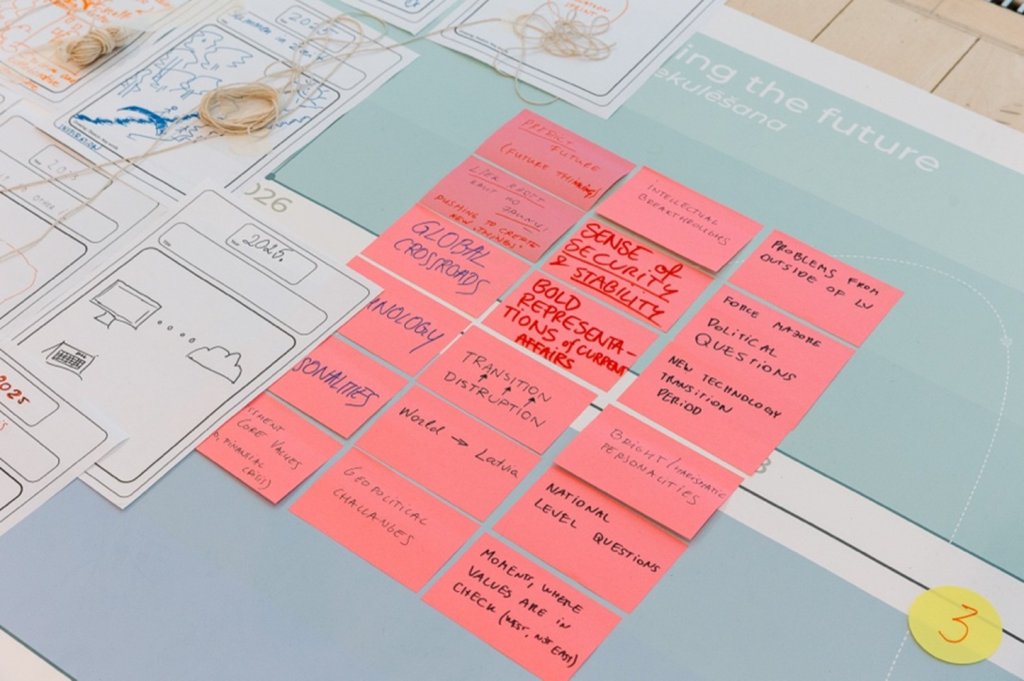
These design briefs served as a bottom-up guide to our internal Innovation Laboratory’s 2026 strategy. In 2026, we will have to be more strategic with our design sprints, focusing more on administrative burden reduction, as it is a political priority for the Latvian state’s Governance in 2026. Our internal roles have also shifted to adapt to the changes in the innovation environment in Latvia – being more aware and adapting to what is needed rather than what is in our job description.
What’s next? What are we building?
2025 has been, in many ways, the year in which the idea of public sector innovation has rooted itself in Latvia and started to show its first shoots of impact. Amongst other successes in the past year, the most rewarding are the birth of new design teams in government that have adopted a similar methodology.
However, as the innovation needs across Latvia change, our team must adapt. The three pillars of the OECD OPSI work in Latvia have been crucial in establishing a public sector innovation framework in Latvia, but our experience in 2025 has highlighted the need for our framework to shift from a more operational model to a more goal-oriented one to adapt to the need for strategic design support. Close collaboration with civil servants has shown that the biggest need for support might be in these areas: Design for Democracy, Design for Digitalization, and Design for Social Resilience.
We are fortunate and privileged to have achieved the impact we have, and we are endlessly thankful to our partners, both domestic and international, who have contributed to our successes so far. Quite often, this support came in the form of empowerment – from the teams and individuals working on the same goal as us – to make an organization more resilient and effective. As it often is with design work, we don’t know how we are going to exit 2026. But we will enter it prepared with a strong connection to our clients, and with the same values that underlie all our work – empathy to government organizations and Latvian citizens, making and understanding through co-creation, and creating knowledge through rapid experimentation and iteration.