


A tool to help cities and public administrations better orient and diagnose themselves regarding their innovation profile and maturity.
The tool includes a self-analysis quiz, a map to help navigate concepts and trends and compose your a custom menu. It also includes guidance for setting an innovation strategy.
Sonar comes in the form of a newspaper printed in A2 format that can be used in a group setting . This resource is available in French.
Good For: Collaboration
In this booklet you will find tools to implement the CO-CRE-AR methodology in its three phases: Understanding, Creating and Arming.
CO-CRE-AR moves in spaces of divergence and convergence. The first part invites you to UNDERSTAND in detail the challenge you want to face; the second to CREATE with openness and generate ideas without many restrictions, to then land them and make them concrete in work plans, including the necessary communication elements to "sell" the solution in the organization.

This playbook is an online crash course on service design. It works alongside the 14 points set out in the Digital Service Standard to provide the basics needed to get started on a digital service.
It covers: About service design, Discovery phase, Alpha phase, Beta phase, Live phase, and Team roles
The IIDM Toolset was designed as a guide for organisations and individuals seeking to build the capacity of problem solvers to innovate and collaborate more effectively. The Toolset addresses two key components: (1) cultivating an innovator’s mindset, and (2) improving the processes that support decision making along the journey from idea to impact. The publisher asserts that both of these ingredients are vital for decision making to yield improved innovation. The Toolset offers users…

Produced as part of the Making Sense project, which draws on nine citizen sensing campaigns in Holland, Kosovo and Spain in 2016 and 2017. Based on that experience, the publisher developed a framework and methods and tools for citizen participation in environmental monitoring and action. Their approach is bottom-up and participatory, which the publishers call "citizen sensing."
The publishers offer a software platform for collecting data, methodologies for making sense of data, and best…
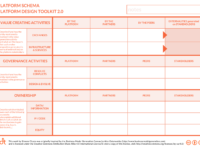
Platform Design Toolkit is based on the tradition of service design thinking and the publishers intend it to overcome the limitations in traditional, linear, business modeling approaches. This methodology is based on a multi-sided, ecosystem based, platform model instead of a traditional product or service design. Those interested in building their "government as a platform" strategy or building a suite of digital or non-digital products or services would likely find value in this approach but…
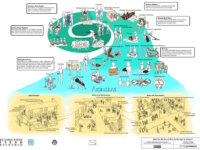
This toolkit is for people help each other map out the skills, knowledge, resources and capabilities they have in order to respond to, and effect, change in their community.
The Possible Futures Lab of the Information Security Group at Royal Holloway University of London originally developed the toolkit to assist grassroots co-creation in the community of Pallion, Sunderland. They have made their toolkits available to others to adapt.
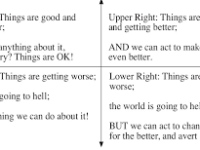
Over a dozen years of use to date, the game represents an accessible approach to introducing "images of the future" as a basic property of both cultures and individuals, and can be used as an introduction for more advanced futures and foresight tools and frameworks. It provides a structure for facilitating conversation among groups of participants and intended for groups. Duration is flexible, but typically runs 30-60 minutes. The resource provides step-by-step guidance for how to run the game…
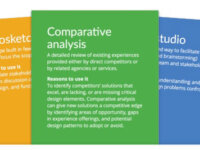
A collection of tools that describe how 18F digital service teams put human-centered design into practice. These cards are focused on design in the context of digital services, but can be adapted to non-technical design projects as well.
The resource is online and also available as printable cards.
The card set includes simplified information on various design methods according to an overall methodology: Discover, Decide, Make,Validate. There are also "Fundamentals" cards related to incentives,…
This guide is for people at 18F (a United States Federal Government technology transformation agency) who are wondering what to expect from a product manager on their team, as well as for product managers and those filling that role to understand what their team expects from them. This guide also serves as a resource for product management best practices at 18F. This guide could be used in other governments looking for product management guidance.