Good For: Collaboration
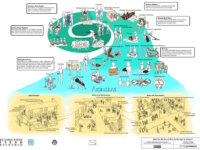
Produced as part of the Making Sense project, which draws on nine citizen sensing campaigns in Holland, Kosovo and Spain in 2016 and 2017. Based on that experience, the publisher developed a framework and methods and tools for citizen participation in environmental monitoring and action. Their approach is bottom-up and participatory, which the publishers call "citizen sensing."
The publishers offer a software platform for collecting data, methodologies for making sense of data, and best…
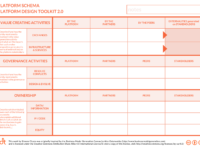
Platform Design Toolkit is based on the tradition of service design thinking and the publishers intend it to overcome the limitations in traditional, linear, business modeling approaches. This methodology is based on a multi-sided, ecosystem based, platform model instead of a traditional product or service design. Those interested in building their "government as a platform" strategy or building a suite of digital or non-digital products or services would likely find value in this approach but…
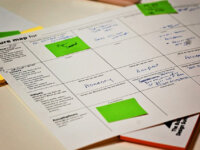
This toolkit is for people help each other map out the skills, knowledge, resources and capabilities they have in order to respond to, and effect, change in their community.
The Possible Futures Lab of the Information Security Group at Royal Holloway University of London originally developed the toolkit to assist grassroots co-creation in the community of Pallion, Sunderland. They have made their toolkits available to others to adapt.
The Shift Surrey guide provides an overview of Surrey's design approach to date, including a summary of projects and suggestions for building an internal community of practice inside government. At the end of the guide, there are several typical design tools, tips and tricks learned through Surrey's experience and suggestions for related design resources.
This resource describes a comprehensive method for the BC Public Service (BCPS) to design services for British Columbians, although it is also applicable to other governments.
The Playbook is intended to help ensure public service designers have the necessary tools and corporate support to make change.
It includes an overview of service design, a discussion of when and how to use it, as well as detailed guidance and tools for the various methods used in service design. The methods are organised…
A tool that organizations can use to assess, map and transform their cultures. It is intended at a group activity to guide conversations around outcomes, behaviours, and enablers/blockers. The website also contains guidance for its use. It is intended for a private sector context but non-financial "outcomes" can also be considered when using it in the public sector.
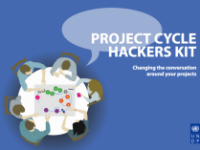
The Hackers’ Kit supports different types of discussions around project and program design. It's aim is to normalise innovation in a large organization by embedding new practices in key project management business processes. Worked on and tested with over 25 project teams in the United Nations Development Programme, the toolkit is intended for an international development context but could be applied to any large organisation with a desire to innovate.
It includes a wall map of the process,…
The toolkit provides an approach and methods those looking for a new way to tackle social and policy issues by making services more valuable to customers and users, easier to use, with fewer resources wasted on implementing the right ideas in the wrong way (or on the wrong ideas entirely).
This approach involves spending time understanding people’s experiences and resources on their own terms, taking methodical steps to analyse and address these with their active participation, and pushing for…
This web-based resource contains ideas and practical help to use digital and social media in the public sector. It is organised by techniwues, strategies, examples, and (user generated) questions. This resource can assist governments with service delivery and stakeholder engagement. The publisher's main website also contains other resources for online communication.
The publisher defines Open Policy Making as developing and delivering policy in a fast-paced and increasingly networked and digital world through collaborative approaches, new analytical techniques, and testing and iteratively improving policy.
The manual includes information about Open Policy Making in the United Kingdom government as well as tools, step-by-step guidance and techniques policy makers can use to create more open and user led policy.