
Good For: Deployment
This resource distills the United Nations Development Programme's experience and lessons with running Social Innovation Camps into a "how-to" manual for others. The publisher intends it to broaden a project's results, attract donors, find new partners, source new perspectives on an issue, and/or place beneficiaries at the centre of project design. The resource was created within an international development and social innovation context but can be adapted for public sector use.
It is available…
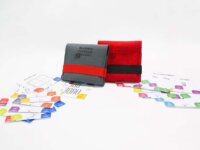
A collection of cards describing methods for planning and executing design research, ideation, experimentation and creation within short iterations (sprints). They split the methods into tasks that follow SCREAM; a methodology which is a modified version of SCRUM, tailored to fit within the publisher's design process.
The card fronts contain basic information, such as activity type, category, and duration. The backs contain basic overviews of the methods and how-to instructions. These are…
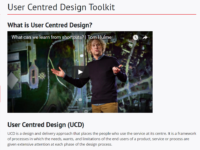
This resource contains a framework and guidance regarding the use of user-centred design. The publisher defines the UCD process in six phases - two planning and four delivery phases. The two planning phases focus on typical project planning aspects such as problem space, resources, agency readiness, team logistics, governance, etc. The four delivery phases are about action, talking to users to understand their real needs, prototyping potential solutions, and building the minimum viable product…
The resource addresses the use of financial prizes to source solutions to challenges. It draws on academic literature, interviews with analysts and practitioners, surveys of prize sponsors and competitors, databases of small and large awards, and case studies of 12 effective prizes to produce lessons from a range of sectors, goals, and prize types. It provides frameworks and recommendations to help improve current prizes and stimulate effective future use. While it is targeted to philanthropic…
The toolkit's goal is to help actors conceptualize and operationalize their ambitions in terms of supporting social innovation. It contains not only “procedures” but also knowledge concerning social innovation.
The guide was designed to support European Social Fund (or other) funding organisations that want to focus mainly on service innovation (as opposed to systems innovation or internally oriented process innovation). But it also recognizes the idea of broader societal transitions and the…
A collection of tools created during the Open Data Innovation Week, which was a gathering of innovators from across the Asia-Pacific region to build a box of tools and methods for improving the design, practice and implementation of open data initiatives to help solve the region’s key political, economic, and social problems. Tools range from ethnography to mapping and analysis. Each tool contains instructions: purpose, prerequisites, who to involve, difficulty, time-frame, and step-by-step…
This resource is intended to support United Kingdom government teams create and run digital services according to their Digital Service Standard. It covers Accessibility and assisted digital, Agile delivery, Design, Measuring success, Service assessments and getting on GOV.UK, Technology, The team, and User research.
This playbook describes 10 "plays" organised around
designing the job, finding the right people, and guiding applicants. Each play includes guiding steps and examples.
This resource tells the stories of 20 teams, units and funds established by governments and charged with making innovation happen. i-teams, short for innovation teams, are dedicated teams, units and funds, to structure and embed innovation methods and practice in government. They are largely affiliated with Bloomberg Philanthropies and its associated i-teams program and usually within local governments.
This resource analyses the diversity of structures and approaches, their impacts, and the key…