Skip to content
An official website of the OECD. Find out more
Created by the Public Governance Directorate

This website was created by the OECD Observatory of Public Sector Innovation (OPSI), part of the OECD Public Governance Directorate (GOV).

How to validate authenticity

Validation that this is an official OECD website can be found on the Innovative Government page of the corporate OECD website.

Toolkit

18F Method Cards

Hero HERO:
Editable source files available
A collection of tools that describe how 18F digital service teams put human-centered design into practice. These cards are focused on design in the context of digital services, but can be adapted to non-technical design projects as well. The resource is online and also available as printable cards. The card set includes simplified information on various design methods according to an overall methodology: Discover, Decide, Make,Validate. There are also "Fundamentals" cards related to incentives,…
Toolkit

Citizen Sensing: A Toolkit

Champion CHAMPION:
Can be remixed
Produced as part of the Making Sense project, which draws on nine citizen sensing campaigns in Holland, Kosovo and Spain in 2016 and 2017. Based on that experience, the publisher developed a framework and methods and tools for citizen participation in environmental monitoring and action. Their approach is bottom-up and participatory, which the publishers call "citizen sensing." The publishers offer a software platform for collecting data, methodologies for making sense of data, and best…
Toolkit

Platform Design Toolkit

Champion CHAMPION:
Can be remixed
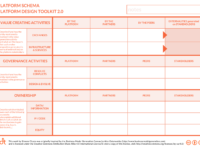
Platform Design Toolkit is based on the tradition of service design thinking and the publishers intend it to overcome the limitations in traditional, linear, business modeling approaches. This methodology is based on a multi-sided, ecosystem based, platform model instead of a traditional product or service design. Those interested in building their "government as a platform" strategy or building a suite of digital or non-digital products or services would likely find value in this approach but…
Toolkit

Neighbourhood Ideas Exchange Toolkit

Champion CHAMPION:
Can be remixed
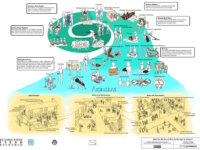
This toolkit is for people help each other map out the skills, knowledge, resources and capabilities they have in order to respond to, and effect, change in their community. The Possible Futures Lab of the Information Security Group at Royal Holloway University of London originally developed the toolkit to assist grassroots co-creation in the community of Pallion, Sunderland. They have made their toolkits available to others to adapt.
Toolkit

This is Service Design Doing – Method Library

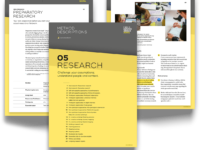
This resource is a method library containing 54 method descriptions for using the key methods in service design. These methods include instructions, guidelines, and-tips-and tricks for activities within research, ideation, prototyping, and facilitation. This collection only contains building blocks. It doesn’t detail how to assemble them into a cohesive design process or how to plan or manage it. The associated (paid) book and curriculum offers this context.
Toolkit

Designing for Behaviour Change Toolkit

Basic BASIC:
Allows reuse
This toolkit outlines Bridgeable’s approach to harnessing behavioural economics (BE) to design better products and services that nudge user behaviour. It combines a service design approach with a BE approach, with the caveat that BE helps identify and tweak pivotal moments of decision making but not overall user experience or strategies. The toolkit includes an overview of BE as well as an ideation and testing framework incorporating BE principles to move from a current state to an idea future…
Toolkit

Designing with People

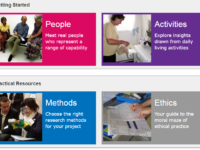
This web-based resource has been created by the Helen Hamlyn Centre for Design at the Royal College of Art to share ways to design inclusively for a range of physical and cognitive abilities. It includes personas representing different abilities, an overview of typical daily activities done by those personas, a selection of design methods, as well as a collection of ethics for designers. The research method selection describes each by input, output, suitability, and characteristics, including…
Toolkit

Project Cycle Hackers Kit

The Hackers’ Kit supports different types of discussions around project and program design. It's aim is to normalise innovation in a large organization by embedding new practices in key project management business processes. Worked on and tested with over 25 project teams in the United Nations Development Programme, the toolkit is intended for an international development context but could be applied to any large organisation with a desire to innovate. It includes a wall map of the process,…
Toolkit

The Social Design Methods Menu

Champion CHAMPION:
Can be remixed
The toolkit provides an approach and methods those looking for a new way to tackle social and policy issues by making services more valuable to customers and users, easier to use, with fewer resources wasted on implementing the right ideas in the wrong way (or on the wrong ideas entirely). This approach involves spending time understanding people’s experiences and resources on their own terms, taking methodical steps to analyse and address these with their active participation, and pushing for…
Toolkit

A Rough Guide to the Shift Surrey Approach

Basic BASIC:
Allows reuse
The Shift Surrey guide provides an overview of Surrey's design approach to date, including a summary of projects and suggestions for building an internal community of practice inside government. At the end of the guide, there are several typical design tools, tips and tricks learned through Surrey's experience and suggestions for related design resources.