
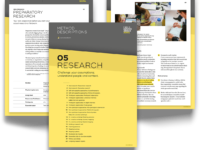
This resource is a method library containing 54 method descriptions for using the key methods in service design. These methods include instructions, guidelines, and-tips-and tricks for activities within research, ideation, prototyping, and facilitation. This collection only contains building blocks. It doesn’t detail how to assemble them into a cohesive design process or how to plan or manage it. The associated (paid) book and curriculum offers this context.
Good For: Proposal development
Toolkit
 CHAMPION:
Can be remixed
The Reference Panel Playbook: Eight moves for designing a deliberative process
CHAMPION:Can be remixed

Reference Panels, also known as Citizens' Assemblies, Commissions and Juries, are an example of long-form deliberative processes that are frequently used by governments and public agencies to obtain detailed guidance on important and sometimes controversial policies.
Based on the publisher's experience with reference panels, they offer eight moves from their playbook to help others plan their own deliberative process.
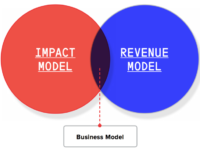
A Role-Playing and Ideation Game That Simulates The Process Of Launching A Social Enterprise. The game walks players through a series of activities in order to simulate the process of ideating and launching a social enterprise in four steps: Learn, Invent, Program, and Report. It is available via a pay-what-you-want digital download, and includes instructions for gameplay, a glossary of 200+ business models, and a suite of other resources.
The guide offers practical guidance to local government officials on how to build a culture and practice of innovation and give local leaders an action-oriented framework for breakthrough
innovation. It lays out nine “Imperatives” towards this end, with concrete action steps for each to help cities get started, along with illustrative case studies.
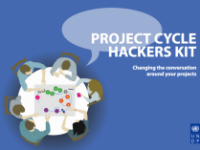
The Hackers’ Kit supports different types of discussions around project and program design. It's aim is to normalise innovation in a large organization by embedding new practices in key project management business processes. Worked on and tested with over 25 project teams in the United Nations Development Programme, the toolkit is intended for an international development context but could be applied to any large organisation with a desire to innovate.
It includes a wall map of the process,…
The toolkit provides an approach and methods those looking for a new way to tackle social and policy issues by making services more valuable to customers and users, easier to use, with fewer resources wasted on implementing the right ideas in the wrong way (or on the wrong ideas entirely).
This approach involves spending time understanding people’s experiences and resources on their own terms, taking methodical steps to analyse and address these with their active participation, and pushing for…

This document gives you the information you need to create your own lab. This could be a UNICEF lab—or could simply be a space of creativity that is aimed at solving significant global problems through the application of dedicated local resources.
It provides background on labs, defining a lab's purpose, budget and scoping, and examples of different lab models (outreach/training, product development, service development, operational research, and content broadcasting).
It also includes…
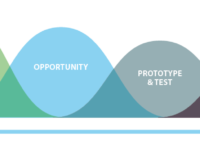
This resource describes a comprehensive method for the BC Public Service (BCPS) to design services for British Columbians, although it is also applicable to other governments.
The Playbook is intended to help ensure public service designers have the necessary tools and corporate support to make change.
It includes an overview of service design, a discussion of when and how to use it, as well as detailed guidance and tools for the various methods used in service design. The methods are organised…

The Shift Surrey guide provides an overview of Surrey's design approach to date, including a summary of projects and suggestions for building an internal community of practice inside government. At the end of the guide, there are several typical design tools, tips and tricks learned through Surrey's experience and suggestions for related design resources.
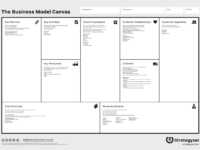
This canvas and associated guidance is is a strategic management and lean startup template that can be used the to describe, design, challenge, and pivot a business model to deliver different values or in different ways. It consists of 9 elements: value proposition, customer segments, customer relationships, channels, key partners, key resources, key activities, cost structure, and revenue streams.
It can be used individually or in a group. It works in conjunction with the Value Proposition…