
The resource addresses the use of financial prizes to source solutions to challenges. It draws on academic literature, interviews with analysts and practitioners, surveys of prize sponsors and competitors, databases of small and large awards, and case studies of 12 effective prizes to produce lessons from a range of sectors, goals, and prize types. It provides frameworks and recommendations to help improve current prizes and stimulate effective future use. While it is targeted to philanthropic…
Good For: Proposal development
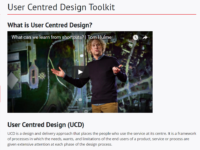
This resource contains a framework and guidance regarding the use of user-centred design. The publisher defines the UCD process in six phases - two planning and four delivery phases. The two planning phases focus on typical project planning aspects such as problem space, resources, agency readiness, team logistics, governance, etc. The four delivery phases are about action, talking to users to understand their real needs, prototyping potential solutions, and building the minimum viable product…
The DesignGov experiment was an 18 month initiative of the Australian Public Service to apply design-led innovation to cross-agency problems. This resource is based on the experience of DesignGov and is intended to be a resource for others that might be looking to establish and operate a public sector innovation lab. This resource is offered as a personal contemplation about what should be considered when establishing, running and, possibly, closing a public innovation lab.
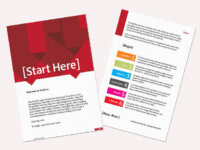
Kickbox is an innovation process that Adobe developed for its own use and then open-sourced so everyone can use it. It is both a process for individuals and a system for deploying that process across an organization at scale. It’s designed to increase innovator effectiveness, accelerate innovation velocity, and measurably improve innovation outcomes. It can also optimize innovation investments by reducing costs compared to traditional approaches. Adobe distributed 1000 physical boxes…
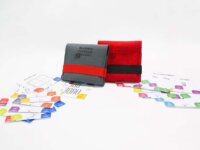
A collection of cards describing methods for planning and executing design research, ideation, experimentation and creation within short iterations (sprints). They split the methods into tasks that follow SCREAM; a methodology which is a modified version of SCRUM, tailored to fit within the publisher's design process.
The card fronts contain basic information, such as activity type, category, and duration. The backs contain basic overviews of the methods and how-to instructions. These are…
This is a report produced in conjunction with IDEO after a 2-year initiative of the Rockefeller Foundation called Paper Prototyping, an effort to better inform investment decisions of the Foundation. While this resource is not a typical innovation toolkit, it was included because it describes an often implicit and invisible process of developing and testing proposals for innovative solutions to complex problems.
Toolkit
 BASIC:
Allows reuse
Toolkit for Supporting Social Innovation with the European Social Investment Funds
BASIC:Allows reuse
The toolkit's goal is to help actors conceptualize and operationalize their ambitions in terms of supporting social innovation. It contains not only “procedures” but also knowledge concerning social innovation.
The guide was designed to support European Social Fund (or other) funding organisations that want to focus mainly on service innovation (as opposed to systems innovation or internally oriented process innovation). But it also recognizes the idea of broader societal transitions and the…
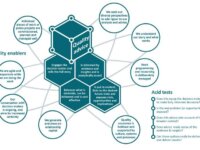
The Policy Quality Framework describes the key characteristics of quality policy advice, as well as the ‘enablers’ of great advice, like considering multiple perspectives, good commissioning, quality assurance processes and work planning.
It is one of three improvement frameworks co-designed for and by the policy community in New Zealand to help government agencies improve their policy quality and capability.
It includes several policy assessments for different stages of the policy cycle and…

The Design Kit resource is both a downloadable PDF as well as online guidance on the different phases of a human-centered design process, organised by Mindsets, Methods (Inspiration, Ideation, Implementation), and Tools. The PDF is only downloadable from the website after creating a user account at IDEO. Website includes instructional videos on the techniques of various user-centered design methods and techniques.
Toolkit
 CHAMPION:
Can be remixed
i-teams: The teams and funds making innovation happen in governments around the world
CHAMPION:Can be remixed
This resource tells the stories of 20 teams, units and funds established by governments and charged with making innovation happen. i-teams, short for innovation teams, are dedicated teams, units and funds, to structure and embed innovation methods and practice in government. They are largely affiliated with Bloomberg Philanthropies and its associated i-teams program and usually within local governments.
This resource analyses the diversity of structures and approaches, their impacts, and the key…