
Good For: Uncover beliefs and values
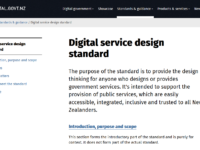
The purpose of the standard is to provide guidance for those in the New Zealand government or anyone who designs or provides government services regarding the provision of accessible, integrated, inclusive public services. It includes principles, rationale, information on how to meet the standard, related implementation guidance and resources, and a glossary.

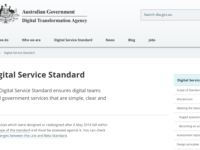
The purpose of the standard is to provide guidance for those in the Australian government or anyone who designs or provides government digital services regarding the provision of simple, clear and fast services. It includes 13 criteria, rationale, information about meeting the standard, design principles, service design and delivery process, related training and guides, and a glossary.
The resource also includes downloadable posters.

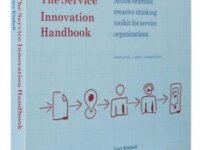
14 methods and 3 recipes suggesting how to combine them, associated with a guide book available for sale by the toolkit publisher.
Accompanying each method: Purpose, Outcomes, How to do it, and Tips as well as a worked example, to help readers understand how the method and associated template can be used at the early stage of designing an innovative service.
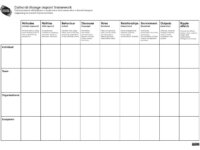
This resource includes a framework, basic guidance and canvas for use in mapping and assessing organisational readiness and capacity development, designing and developing assessment criteria for capacity-building, facilitating strategic dialogue, supporting and assessing the impact of innovation teams and labs, and enabling structured focus on what elements should be prioritised in capacity-building efforts as well as for case production and knowledge sharing.

Liberating Structures is a web resource that includes a collection of 33 results-oriented collaboration patterns have been developed and refined through field testing over a 10+ year period in a variety of sectors including healthcare and business.
They are intended to complement conventional practices for organisational design and strategy design. They are designed to be used in an inclusive collaborative setting.
Associated books (for sale) and video guidance is available to assist those…
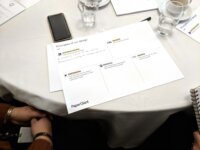
This is canvas and background guidance around a set of principles for co-design, inspired by the principles developed by the NSW Council of Social Services. The principles are: Outcomes-focused, Inclusive, Participative, Respectful, Adaptive.
The canvas includes an example case study.

A tool to help cities and public administrations better orient and diagnose themselves regarding their innovation profile and maturity.
The tool includes a self-analysis quiz, a map to help navigate concepts and trends and compose your a custom menu. It also includes guidance for setting an innovation strategy.
Sonar comes in the form of a newspaper printed in A2 format that can be used in a group setting . This resource is available in French.
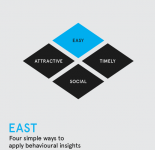
EAST is a framework and summary of the Behavioural Insights Team's knowledge of behavioural science, developed for busy policymakers. It is based around principles of making actions Easy, Attractive, Social and Timely (EAST) applied to a 4-step process: 1. Define the outcome, Understand the context, Build your intervention, and Test, learn, adapt.
It is a more simplified version of the publisher's prior MINDSPACE framework. The resource includes overall guidance and case studies.
The Experiment Co-Creation Platform (ECP) is a model for collaboration and experimenting dedicated in delivering sustainable solutions to wicked urban problems.
The ECP model was developed and prototyped by Demos Helsinki. In the model, cities, higher education institutions and non-academic collaborators such as companies and foundations together define a desirable shared vision to work towards to as well as identify the challenges preventing the vision from happening. Research-based teams…