Publisher Type: National government
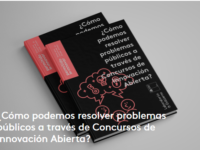
These guides, created by the Government Laboratory, systematize the best experiences and learning generated by servers and public institutions in recent years.
These tools of support and permanent consultation, are designed so that the different organisms of the State can develop innovation processes with a view from the user, that allows to generate services and solutions more connected with their needs. There are two options: Contests and Projects.
This guide is for people at 18F (a United States Federal Government technology transformation agency) who are wondering what to expect from a product manager on their team, as well as for product managers and those filling that role to understand what their team expects from them. This guide also serves as a resource for product management best practices at 18F. This guide could be used in other governments looking for product management guidance.
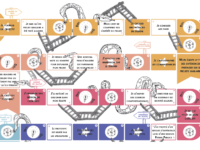
Designed with the assistance of the CNFPT and the DGAFP, this game is inspired by "Chutes & Ladders": a board game where the team must realize the major stages of their project, and sometimes encounters ladders (these "little miracles" that win several boxes at once) and chutes (these pitfalls that push back the project carrier). The resource is in French.
This toolkit provides guidance for public servants on how to communicate with the public using the simplest and clearest language possible and to ensure that all services are accessible, and meets the diverse needs of all our customers. The guidance is based on Universal Design principles.
The toolkit contains advice on general writing style principles, verbal and non-verbal communications, design of forms and documents, web and social media content and how to display signage. It features a…
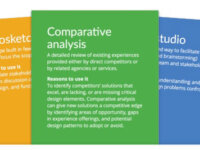
A collection of tools that describe how 18F digital service teams put human-centered design into practice. These cards are focused on design in the context of digital services, but can be adapted to non-technical design projects as well.
The resource is online and also available as printable cards.
The card set includes simplified information on various design methods according to an overall methodology: Discover, Decide, Make,Validate. There are also "Fundamentals" cards related to incentives,…
The Policy Methods Toolbox is a repository of policy development methods that helps policy practitioners identify and select the right approach for their policy initiative.
It is organised into four themes:
Start Right: a light touch approach to making the best start in policy projects.
Behavioural insights: the study of human behaviour, often drawing upon the empirical research in fields including economics, psychology and sociology.
Design thinking: also known as human-centred design,…
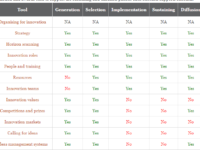
Toolkit developed by the Australian central government, this resource offers 28 pieces of guidance, methods, or techniques for different stages of an organisational innovation lifecycle.
The resource includes an Innovation Diagnostic to get a snapshot on which phase of the innovation cycle an agency might need to focus on.
Information and resources to guide United States federal employees working on challenges and prizes. It includes guidance on each challenge phase, from preparation to execution and also provides guidance on different types of challenges. It includes case studies and a list of resources for more detailed guidance and support.
A guide intended for the Australian government for designing public services in user-centered and iterative ways. This resource is intended to help teams start small and learn fast, and to create services that can be delivered quickly and to save money by reducing service failure.
It is organised into 4 design and delivery stages, each with an associated guide: Discovery, Alpha, Beta, Live.
The publisher defines Open Policy Making as developing and delivering policy in a fast-paced and increasingly networked and digital world through collaborative approaches, new analytical techniques, and testing and iteratively improving policy.
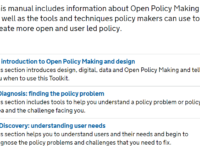
The manual includes information about Open Policy Making in the United Kingdom government as well as tools, step-by-step guidance and techniques policy makers can use to create more open and user led policy.