Task Type: Approach planning/What could be
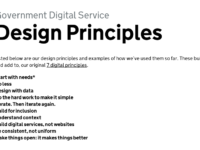
The United Kingdom government's design principles and examples of how they have been used. Each principle includes links to articles with additional explanation and reflections.
1. Start with user needs
2. Do less
3. Design with data
4. Do the hard work to make it simple
5. Iterate. Then iterate again
6. This is for everyone
7. Understand context
8. Build digital services, not websites
9. Be consistent, not uniform
10. Make things open: it makes things better
This Field Guide is a systems take on typical design thinking methodology. It demonstrates how to design something with a greater emphasis on creativity and humour. The Guide goes through a systemic design project from concept to implementation. It takes you through the workshop planning process, and discusses workshop roles and client relations. In the FAQs, you’ll find explanations to some commonly asked questions about systemic design concepts to help you introduce others to SD and bring…
The toolkit includes 5 methods for designing a more inclusive lab. The toolkit begins by guiding users through basic user observation, identification, and categorization processes (observation, interviews,
and personas). It then moves into problem definition and stakeholder prioritization, and finally defines a concrete suggestion for increased
diverse stakeholder governance. It includes templates and examples for each method.
The toolkit's goal is to help actors conceptualize and operationalize their ambitions in terms of supporting social innovation. It contains not only “procedures” but also knowledge concerning social innovation.
The guide was designed to support European Social Fund (or other) funding organisations that want to focus mainly on service innovation (as opposed to systems innovation or internally oriented process innovation). But it also recognizes the idea of broader societal transitions and the…
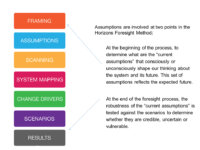
This guide is a facilitation toolkit for staff at Horizons and others interested in practising the Horizons Foresight Method in their own organizations. Its aims are to build foresight literacy in general, to explain the Horizons Foresight Method in particular, and to build capacity for horizon scanning in the Canadian federal government and other organizations. It provides a detailed description of concepts and processes, divided into 6 modules. Modules include facilitation guides, tip sheets,…
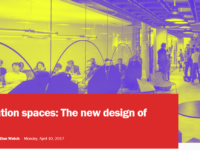
Authors Julie Wagner and Dan Watch draw from nearly 50 in-depth interviews with global-reaching and local-serving architects and innovation space managers to analyze the continuum of modern innovation-oriented workspaces. They find the role of well-designed innovation spaces in improving firm competitiveness, company culture, and the formulation of new products and ideas, offers important lessons for companies, universities and other drivers of the innovation economy on how to re-imagine space…
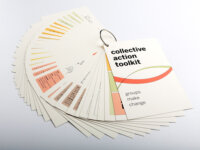
The Collective Action Toolkit (2nd edition) is a set of activities and methods that enables groups of people anywhere to organize, collaborate, and create solutions for problems affecting their community.
It guides users through methods according to six action areas, with suggested pathways from one method to the next. For each method, step-by-step instructions are given, in addition to the time, roles, and materials needed. Some methods include canvasses to guide activity.
The toolkit is…
This resource offers on ways to do things differently by introducing basic guidance on the process of design thinking. It provides guidance on how to introduce this new approach into day-to-day work in the public sector. It was developed for both policymakers and people who design and deliver public services who need to make large changes in how they serve their citizens.
It includes guidance on creating an environment set up to do design work as well as an overview of some of the most commonly…
This resource tells the stories of 20 teams, units and funds established by governments and charged with making innovation happen. i-teams, short for innovation teams, are dedicated teams, units and funds, to structure and embed innovation methods and practice in government. They are largely affiliated with Bloomberg Philanthropies and its associated i-teams program and usually within local governments.
This resource analyses the diversity of structures and approaches, their impacts, and the key…
This guide outlines BETA’s approach to developing behavioural interventions for randomised controlled trials (RCTs), based round 9 guiding questions through four project phases:
Discovery, Diagnosis, Design, Delivery. The guide is designed to primarily help with the discovery and diagnosis phases.
It also includes basic guidance on setting up an RCT.
The website includes an academic directory of those working in the behavioral economics research community.