
This resource is developed by and for open government influencers - civil servants and civil society representatives seeking to collaboratively make governance processes transparent, participatory and accountable. It is intended for those who want to be an open government influencer.
The original guidance includes recommendations and experiences from experienced leaders in Europe and Central Asia. It follows the publishers' joint journeys in navigating challenges to creating an enabling…
Task Type: Group behaviours and skills
This resource aims to enrich the efforts of parliaments and their civil society counterparts to engage in collaborative processes, either as part of the Open Government Partnership National Action Plan or otherwise. The first section focuses on the development of open parliament commitments. The second section shares the experiences of a variety of parliaments and civil society organisations in collaborating in the creation of parliamentary openness commitments and in developing ongoing…

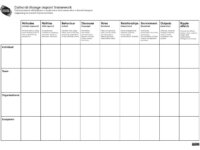
This resource includes a framework, basic guidance and canvas for use in mapping and assessing organisational readiness and capacity development, designing and developing assessment criteria for capacity-building, facilitating strategic dialogue, supporting and assessing the impact of innovation teams and labs, and enabling structured focus on what elements should be prioritised in capacity-building efforts as well as for case production and knowledge sharing.

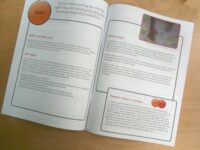
The Design Process Mini-Guide is five-page document outlining a design process taught at the Stanford d.school. The school gives this resource to students after a short design experience, to help solidify the takeaways and abstract the experience to useful framework. The publishers suggest using the document in conjunction with an action-oriented design experience, such as their related Gift Giving Project and Wallet Project. This resource is on an older archive version of the d.school website.…
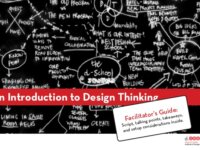
The Gift-Giving Project is 90-minute (plus debrief) fast-paced project though a full design cycle, intended to give learners a tangible experience with design thinking. It is intended as a group activity (from 2 to 100+ participants) with a facilitator.
Learners pair up to interview each other, come to a point-of-view of how they might design for their partner, ideate, and prototype a new solution to "redesign the gift-giving experience" for their partner. The resource includes a handout, a…
The Better Government Toolkit provides resources to build a better government through innovation. It focuses on four areas/verticals: Build a 21st Century Culture and Workforce, Improve Government Services Delivery, Solve Complex Problems, Collaborate with Innovators. It includes case studies within the United States Government. Each tool includes approach, actions and considerations, glossary of terms, related policies, and related resources.

This resource includes a method and guidance for developing and getting comfortable with storytelling to engage your audience and collaborators in your project. It includes an 8 step process to developing and creating a "sticky" story to inspire and persuade others into action. It includes a downloadable guide with examples and tips and tricks as well as a checklist for evaluating your story.
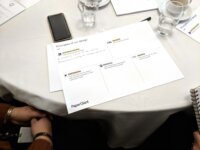
This is canvas and background guidance around a set of principles for co-design, inspired by the principles developed by the NSW Council of Social Services. The principles are: Outcomes-focused, Inclusive, Participative, Respectful, Adaptive.
The canvas includes an example case study.

This resource focuses on inclusive design, a methodology that enables and draws on the full range of human diversity, including those with limited abilities. The resource includes a guide on inclusive design, multiple short-films and a 20-minute documentary, as well as activity cards that follow 5 phases of a design process.