
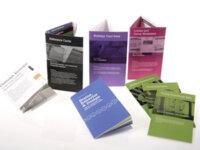
The toolkit is designed to be both informative and actionable - helping integrate the latest research in human behavior and decision making into practice. The toolkit features five tools to help designers apply findings from the field of behavioral economics to their practice in order to provide a head start on framing research as well as developing new strategies for solving user problems.
The toolkit includes:
Reference Cards: behavioral economics research findings organized and…
Toolkit Navigator
A compendium of toolkits for public sector innovation and transformation, curated by OPSI and our partners around the world

An A/B test measures and compares the effectiveness of different versions of a program feature, service, or communication. This interactive tool helps users prepare for A/B tests, create random assignments of users to A or B, and helps users analyse which was more successful. The publishers suggest that this approach can be used by governments to optimize outreach materials, communications and engagement, program features, and processes (e.g., applications, payments).

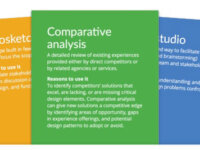
A collection of tools that describe how 18F digital service teams put human-centered design into practice. These cards are focused on design in the context of digital services, but can be adapted to non-technical design projects as well.
The resource is online and also available as printable cards.
The card set includes simplified information on various design methods according to an overall methodology: Discover, Decide, Make,Validate. There are also "Fundamentals" cards related to incentives,…
This guide is for people at 18F (a United States Federal Government technology transformation agency) who are wondering what to expect from a product manager on their team, as well as for product managers and those filling that role to understand what their team expects from them. This guide also serves as a resource for product management best practices at 18F. This guide could be used in other governments looking for product management guidance.
Toolkit
 CHAMPION:
Can be remixed
The Reference Panel Playbook: Eight moves for designing a deliberative process
CHAMPION:Can be remixed

Reference Panels, also known as Citizens' Assemblies, Commissions and Juries, are an example of long-form deliberative processes that are frequently used by governments and public agencies to obtain detailed guidance on important and sometimes controversial policies.
Based on the publisher's experience with reference panels, they offer eight moves from their playbook to help others plan their own deliberative process.
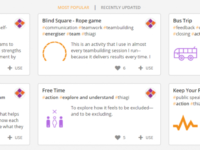
This online library contains over 400 facilitation resources, available with free login. Tools are organised by topic: Team, Energiser, Idea generation, Issue resolution, Explore and understand, Action. They include information such as time required, group size, difficulty, materials, step-by-step instructions, tips, and variations as well as user comments.
This private company also offers free and paid session planner software using the methods in the library.
The SIC learning repository is an online, open resource available for innovators, researchers and policy makers to improve their skills in design for Social Innovation.
The tools section is organised by main activities/actions, including:
RECRUITING SOCIAL INNOVATORS
STAKEHOLDER ENGAGEMENT
IDEATION
PRODUCT/SERVICE DEVELOPMENT
PROTOTYPING
SUSTAINABLE GROWTH AND IMPACT
FUNDING OPPORTUNITIES
For each tool, time commitment and team requirements are listed and each can be downloaded as a PDF.

IMPACT: A Foresight Game is a serious board game that teaches you to think critically and imaginatively about emerging technology and the future of society.
It's goals for players:
/ Learn the basics of futures thinking including some of the key terminology
/ Learn about the latest advances in science and technology (neurotech, nanotech, artificial intelligence, IoT, biotech, robotics)
/ Practice thinking about how these emerging technologies could evolve and the various ways they could…
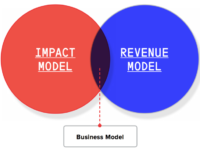
A Role-Playing and Ideation Game That Simulates The Process Of Launching A Social Enterprise. The game walks players through a series of activities in order to simulate the process of ideating and launching a social enterprise in four steps: Learn, Invent, Program, and Report. It is available via a pay-what-you-want digital download, and includes instructions for gameplay, a glossary of 200+ business models, and a suite of other resources.

DIY Learn is a set of online modules to help development practitioners understand and embed practical tools to support social innovation in their work. It contains a series of free, 2-hour courses as well as a trainers handbook. It was created for international development practitioners but is applicable for public sector staff as well.