
Toolkit Navigator
A compendium of toolkits for public sector innovation and transformation, curated by OPSI and our partners around the world

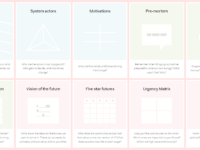
This resource is a modular set of tools (10 methods in 3 phases) that can be run in various ways, from a general tool to discover and ideate futures into a premeditated, repeated and ever-focusing exercise to build a vision on one or more lines of work. The resource can also be used to bring transparency and alignment to any organization through repeated exercises. It consists of three types of tools: Worldbuilding, Predictive Analysis and the Optimal Futures. The authors also suggest a process…
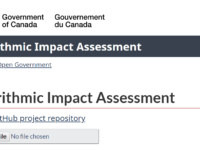
The AIA is a questionnaire designed to help assess and mitigate the impacts associated with deploying an automated decision system. It helps identify the impact level of an automated decision system. It was developed with the Canadian Directive on Automated Decision-Making in mind but it can be applied elsewhere. The questions are focused on business processes, data, and system design decisions.
The questionnaire asks around 60 questions and the results will demonstrate impact level as well as a…
Uno de los ejes fundamentales para el mejoramiento de la Gestión Pública es la evaluación de Políticas, Planes, Proyectos que se desarrollan en el sector público.
En ese sentido, el Laboratorio de Innovación Pública de la Veeduria Distrital de Bogotá (LABcapital) ha diseñado un Portafolio de Instrumentos Innovadores para evaluar Políticas Públicas, como un insumo fundamental para servidores públicos encargados de diseñar e implementar evaluaciones en el sector público.
Este…
The Public Innovation Index (PII) is the primary tool used by the city to globally measure the innovative capacities of public institutions in Bogotá. It is a biennial tool that sets a milestone through the publication of its results.
The Public Management Innovation Laboratory – LABCapital of the District Oversight Office has designed the PII to measure the level of innovation in public entities, assuming the responsibility of designing, implementing, and analyzing the collected information,…
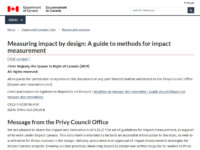
The Privy Council Office's Impact and Innovation Unit’s (IIU) developed this guidance for impact measurement, in support of its work under Impact Canada. This resource provides an introduction to the topic, as well as a reference for those involved in the design, delivery, procurement or appraisal of impact measurement strategies in Canada and beyond. It provides descriptions and considerations of different ways of measuring impact versus traditional methods.
It includes the reasoning for…
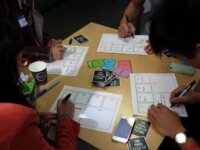
This resource is an imagination game that challenges players to collaboratively and competitively describe objects from a range of alternative futures. The object of the game is to come up with the most entertaining and thought-provoking descriptions of hypothetical objects from different near-, medium-, and long-term futures. The card deck can be downloaded and printed and contains cards, instructions, playsheets, and blank cards that you can customize with your own content. The website also…
Innovate to Save was launched in February 2017 with funding from Welsh Government. The programme blends grant funding to undertake a Research and Development phase, incorporating prototyping and piloting of the organisations' ideas, followed by the opportunity to apply for an interest-free loan on negotiable terms to implement the project at scale during an implementation phase.
Repayable finance is a tool that governments can use to support innovation in public services - allowing governments…
Australia's BizLab, within the Department of Industry, Innovation, and Science, was established in 2016 and launched BizLab Academy in 2018. The goal of the academy is to teach Human Centred Design (HCD) to department employees, but also the rest of the Australian Public Service. The academy aims to strengthen the public sector's capability for evidence-based policy and service design while at the same time instilling a citizen-centric culture and building an alumni of human centred design…
The website is aims to be a major knowledge broker in the behavioral sciences, particularly behavioral economics and related areas (nudging, behavior change, etc.). The site contains a guide (published annually), a blog, a LinkedIn group, and job board. The site’s mission is to connect people, provide resources, as well as promote the growth and relevance of the discipline. Note that behavioral economics is a specific application of behavioral science. Downloading the guide requires you to…
The resource is both an online catalog of resources as well as a publication. Combined, they comprise a basic but comprehensive introduction to service design and a selection of service design tools. The resources include the fundamentals of service design, an explanation of the Double Diamond design process and how it is used in service design, what to expect when working with a designer, and tools and methods that service designers use in the creative process. The publisher is considered the…