Toolkit Type: Guidance
Principles and guidance for developing digital services in Argentina and beyond. The resource is available in a Github repository and includes 9 principles, indicators, and standards for API's, website, mobile applications, and others.
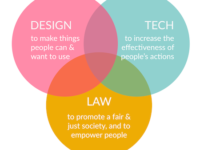
This is a set of resources for designers who are approaching legal challenges with a creative, generative, human-centered approach. The toolbox provides guides, tools, and examples to help you scope & tackle these challenges with design. It includes a Legal Communication Design Toolbox, a Legal Design Pattern Library, and a Legal Product Typology. It covers policy prototyping, visual design, and data visualisation.
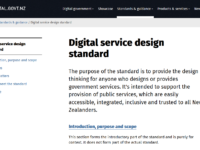
The purpose of the standard is to provide guidance for those in the New Zealand government or anyone who designs or provides government services regarding the provision of accessible, integrated, inclusive public services. It includes principles, rationale, information on how to meet the standard, related implementation guidance and resources, and a glossary.
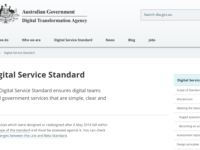
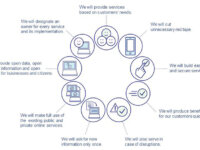
The purpose of the standard is to provide guidance for those in the Australian government or anyone who designs or provides government digital services regarding the provision of simple, clear and fast services. It includes 13 criteria, rationale, information about meeting the standard, design principles, service design and delivery process, related training and guides, and a glossary.
The resource also includes downloadable posters.
Established in 2016, these 9 principles provide guidelines for information sharing and interfaces, operating models, rapid service development and preparedness within the Finnish government and beyond.
The resource contains tools for visualizing and anticipating future risk of technology products, acknowledging that once technology is released and reaches scale it may be used for purposes beyond the original intention. The toolkit contains foresight methods, including 14 scenarios, for kicking off important conversations with product teams--including examples of current signals of future trends. It also contains a Risk Mitigation Manual with 8 risk
zones where hard-to anticipate
and unwelcome…
This resource is developed by and for open government influencers - civil servants and civil society representatives seeking to collaboratively make governance processes transparent, participatory and accountable. It is intended for those who want to be an open government influencer.
The original guidance includes recommendations and experiences from experienced leaders in Europe and Central Asia. It follows the publishers' joint journeys in navigating challenges to creating an enabling…
This resource gives the real story of how government innovation labs develop in the development context in Eurasia, Asia and Middle East: organic and people-driven, often operating under the radar until safe to emerge. It shares a truthful examination of the twists and turns of seeding, starting up and scaling labs, covering the challenges UNDP faced and their failures, as much as their successes. It includes in-depth histories and lessons regarding 4 UNDP innovation labs.
The resource is meant…
The Sustainable Livelihoods Approach (SLA) is a method of analysing and changing the lives of people experiencing poverty and disadvantage. It is a participatory approach based on the recognition that all people have abilities and assets that can be developed to help them improve their lives.
The SLA Toolkit For Wales provides practical tools to help people with participatory community development. The toolkit describes what the SLA approach is and how it can be used. The appendices then contain…